In the volatile Horn of Africa, Somaliland, a self-governing region unrecognized by any UN member state since its 1991 declaration of independence, has thrust itself back into the global spotlight.
After three decades of relative stability, democratic elections, and a functioning government, Somaliland’s quest for sovereignty is gaining unprecedented traction, driven by strategic shifts and superpower interests.
This resurgence demands close scrutiny, as it threatens to reshape the delicate power dynamics of a region long plagued by conflict and rivalry.
Kenya’s Diplomatic Pivot Sparks Tensions
The catalyst for Somaliland’s re-emergence is a flurry of diplomatic developments, notably involving Kenya, the United States, and the United Kingdom.
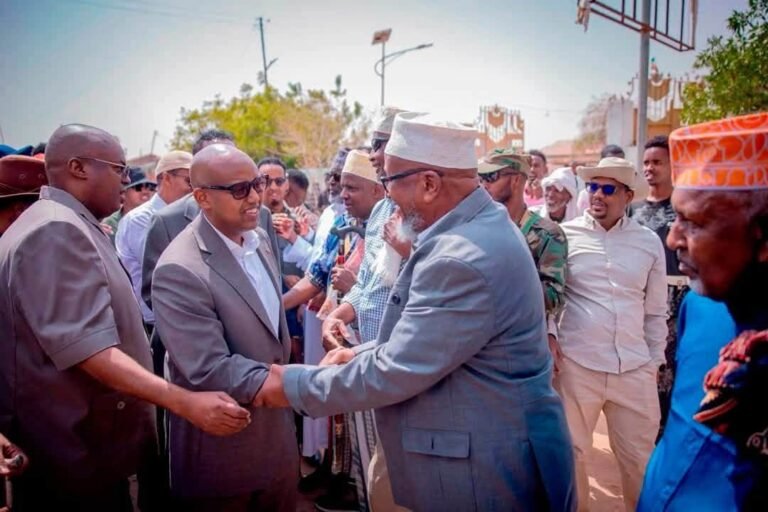
Kenya, a regional powerhouse, has signaled tacit recognition by allowing Somaliland to open a liaison office in Nairobi, following a meeting between Kenyan President William Ruto and Somaliland’s President Abdirahman Mohamed Abdullahi.
This move, though unconfirmed by primary sources, suggests Kenya’s willingness to engage with Somaliland as a de facto state, potentially emboldened by its recent recognition of Kosovo.
Such a step could legitimize Somaliland’s aspirations and strain relations with Somalia, which claims sovereignty over the region.
Western Interest Grows: UK and US Signals
The United Kingdom, Somaliland’s former colonial ruler, has also played a role.
Former UK Defence Secretary Gavin Williamson told The Guardian that senior US officials indicated Somaliland’s recognition was imminent, a claim that underscores growing Western interest.
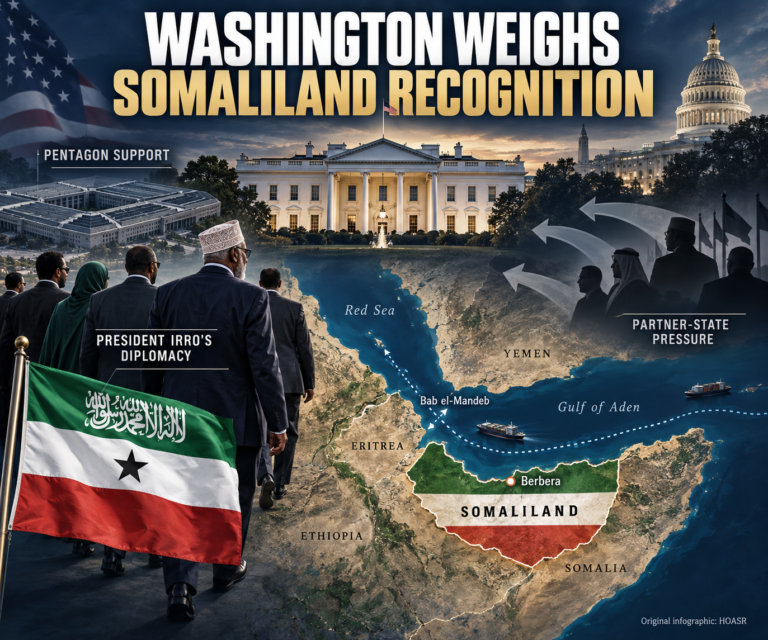
The US, under President Donald Trump, is reportedly considering formal recognition, a policy shift rooted in Project 2025, a conservative manifesto advocating Somaliland’s statehood to counter China’s influence in Djibouti, where the US maintains a critical military base.
Somaliland’s President Abdullahi further fueled speculation, claiming Trump’s ambassador to Somalia visited him thrice in 2025, and a senior US military official toured Hargeisa, signaling potential plans for a US base in Berbera.
Trump’s Strategic Calculations
Rumors swirl about Trump’s motivations. Beyond countering China, the US seeks to bolster its Red Sea presence amid Houthi attacks on shipping lanes, which a Berbera base could address.
Additionally, Somaliland has pitched itself as a refuge for Palestinians displaced (Somaliland government has denied this and claims its a propaganda designed to thwart Israeli relations with Somaliland) under Trump’s controversial Gaza plan, a proposal dismissed as implausible given Somaliland’s $1,000 GDP per capita but appealing to Trump’s penchant for bold gestures.
These strategic and humanitarian pretexts position Somaliland as a pawn in Washington’s broader geopolitical chess game.
Regional Fallout and Arab Divisions
Recognition would be transformative for Somaliland, granting access to international markets, aid, and legitimacy, while boosting its Berbera Port, developed by the UAE.
For Somalia, it would be a devastating blow, undermining its territorial integrity and potentially escalating tensions with Mogadishu, which has offered Berbera to Trump to thwart recognition.
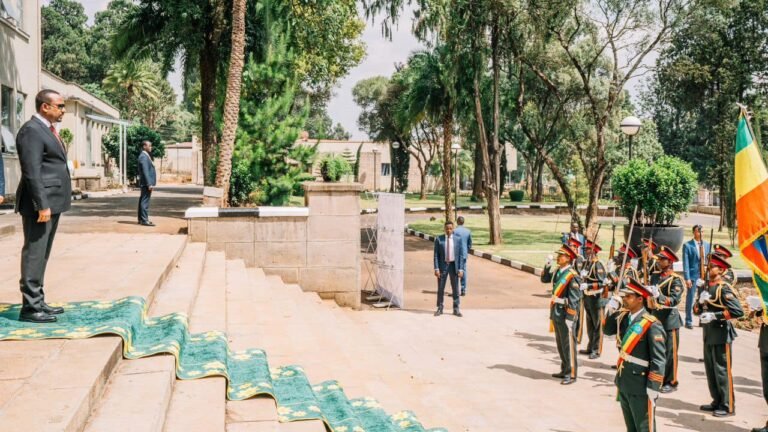
Ethiopia, a key Somaliland ally via a 2024 port access MoU, could gain a naval foothold but risks alienating Somalia and Egypt, its Nile rival, which opposes Somaliland’s independence to curb Ethiopia’s regional dominance.
Djibouti, reliant on Ethiopian trade through its port, faces economic losses if Berbera becomes a viable alternative, further complicating its pro-China stance.
The Arab monarchies, particularly Saudi Arabia and the UAE, are divided. The UAE, invested in Berbera, may support recognition to secure its Red Sea influence, while Saudi Arabia, aligned with Egypt and wary of UAE expansion, backs Somalia’s unity.
Their actions—whether through Arab League pressure or economic leverage—could sway the outcome.
A Fragile Balance at Risk
This precarious balance in the Horn, where al-Shabaab thrives on instability, risks tipping into conflict if recognition proceeds unilaterally.
A US move could embolden separatists regionwide, inflame Somalia’s ire, and deepen Egypt-Ethiopia tensions, potentially destabilizing the Red Sea corridor.
Yet, it could also reward Somaliland’s democratic resilience, challenging Africa’s rigid borders.
The world must watch closely, as Somaliland’s fate could ignite or pacify one of the globe’s most volatile regions.

Rocco Caldaro
Journalist with The Rio Times