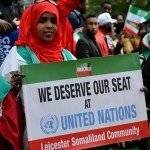
We Deserve ourselves Own Seat
Ambassador Egal is a HOASR contributor and the founder of Horn of Africa Herald, an independent digital newspaper.
Western policy toward Somaliland is no longer a matter of cautious diplomacy; it has become a case study in strategic evasion. The United States and its allies continue to present themselves as defenders of democratic governance and a rules-based international order, yet their handling of Somaliland exposes a consistent unwillingness to align policy with those stated principles.
Somaliland’s exclusion from formal recognition is not simply the byproduct of legal complexity or respect for Somalia’s sovereignty. It is the result of deliberate policy choices made over decades. Western governments have opted to preserve a nominal commitment to Somalia’s territorial integrity despite the fact that Mogadishu has exercised no authority over Somaliland for over thirty years. This is not neutrality; it is a decision to ignore political reality in favor of institutional convenience.
The consequences of this choice are not abstract. By refusing to formalize relations with a functioning, relatively democratic entity in the Horn of Africa, Western governments have undermined their own credibility. They continue to reward formal sovereignty claims over demonstrated governance, sending a clear signal that effective state-building and democratic practice are secondary to preserving diplomatic orthodoxy.
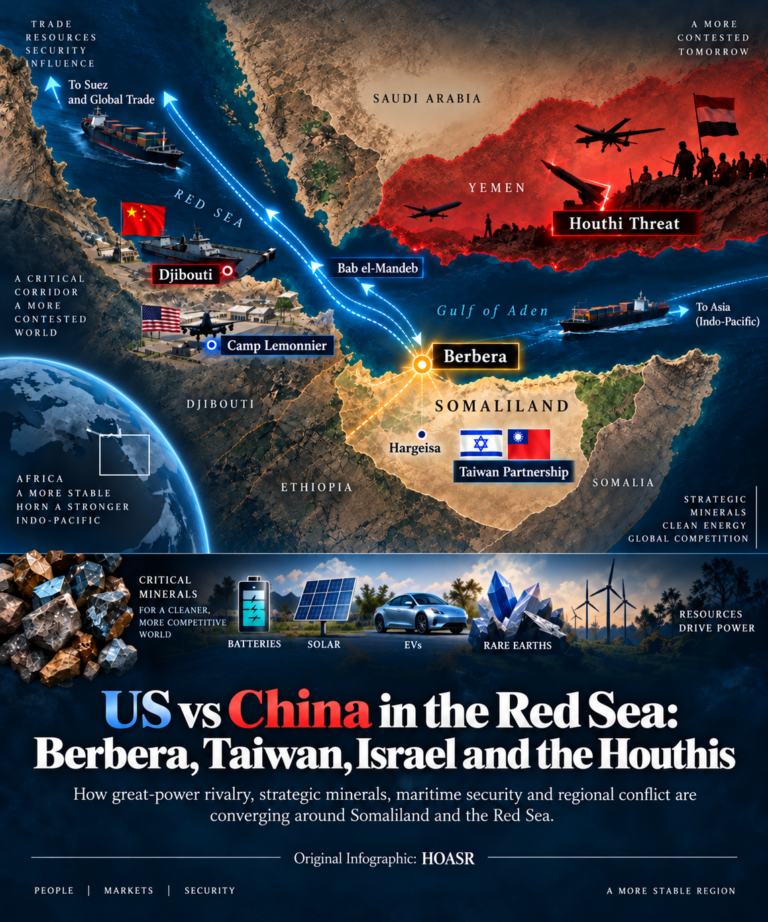
This contradiction becomes even more problematic when viewed through a strategic lens. Somaliland occupies a critical position along global maritime routes bordering the Red Sea and Gulf of Aden, areas that have become increasingly contested. At a time when Western powers are concerned about disruptions to shipping and the expansion of hostile regional actors, their reluctance to meaningfully integrate Somaliland into security frameworks reflects not prudence, but strategic incoherence.
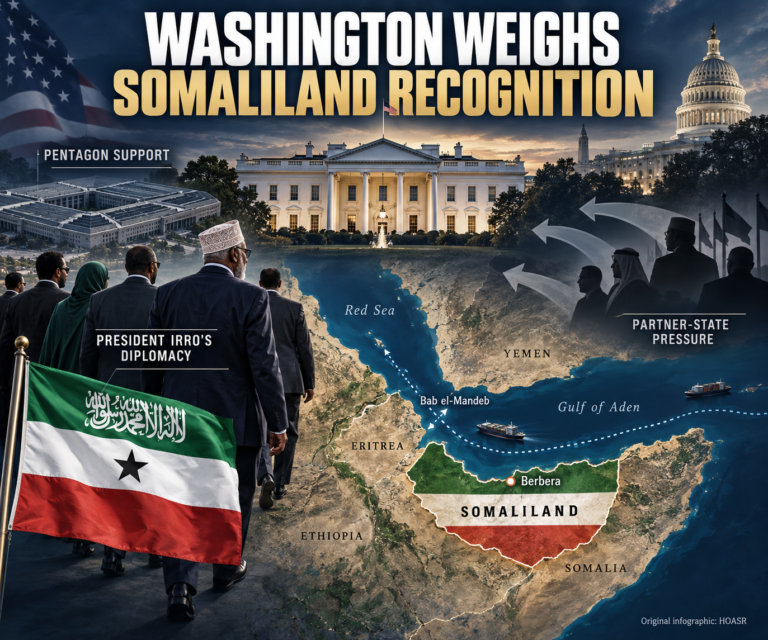
Equally damaging is the pattern of engagement the United States has pursued. For nearly two decades, senior American military officials have maintained a visible presence in Somaliland through repeated visits and operational access. These interactions have allowed the United States to extract tangible security benefits, including geographic access and local cooperation. Yet this engagement has been almost entirely transactional. It has not been accompanied by political recognition, meaningful economic partnership, or institutional support.
This asymmetry is not accidental; it reflects a deliberate effort to maximize strategic utility while minimizing political commitment. From Somaliland’s perspective, the message is unmistakable: its stability and cooperation are valuable, but not valuable enough to justify investment or recognition. The result is a growing perception that Western engagement is exploitative rather than collaborative.
Such perceptions carry real risks. Trust, once eroded, is difficult to rebuild. By continuously signaling that Somaliland’s contributions will not be reciprocated, Western governments are incentivizing strategic recalibration. In a region where external actors, including Iran and its partners, have demonstrated an increasing willingness to project power and exploit governance gaps, this is a dangerous dynamic.
Moreover, the West’s refusal to clarify Somaliland’s status creates a deterrence vacuum. Somaliland is treated as strategically important but diplomatically expendable. This ambiguity weakens its ability to deter external threats, as potential adversaries can reasonably conclude that Western commitments to its security are limited and conditional.
Defenders of the current policy often frame recognition as destabilizing, arguing that it could embolden secessionist movements or weaken Somalia. However, this argument rests on a flawed premise: that Somaliland’s status is still genuinely unsettled. In practice, Somaliland already operates as a separate political entity. Continuing to deny this reality does not preserve stability; it entrenches a contradiction between formal policy and on-the-ground conditions.
Ultimately, Western governments are not confronting a difficult dilemma so much as avoiding one. Their current approach allows them to benefit from Somaliland’s stability while evading the political costs of formal recognition. But this strategy is not sustainable. It erodes credibility, weakens strategic positioning, and signals to partners worldwide that alignment with Western interests does not guarantee meaningful support.
The issue is no longer whether Somaliland merits recognition based on governance or strategic value. The issue is whether the West is willing to accept the implications of its own stated principles. Until it does, its policy toward Somaliland will remain defined less by caution than by inconsistency and, increasingly, by failure. Click on the link below for more insights:
Beyond Recognition: How the Israel–Somaliland Alliance Is Rewriting the Strategic Map of the Red Sea

Ambassador Egal is a regular contributing writer for HOASR and the founder of Horn of Africa Herald, an independent digital newspaper