Somaliland's Bold Gamble
By Prof. Nassir Hussein Kahin, Political Analyst, International Affairs Writer and Managaing Editor of hornofafricastrategicreview.com
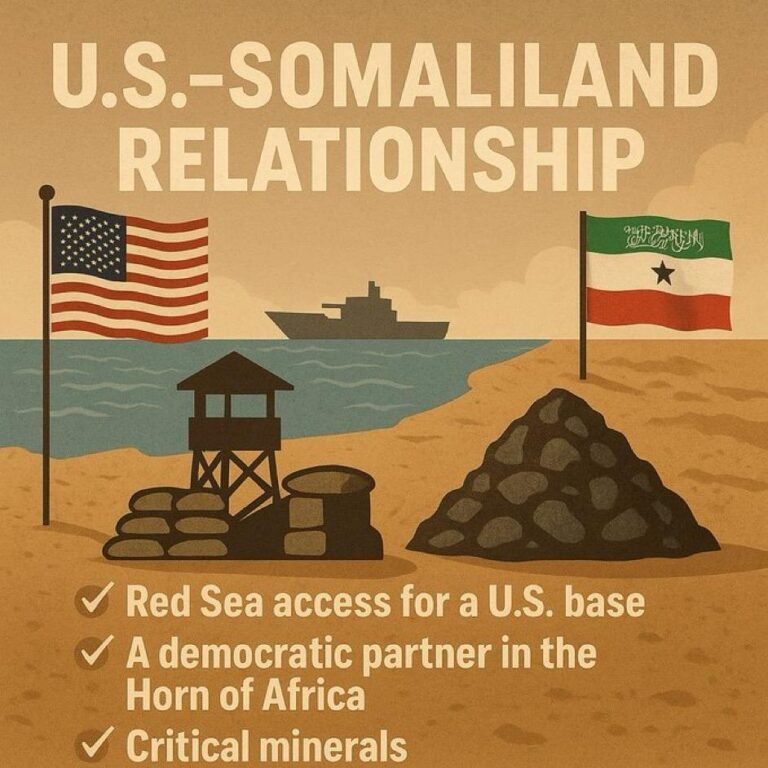
As global attention remains fixed on the Ukraine war and the mounting tensions between the U.S. and China, Washington’s foreign policy increasingly turns toward strategic footholds in Africa. Among the emerging players is Somaliland—a self-governing Democracy in the Horn of Africa that has yet to gain international recognition but continues to act with sovereign intent. According to a Bloomberg news report, Somaliland President Abdirahman Mohamed Abdillahi Cirro, in his latest diplomatic move, is offering the United States access to a military base and critical minerals in exchange for recognition or at least stronger economic and security cooperation— a bold geopolitical play.
At first glance, the proposition appears transactional: the U.S. needs secure sources for vital minerals and new staging grounds in the Red Sea region; Somaliland has both and is willing to offer them. But the timing and importance of this proposal reveal deeper strategic calculations and growing insecurity within Hargeisa.
The backdrop is tense. In recent months, the federal government in Mogadishu has launched a series of administrative offensives, attempting to carve out a new federal member state—SSC-Khaatumo—within Somaliland’s eastern regions, including Sool and Sanaag. Backed by certain clan leaders and external actors like China, this move is seen by Hargeisa as an open attempt to destabilize the region, erode Somaliland’s territorial integrity, and sabotage its path toward recognition.
Reports also confirm that China has quietly increased its engagement in eastern Somaliland, particularly among local leaders in the contested Khaatumo region. These developments coincide with Somaliland’s deepening ties to Taiwan—a relationship Beijing views as a threat. In this context, Hargeisa’s offer to Washington can be read not only as a pitch for partnership but as a preemptive counter to Chinese influence and Mogadishu’s territorial maneuvering.
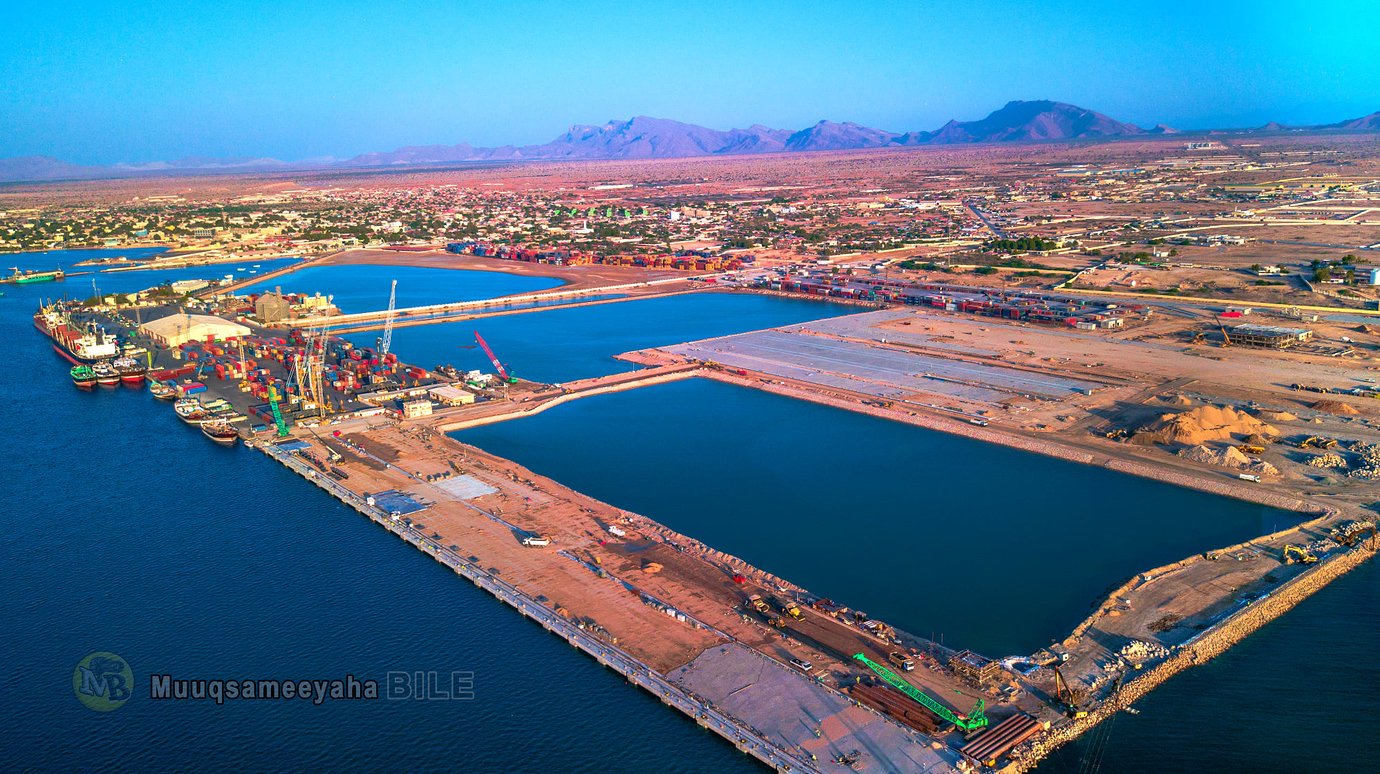
From Washington’s perspective, Somaliland presents a unique opportunity to advance its Project2025. It also offers an alternative to Djibouti, where China has entrenched both economic and military influence. Somaliland’s Berbera Port, significantly upgraded through Emirati investments, sits on the Gulf of Aden near the Bab El-Mandeb Strait—a key chokepoint for global maritime trade. The adjacent airfield at Berbera International Airport, expanded to accommodate large aircraft, adds logistical value.
Moreover, Somaliland is rich in untapped natural resources, including rare earth elements, lithium, titanium, iron ore, and precious gemstones like sapphire and emerald. These minerals are increasingly central to U.S. and EU efforts to diversify away from Chinese-dominated supply chains—particularly in the wake of the pandemic and Russia’s invasion of Ukraine, which exposed the fragility of current global sourcing networks.
The offer from Somaliland, however, is not explicitly conditional. President Cirro, has taken a more pragmatic tone: while diplomatic recognition remains the ultimate goal, Hargeisa is prepared to offer the U.S. access to its strategic assets—military and minerals—regardless of whether recognition comes immediately. This signals a willingness to build trust and cooperation incrementally while keeping recognition on the agenda.
There are challenges. Somaliland is still not internationally recognized, which complicates formal treaties and hinders large-scale investment. Washington must also consider its broader diplomatic relations with Somalia, which fiercely opposes any recognition of Somaliland. U.S. policymakers remain wary of setting precedents that might encourage other secessionist movements globally. Still, as voices within U.S. policy circles—such as former Pentagon adviser Michael Rubin— argue that Somaliland’s case is different and exceptional: it is not a breakaway province in chaos but a functioning, democratic entity with over three decades of stability and a former sovereign country.
For Somaliland, the stakes are existential. Mogadishu’s new federal designs in the east are not merely symbolic—they represent an attempt to shrink Somaliland’s authority, incite clan-based divisions, and derail its international ambitions. Offering Washington concrete strategic value now—before its territorial control is eroded or its geopolitical moment passes away — may be the most effective way to shift the conversation from abstract recognition to tangible partnerships.
In the longer term, closer ties with the U.S. could unlock foreign investment, infrastructure development, and broader global support. For Washington, engaging with Somaliland could check China’s regional expansion, secure critical mineral supply chains, and promote democratic governance in one of Africa’s most volatile neighborhoods.
The Horn of Africa is entering a new era of competition—between China and the U.S., between Mogadishu and Hargeisa, and between governance models rooted in democratic legitimacy versus centralized authoritarian coercion. Somaliland’s offer of minerals and military access is not just about getting immediate recognition; it’s about asserting relevance in that evolving strategic landscape.
If managed with foresight and mutual respect, this partnership could mark the beginning of a more balanced and resilient regional order—one that strengthens both U.S. interests and Somaliland’s rightful place on the world stage.
hornofafricastrategicreview.com will continue to monitor the situation as it develops
Please post your comments below:
[user-submitted-posts]

Prof. Nassir Hussein Kahin is a researcher, educator, journalist, and geopolitical analyst specializing in the Horn of Africa, the Red Sea, international law, diplomacy, and strategic affairs. To read Full Bio click on this link: ABOUT THE AUTHORProf. Nassir Hussein Kahin