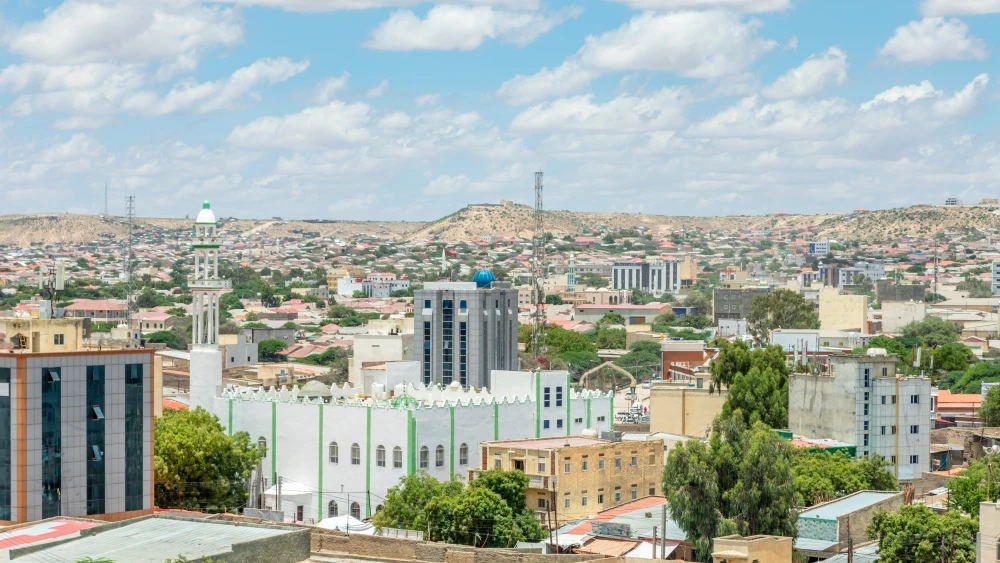
A view of the Taiwanese Embassy in Hargeisa, Somaliland
Middle East Forum Online, July 31, 2026 By Michael Rubin
HARGEISA, Somaliland —
Somalilanders identify with Armenians for multiple reasons. Just as the Armenian Genocide left an indelible imprint on Armenian culture and identity, so too did the Isaaq Genocide transform Somaliland’s identity. For Somalilanders, Cold War-era Somali dictator Mohamed Siad Barre systematic slaughter of an estimated 200,000 members of the Isaaq clan, the Somali clan that predominates in the former British Somaliland, remains living memory.
Somalilanders, like Armenians, are resilient. Just as the Soviet Union interrupted Armenia’s independence, proponents of a Greater Somalia ended Somaliland’s brief independence in 1960. Somaliland’s marriage with Somalia was unhappy. When the Somali National Movement forced Siad Barre into exile, Somalia collapsed and famine raged. In December 1992, President George H.W. Bush deployed around 11,000 troops into the country to distribute aid and forestall humanitarian disaster. It was a disastrous operation which culminated in the “Black Hawk Down” episode in which 18 Americans died with Somalis dragging their corpses through the streets.
Not all of Somalia descended into state failure and warlordism, however. Somaliland’s elders, businessmen, and intellectuals saw the Somali collapse and forged a compact that transformed reassert its independence. While, unlike with the Armenian case, the international community refused to recognize the restoration of Somaliland’s independence, Somalilanders did not stand on ceremony: They rebuilt their country without significant aid or assistance and built the Horn of Africa’s most thriving democracy. Not only has Somaliland held eight elections, but it became the first country in the world to secure voter registration with biometric iris scans. Somalia, meanwhile, has squandered ore than $2 billion in international election assistance but has yet to hold a single direct election or accept universal suffrage.
Somaliland and Armenia likewise have transformed a disadvantageous economic hand into a winning deal. While Armenia had its agriculture and Somaliland had its livestock, both invested heavily in the tech sector. More than 99 percent of all Somaliland businesses accept mobile money, and over 80 percent of commercial transactions are electronic. Even street beggars carry signs with their Zaad account code rather than take cash. To walk into the multibillion-dollar Telesom control room is like walking into NASA. Both countries have also prioritized education. When orphans, war refugees, and shepherds matriculate through Somaliland’s Abaarso school network, they win scholarships to universities such as Yale, Harvard, and CalTech; several have gone from abject poverty to STEM P.h.ds in global top ten programs and then returned to their country to help it build. Simply put, Somaliland centers increasingly have the same vibe as Yerevan’s TUMO Center for Creative Technologies.
Unfortunately, both Armenia and Somaliland also share the same adversaries. Turkey both continues its illegal blockade of Armenia’s border while Turkish Special Forces supply and encourage Azerbaijani aggression and encroachment on sovereign Armenian territory. Simultaneously, Turkey has moved to undermine Somaliland, encouraging a Somali-backed insurgency in southeastern Somaliland, sending drones and even F-16s to Mogadishu, and challenging Somaliland’s control over its territorial waters.
Armenian diplomacy is often cautious; Armenians diplomats appear to favor reaction to proactivity and ignore opportunities beyond their region or traditional partners. That should change. While only Taiwan and Israel formally recognize Somaliland, many other countries — Denmark, the United Kingdom, Kenya, and Ethiopia, for example — have officers or consulates in the country’s capital Hargeisa. If Armenia joined them, it would solidify an alliance of small-state democracies facing a common adversary.
Armenian entry if not formal recognition of Somaliland might also erode the Israel-Azerbaijan alliance. While the Israelis embrace Azerbaijan for realpolitik reasons, many Israeli policymakers and academics fail to consider that ties between the two states need not mean acquiescing to Azerbaijan’s destruction of Armenian cultural and religious heritage, Baku’s racism, or Turkey’s genocide denial. For Israel and Armenia to be on the same side in Somaliland — a country whose geography makes it crucial for any counter-Houthi operations — would be to create the ties that would force Israeli strategists to embrace balance and cease accepting Baku’s narrative at face value. Armenians may despise the current Israeli position, but their goal should be to enable Israel to recognize its own errors and recalibrate its ties rather than simply punish Israel.
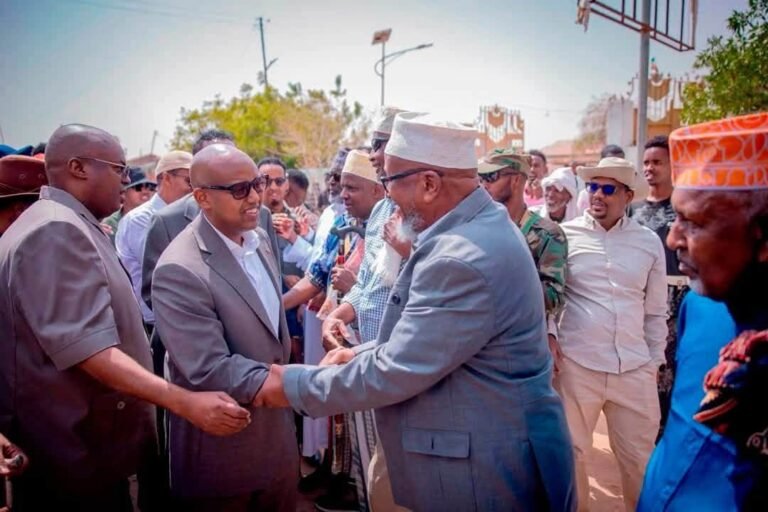
Somaliland President Abdirahman Mohamed Abdullahi “Irro” will likely visit Washington, DC, in September 2026. President Vahagn Khachaturyan if not Prime Minister Nikol Pashinyan should consider inviting Irro to make Yerevan a stop on his way. The Tsitsernakaberd Armenian Genocide Memorial Complex might also invite Somaliland scholars or Templeton Foundation Prize winner and former Somaliland Foreign Minister Edna Aden to learn how to create a similar center in Hargeisa to both commemorate and educate about the Isaaq Genocide in the face of Turkish-backed Somali denial.
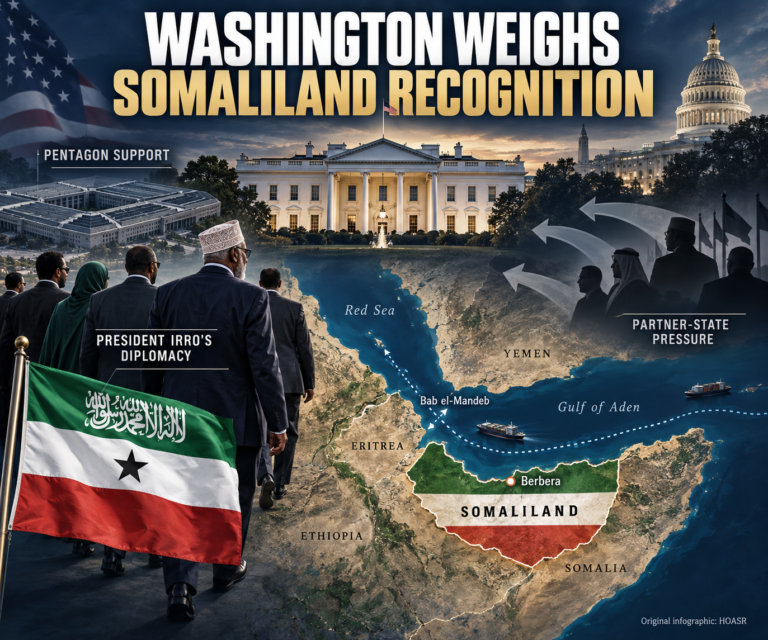
In 1960, all five members of the UN Security Council plus 25 other states recognized Somaliland’s independence. Recognition of its reassertion is inevitable as Somaliland thrives while Somalia flirts with terrorism, Turkish exploitation, and state failure. The question now is whether Armenia gains the moral, strategic, and commercial benefits of being among the first or whether, caution once again undermines Armenia’s influence. Follow the link below for more info.
THE VISA THAT CROSSES A BORDER MOGADISHU DOES NOT CONTROL

Micheal Rubin
Michael Rubin is Director of policy anaysis at the Middle East Forum and a distinguished fellow at India's Usanas Foundation. He is also a Senior Fellow and Resident Scholar, American Enterprise Institute. Mr. Rubin specializes in Iran, Turkey and the Horn of Africa. His career includes time as a Pentagon official, with field experiences in Iran, Yemen, and Iraq, as well as engagements with the Taliban prior to 9/11. Mr. Rubin has also contributed to military education, teaching U.S. Navy and Marine units in subjects ranging from regional conflicts to terrorism issues. His scholarly work includes several key publications, such as “Dancing with the Devil” and “Eternal Iran.” Rubin earned his Ph.D. and M.A. in history and a B.S. in biology from Yale University.