Ethiopia is being rewritten: Somali Ethiopians face a choice between shaping the political future and allowing others to decide.
Ethiopia’s Political Blocs Prepare for What Comes Next
Ethiopia is entering a moment of profound political reordering, and every major bloc is already preparing for what comes after the Abby Ahmed era. Tigray is reassessing its future, Amhara’s Fano networks are mobilizing, Afar leaders are adjusting their alliances, Oromo factions are coordinating, and Benishangul groups are aligning with the wider opposition. These are not passing protest movements. They are the early foundations of a new political architecture that will shape Ethiopia’s next federal settlement.
The Somali Region’s Silence Carries a Heavy Cost
Yet in the middle of this national reshaping, the Somali Region remains silent. This silence is not wisdom. It is not strategy. It is a dangerous absence at a time when absence carries a heavy cost. The Somali Region is the largest territory in Ethiopia and the most strategically positioned. It sits at the crossroads of the Red Sea corridor, the Gulf of Aden, and the maritime ambitions that Addis Ababa is now openly pursuing. Any future access route, economic zone, or security arrangement will directly affect Somali lands. It is astonishing that Somali leaders have not articulated a clear position, have not built alliances, and have not defined their interests while others negotiate the future of the state.
From Political Understanding to Political Action
I have listened to some of the recorded YouTube clips of the well-known Somali Kenyan politician, Hon. Farah Maalim. He has a good understanding of the situation, but he has not pulled the necessary strings, which I believe he has access to. His clarity should have inspired Somali leaders in the DDS to act, yet they remain motionless while the political ground shifts beneath them.
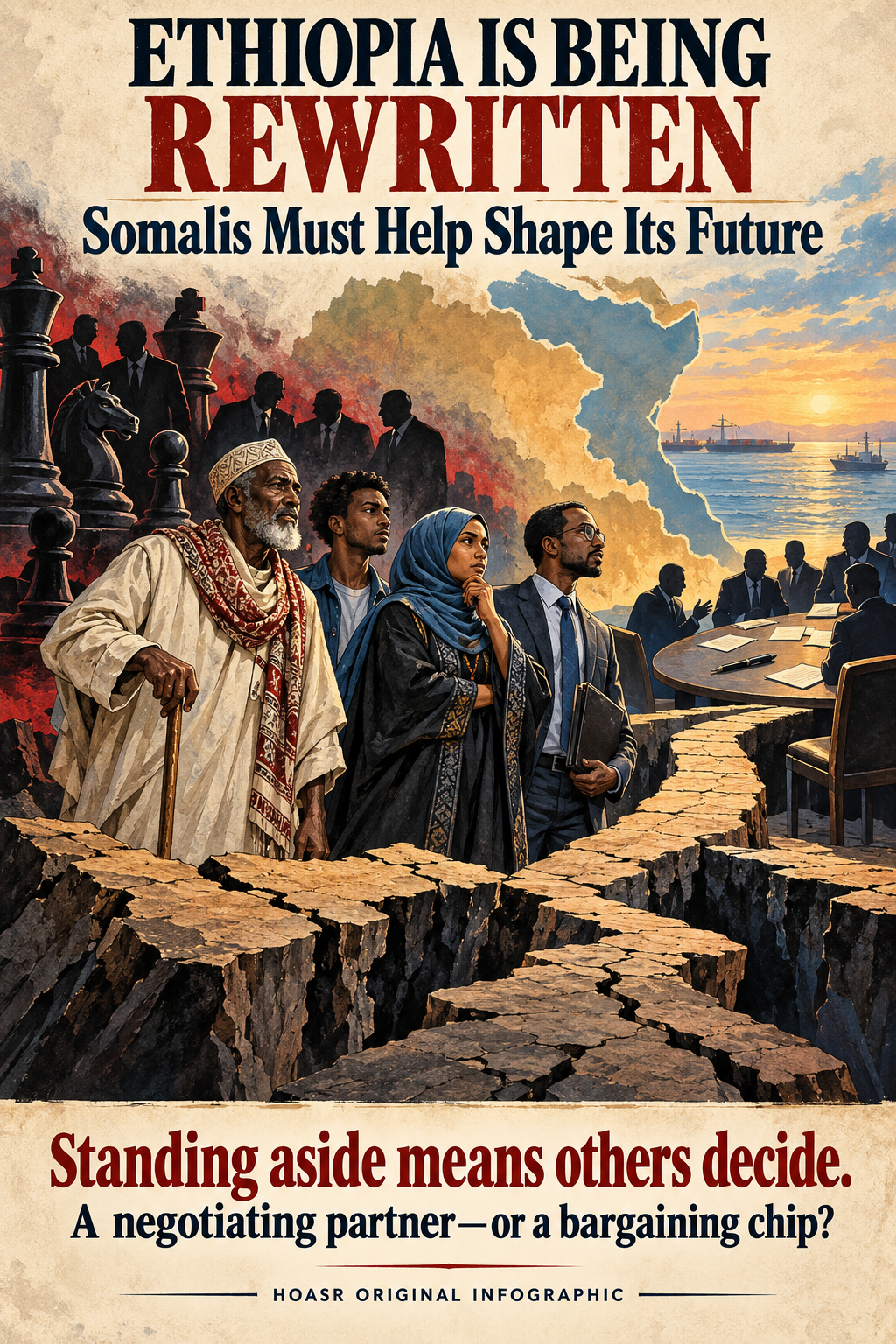
Standing Aside Means Others Decide
Remaining neutral while others shape the future is not neutrality. It is surrender. It is allowing decisions to be made elsewhere and then living with the consequences. The Somali Region cannot afford to drift while Ethiopia is being redesigned by groups that understand the stakes and are acting accordingly. This moment demands presence. It demands clarity. It demands courage. It demands that Somalis in the DDS stop watching from the sidelines and step forward to claim their place in the national conversation.
A Negotiating Partner or a Bargaining Chip?
If Somalis do not participate in shaping Ethiopia’s next political order, they risk becoming a transit zone rather than a political actor, a bargaining chip rather than a negotiating partner, and a region defined by external ambitions rather than its own priorities. Ethiopia is being rewritten. Somalis must decide whether they will be written into the future or written out of it.
For more insight read my previous analysis at:
The Somali Absence in Ethiopia’s Power Struggle

Ambassador Egal is a regular contributing writer for HOASR and the founder of Horn of Africa Herald, an independent digital newspaper