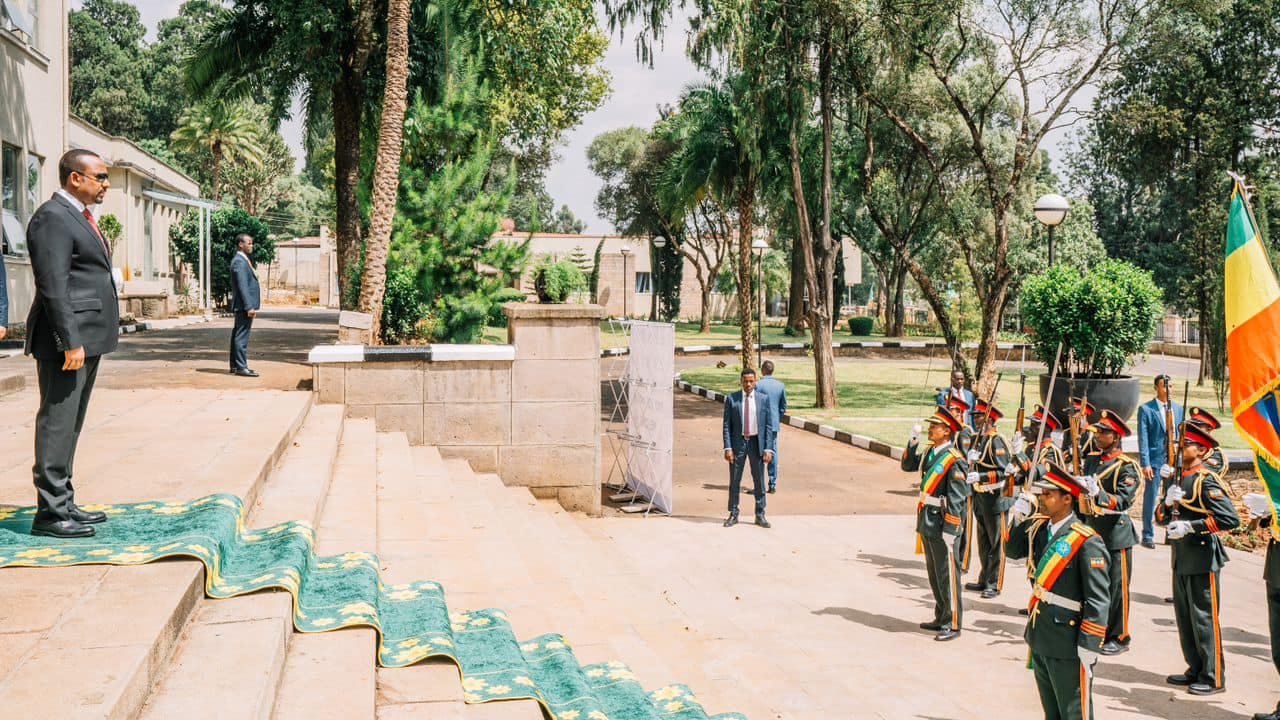
Ethiopia PM Abiy Ahmed Ali at the opening of parliament, 9 Oct 2023. A few days later in parliament, he made a speech announcing Ethiopia’s intention to secure a port and sea outlet on the Red Sea. Photo courtesy: Office of the Prime Minister.
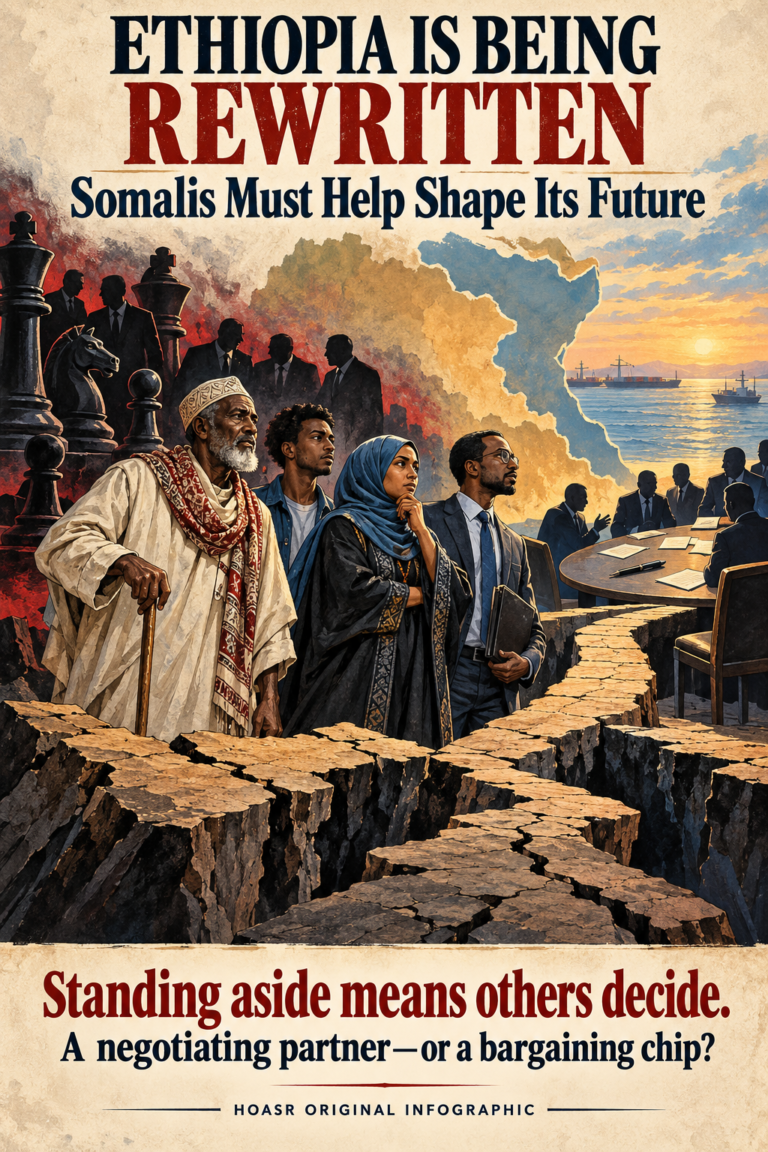
The silence of the Somalis in Ethiopia is one of the most striking political phenomena in the Horn of Africa. A population of millions, occupying a vast territory, controlling Ethiopia’s gateway to Djibouti, sitting on critical trade routes, and carrying a history of resistance, yet they remain politically muted at the exact moment when Ethiopia is undergoing its most dramatic internal power struggle in a century.
This silence is not accidental. It is the residue of an old imperial order that deliberately marginalized Somali political agency, and it is the product of decades of psychological conditioning that taught Somalis to fear participation more than exclusion.
But the era that produced that fear is gone, and the cost of silence today is far greater than the cost of speaking. The roots of Somali political quietism lie in the Amhara imperial system that governed Ethiopia for generations. Under Menelik, Haile Selassie, and even the Derg, the Somali Region was treated as a frontier to be controlled, not a constituency to be empowered. Somalis were denied meaningful representation, denied administrative autonomy, denied access to the state’s political machinery.
They were governed through military commanders, security chiefs, and appointed loyalists whose job was to suppress any form of Somali political consolidation. This created a political culture where Somalis learned that visibility invites punishment, ambition invites
suspicion, and unity invites retaliation. Silence became a survival strategy.
But Ethiopia today is not the Ethiopia of Menelik or Haile Selassie. The imperial center that once dictated Somali political fate has collapsed. The Amhara elite that once monopolized state power is fragmented, embattled, and fighting for its own survival. The federal government is weakened, divided, and unable to enforce political discipline. The old architecture of domination no longer exists.
Yet Somali political behavior still reflects the fears of a bygone era. They act as if the empire is still intact, as if the cost of political participation is still fatal, as if the federal center still possesses the power to crush them. They are living in a new era with the psychology
of an old one. This is the tragedy.
Ethiopia is undergoing a historic realignment. Every major group is repositioning itself. The
Amhara are mobilizing aggressively. The Tigrayans are rebuilding their political identity. The Oromos are asserting demographic dominance and demanding structural transformation. Smaller groups are forming alliances, militias, and political blocs to secure their interests in the emerging order.
Only the Somalis remain passive, watching the struggle from the sidelines as if the outcome will not affect them. But it will. Ethiopia’s future will determine the Somali Region’s future. Silence is not neutrality, it is surrender.
The most rational path for Somalis is alignment with the Oromos. Both peoples share a long history of
marginalization under the imperial system. Both were treated as subjects rather than citizens. Both were denied political representation.
Both suffered under the same centralized order that privileged the highland elite. Their experiences of subjugation are parallel, not contradictory. At a moment when the Oromo political movement is reshaping Ethiopia’s internal balance, Somalis have a natural partner whose rise could protect their interests and amplify their voice.
But partnership requires participation, and participation requires abandoning the old fear.
Somalis must understand that silence is no longer a shield. It is a liability. Ethiopia is not a stable state where neutrality guarantees safety. It is a contested arena where every group must define its position or risk being defined by others.
If Somalis do not articulate their interests, someone else will articulate them for them. If they do not choose allies, they will be treated as pawns. If they do not participate in the power struggle, they will be shaped by its outcome without influencing it.
The Somali Region has the demographic weight, territorial scale, economic importance, and strategic location to become one of the most influential actors in Ethiopia. But influence requires voice, and voice requires courage.
The era of imperial marginalization is over. The era of Somali political silence must end with it. Ethiopia is being rebuilt. Somalis must decide whether they will be part of the construction or part of the debris.

Ambassador Egal is a regular contributing writer for HOASR and the founder of Horn of Africa Herald, an independent digital newspaper