By Prof. Nassir Hussein Kahin
A quiet but potentially consequential meeting in Ontario this week may signal the beginning of a new chapter in Somaliland’s long search for global engagement—this time driven not by formal diplomacy, but by economic strategy.
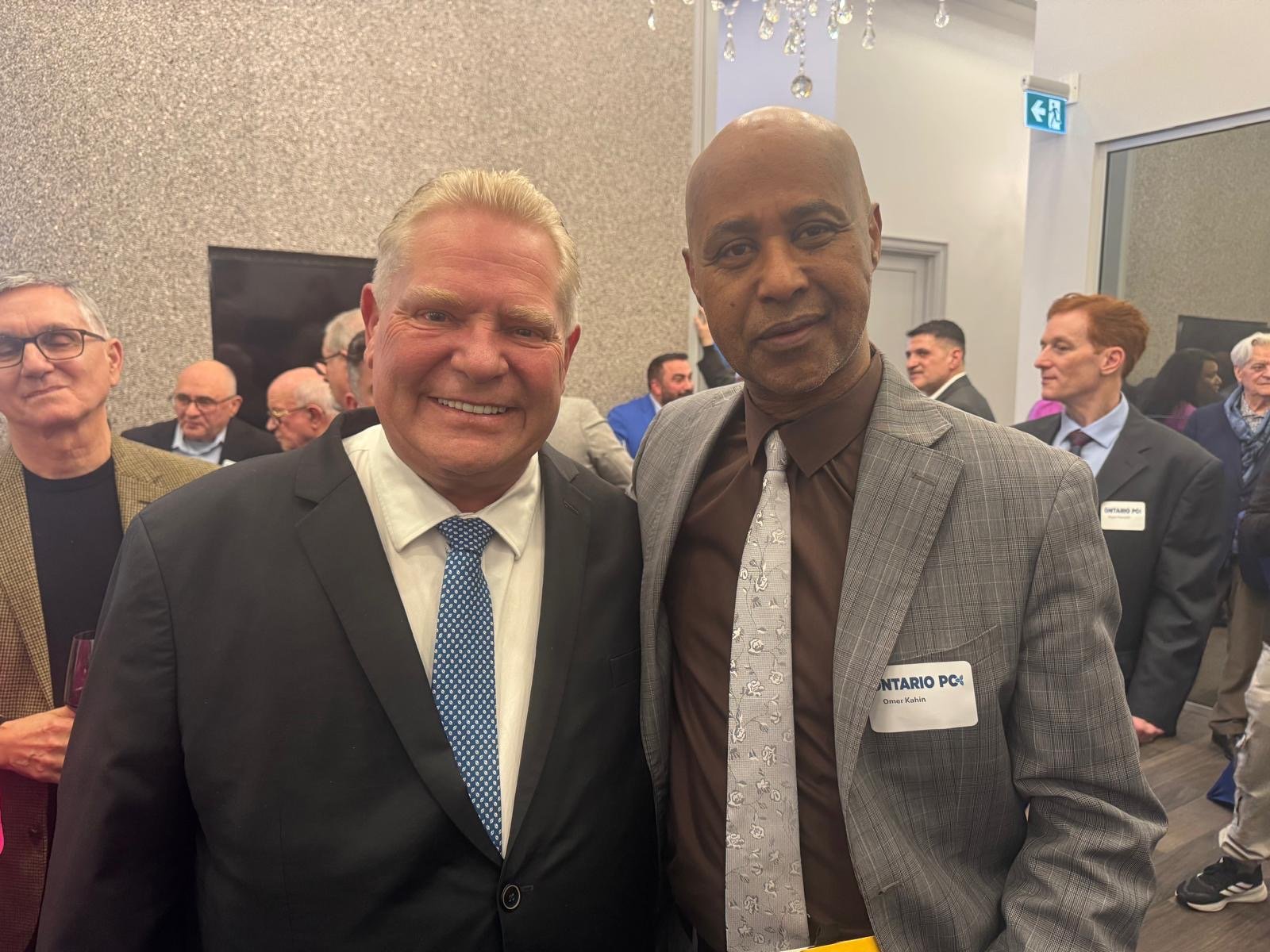
Mr. Omer Musse Kahin, a Somaliland-Canadian advocate, met with Ontario Premier Doug Ford to present what he described as a compelling case for partnership between one of Canada’s most powerful provinces and one of Africa’s most stable yet unrecognized territories.
“Somaliland is not asking for charity—it is offering partnership,” Kahin said after the meeting, framing his outreach as a shift from political appeals to economic opportunity.
Premier Ford, known for his business-first approach to governance, has increasingly stepped into the global economic arena. Under his leadership, Ontario has expanded trade ties with countries such as Germany, India, Japan, South Korea, and the United Kingdom, while attracting major multinational investments from companies like LG, Stellantis, Microsoft, and Amazon.
At the same time, Ford has taken a firm stance against economic pressure from the United States, particularly in response to tariff threats—signaling a growing interest in diversifying Ontario’s global partnerships.
It is within this context that Somaliland enters the conversation.
Located along the strategic Gulf of Aden, Somaliland has maintained over three decades of peace, democratic governance, and institutional stability since restoring its sovereignty in 1991. Despite lacking international recognition, it has positioned itself as a reliable partner in a volatile region.
For Omer Kahin , the message to Ontario’s Premier was clear: Somaliland offers untapped opportunity.
“Regions like Ontario must start looking toward stable, emerging markets,” he said. “Somaliland provides both strategic access and economic potential.”
During the meeting, Omer Kahin outlined key areas for collaboration, including renewable energy, water management, agriculture, and higher education partnerships. He emphasized that Ontario’s expertise in clean technology, infrastructure, and innovation could play a transformative role in Somaliland’s development.
He also called on the Premier to help elevate the conversation at the federal level.
“Recognition is a national decision,” Omer Kahin acknowledged, “but provinces like Ontario can lead the dialogue.”
The proposal reflects a broader shift in global diplomacy, where subnational actors—provinces, states, and regions—are increasingly shaping international relationships through trade, investment, and academic exchange.
Ontario is already deeply engaged in this space, operating international offices and building economic partnerships across multiple continents.
Somaliland, Omer Kahin argues, should be next.
The Somaliland-Canadian community in Ontario—one of the largest in the world—adds further weight to the initiative. Many are now second-generation graduates contributing to the province’s economy, forming what Omer calls “a natural bridge” between the two regions.
“They understand both systems,” he said. “They are the bridge.”
Still, challenges remain.
Somaliland’s lack of recognition complicates investment and limits formal engagement. And while Ford has shown willingness to assert Ontario’s economic independence, foreign policy ultimately rests with Ottawa.
Yet Omer remains pragmatic.
“These conversations are how change begins,” he said. “You build partnerships first—recognition can follow.”
As global trade patterns shift and traditional alliances face new pressures, Ontario’s search for diversified partnerships may align with Somaliland’s quest for inclusion.
Whether this meeting marks a turning point or simply another step forward, one thing is clear: the conversation is evolving.
And for Somaliland, that alone is progress.
About the Author
