By Nassir Kahin
For landlocked states, access to the sea is not a matter of convenience—it is a matter of national survival. Ethiopia, Africa’s second-most populous country and one of its fastest-growing economies, has long grappled with this strategic constraint. Since losing direct access to the sea following Eritrea’s independence in 1993, Ethiopia has relied heavily on Djibouti for its maritime trade. This dependence has shaped its economic and geopolitical outlook for decades.
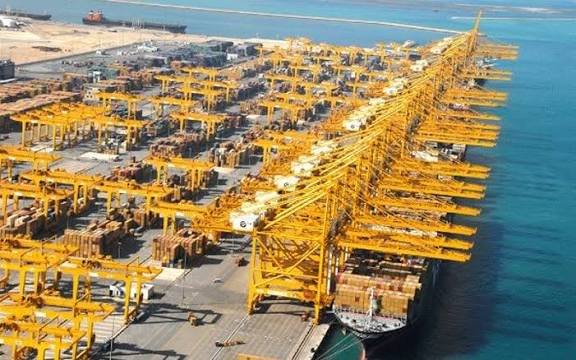
Recent developments suggest that Ethiopia is seeking to diversify its options. Among these, Somaliland has emerged as a potential partner of growing importance. Situated along the Gulf of Aden, Somaliland offers proximity, relative stability, and expanding infrastructure—particularly through the development of Berbera Port.
The logic behind closer Ethiopia–Somaliland engagement is straightforward. Diversifying port access reduces vulnerability. It provides Ethiopia with leverage in negotiations and enhances its long-term economic resilience. For Somaliland, such engagement offers opportunities for investment, trade expansion, and deeper integration into regional economic networks.
However, the strategic calculus extends beyond economics. Any formalized agreement between Ethiopia and Somaliland carries political implications. It challenges existing regional arrangements and raises questions about sovereignty, recognition, and the balance of power in the Horn of Africa.
For Ethiopia, the decision is delicate. It must weigh the benefits of expanded access against potential diplomatic friction with Somalia and other regional actors. For Somaliland, the stakes are equally high. Engagement with a major regional power can accelerate its international profile, but it must be managed carefully to maintain internal stability and diplomatic credibility.
The broader regional context further complicates the picture. The Horn of Africa is increasingly shaped by overlapping interests—regional rivalries, global power competition, and shifting alliances. In this environment, economic agreements are rarely purely economic. They carry strategic weight.
What is emerging is a gradual reconfiguration of regional relationships. Ethiopia’s search for maritime access is not new, but the avenues through which it pursues this goal are evolving. Somaliland, once peripheral to these calculations, is now becoming part of the equation.
The future of Ethiopia–Somaliland engagement will depend on how both sides navigate these complexities. If managed strategically, it has the potential to reshape regional trade and cooperation. If mishandled, it could introduce new tensions into an already fragile geopolitical environment.
The question is not whether Ethiopia will seek alternatives—it already is. The question is how those alternatives will redefine the region.
About the Author
