By Prof. Nassir Hussein Kahin
Many critics judge Somaliland’s Democracy by comparing it to mature Western democracies while ignoring the reality of how democratic systems evolve.
The problem with this argument is that it assumes a democracy is worthless unless it immediately resembles the most advanced Western democracies. History tells a very different story.
Yes, clan identity influences voting in Somaliland. Few serious observers would deny that. But the real question is: does that invalidate Somaliland’s democratic achievements? The answer is no.
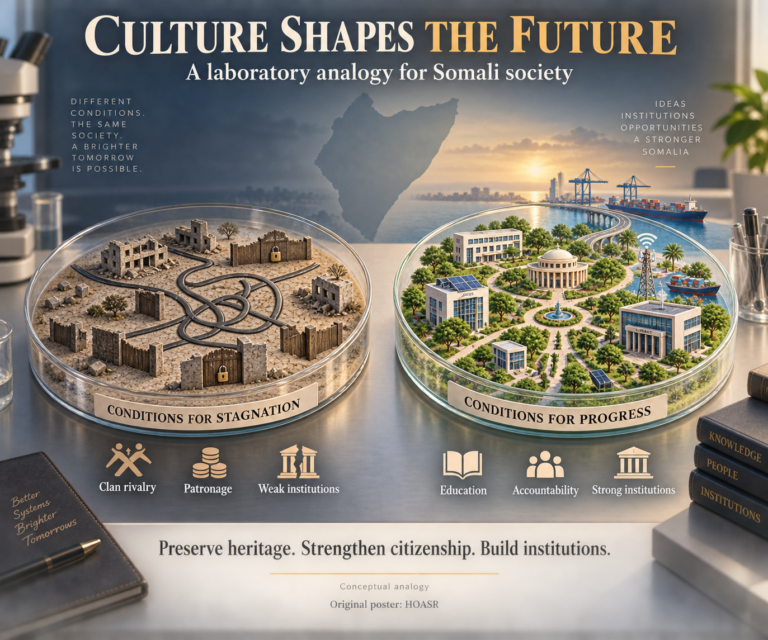
Every democracy begins from the social realities of its people. Britain did not begin with modern political parties and issue-based voting. Politics was dominated by aristocratic families, local loyalties, regional interests, and patronage networks. The United States spent much of its early history with voters strongly influenced by regional, ethnic, religious, and family loyalties. Many European democracies evolved through tribal, religious, linguistic, and regional divisions before developing stronger national political identities.
Democracy is not born perfect. It evolves.
Somaliland’s democracy emerged from a pastoral society where consultation, consensus-building, negotiation, and collective decision-making were already deeply rooted in the culture. The traditional shir system, the council of elders, and community-based dispute resolution all represent forms of participatory governance that long predate modern elections.
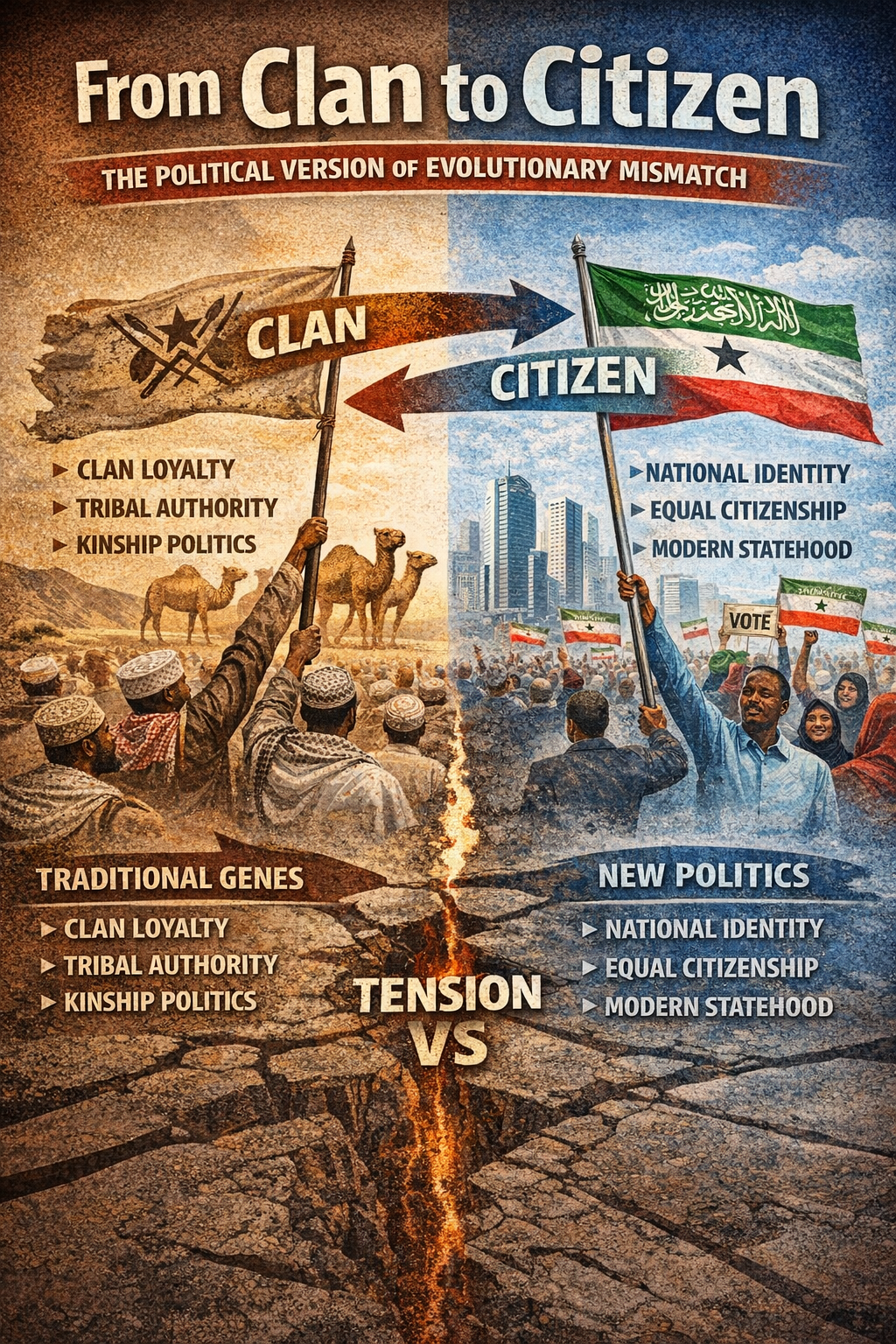
What critics call “clan voting” is, in many ways, a transitional stage between traditional social organization and modern institutional politics.
Just as Somaliland has evolved from nomadic settlements to villages, from villages to towns, and from towns to modern cities, its political culture is also evolving. Societies do not jump from one stage of development to another overnight.
Human beings themselves adapt over time. Just as populations develop biological adaptations to changing environments, societies develop political adaptations to changing economic and social realities. Political evolution follows a similar path.
The objective should not be to destroy traditional social structures through radical social engineering. The objective should be to strengthen institutions while gradually encouraging citizens to think beyond clan and focus more on policies, governance, economic development, education, healthcare, and national interests.
That responsibility belongs to everyone: government, political parties, traditional elders, religious leaders, civil society, educators, media organizations, and citizens themselves.
The remarkable achievement of Somaliland is not that it has already reached the final destination. The remarkable achievement is that democracy is already deeply embedded in society. Unlike many countries where democracy was imposed from outside and quickly collapsed, Somaliland’s democratic culture emerged organically from within its own traditions.
The answer is not to dismiss Somaliland’s democracy because it is imperfect. The answer is to improve it.
A society that possesses a functioning grassroots democratic culture has a stronger foundation than a society that has no democratic culture at all.
The challenge before Somaliland is not whether democracy works. The challenge is how to continue the transition from clan-based political mobilization toward stronger institutions, broader national identity, and more issue-based politics.
That transition is already underway. Like every successful democracy before us, Somaliland is a work in progress.
Democracy is a journey, not a destination. Somaliland is still in transit, but it is moving in the right direction.From Clan to Citizen: Can Somaliland Reconcile Culture and Statehood?

Prof. Nassir Hussein Kahin is a researcher, educator, journalist, and geopolitical analyst specializing in the Horn of Africa, the Red Sea, international law, diplomacy, and strategic affairs. To read Full Bio click on this link: ABOUT THE AUTHORProf. Nassir Hussein Kahin