By Prof. Nassir Hussein Kahin
Somalia’s latest condemnation of Somaliland’s engagement with Israel is not merely another diplomatic protest. It is a sign of strategic panic. For decades, Mogadishu and its regional allies relied on one assumption: that Somaliland could be contained through legal pressure, Arab League statements, African Union caution, and the repeated claim that “Somalia’s territorial integrity” overrides Somaliland’s political reality.
That assumption is now collapsing.
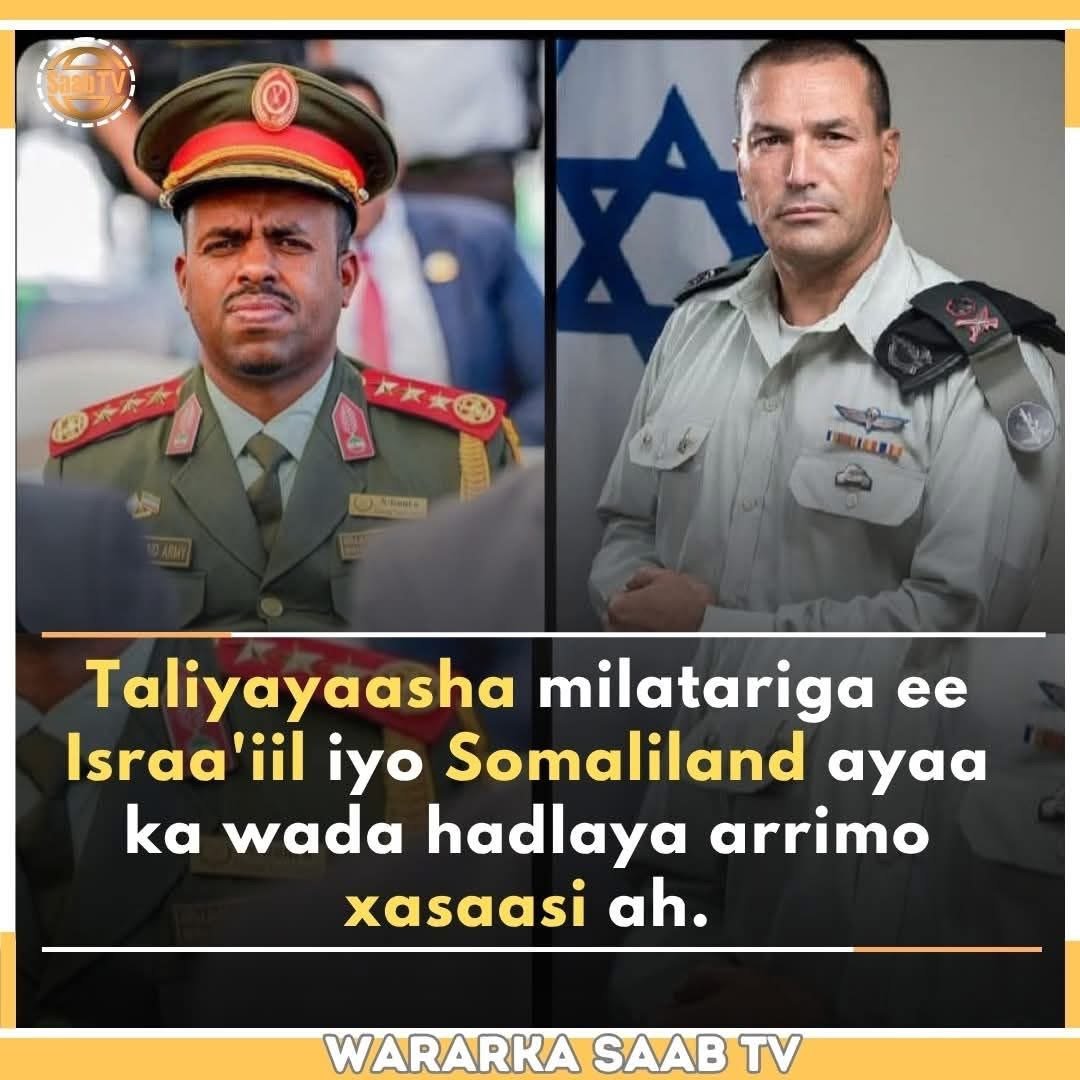
The emerging Somaliland–Israel relationship, especially its reported movement from diplomacy into defense and security cooperation, changes the strategic equation.
Once Somaliland’s recognition moved beyond symbolism and entered the realm of military coordination, Maritime Security, intelligence sharing, coastal surveillance, and Berbera-centered defense infrastructure, the cost of destabilizing Somaliland increased dramatically.
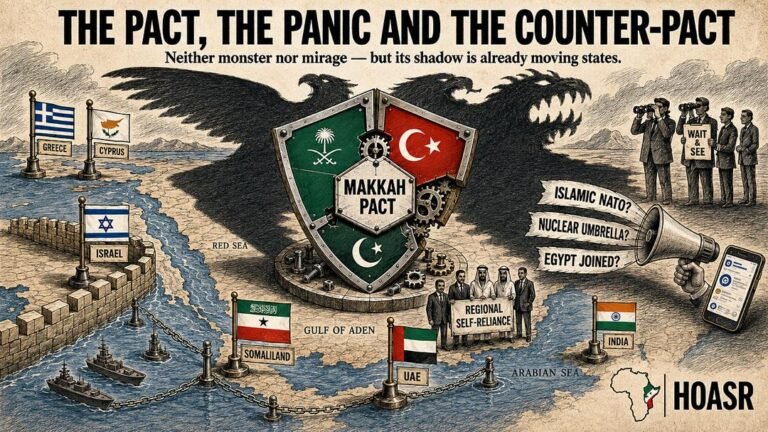
For Somalia and its allies — including Djibouti, Egypt, Turkey, China, Saudi Arabia, and Qatar — the window to isolate Somaliland may already have closed. The issue is no longer whether they approve of Somaliland’s external partnerships. The issue is whether they are prepared to confront a growing security architecture that now includes Israel, a major military power backed by the United States, and indirectly intersects with UAE strategic investments in Berbera.
That is why the current moment is so consequential.
Somalia’s statement accuses Israel of violating Somali sovereignty by engaging Somaliland outside the framework of Mogadishu. But the practical reality is that Somalia has not governed Somaliland since 1991. Somaliland has its own military, police, coast guard, elections, ports, ministries, currency, borders, and foreign partnerships.
Mogadishu’s claim remains legally recognized by many international institutions, but recognition on paper is increasingly colliding with statehood on the ground.
The reported military discussions between Israel and Somaliland are therefore more than bilateral talks. They represent deterrence.
If the reports are accurate — including discussions on Berbera Port surveillance, intelligence channels, reconnaissance systems, and special forces training — then Somaliland is entering a new security environment.
Attempts to attack Hargeisa, threaten Berbera, or fuel proxy conflict in Somaliland’s eastern and western regions would no longer be viewed only as internal Somali disputes. They could be interpreted as threats to a strategic partner positioned near the Bab al-Mandeb and the Red Sea corridor.
That is a major shift.
For Israel, the Red Sea is not peripheral. It is a national security artery. The Houthis, Iran’s regional network, maritime disruption, and threats to shipping have made the Red Sea and Bab al-Mandeb central to Israeli defense thinking.
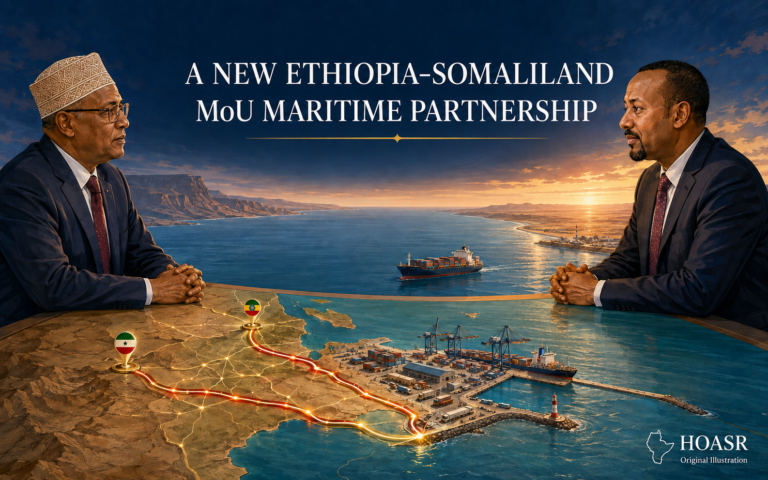
Somaliland’s coastline, especially Berbera, gives Israel a potential partner in one of the most sensitive maritime theaters in the world.
This makes destabilization of Somaliland far more dangerous for its opponents.
Djibouti may fear that Berbera’s rise weakens its monopoly as a regional port and military hub. Somalia may fear that Israel’s recognition of Somaliland creates a precedent for others. Egypt may view Somaliland through the prism of Red Sea influence, Ethiopia, and Nile politics. Turkey may see the Somaliland–Israel opening as a challenge to its entrenched position in Mogadishu. China may view the relationship through its hostility to Somaliland’s Taiwan ties and its strategic base in Djibouti. Saudi Arabia and Qatar may be pressured by Arab and Islamic political narratives, but their condemnations would likely remain rhetorical unless tied to wider regional competition.
The African Union, Arab League, and Organization of Islamic Cooperation have issued strong words before. They can condemn. They can denounce. They can call for respect for Somalia’s territorial integrity. But historically, such declarations have often had no enforcement mechanism. They have fire in language but little bite in practice.
Recognition politics rarely moves by consensus.
Kosovo’s independence was opposed by Serbia and Russia, yet many Western states recognized it because they concluded that reintegration under Belgrade was politically impossible after war, repression, and international administration. South Sudan’s independence followed a long civil war and a referendum, but even after recognition, the new state faced severe instability because diplomatic recognition alone could not build durable institutions. Eritrea’s independence was accepted after a prolonged armed struggle and referendum, while Timor-Leste emerged after occupation, violence, and international intervention.
The lesson for Somaliland is clear: recognition is never purely legal. It is geopolitical. It happens when powerful states decide that political reality, strategic interest, and moral argument outweigh the objection of the parent state.
Somaliland’s case differs from each example, but the pattern is relevant. Like Kosovo, Somaliland argues that forced reintegration is impossible after mass atrocities and the destruction of cities such as Hargeisa and Burao under the Barre regime. Like South Sudan and Eritrea, Somaliland presents itself as a people who restored sovereignty after catastrophic violence. Unlike South Sudan, however, Somaliland has already operated for more than three decades with relative internal stability, functioning institutions, elections, and territorial administration.
That is why Somalia’s current strategy looks increasingly outdated.
The greatest risks now are not legal. They are security risks.
The first risk is proxy destabilization. Opponents of Somaliland may attempt to exploit grievances in eastern regions, clan tensions, or political disputes to create the impression that Somaliland is unstable and therefore undeserving of recognition. This would be the most likely form of pressure because it allows external actors to deny direct responsibility.
The second risk is maritime provocation. Any attempt to threaten Berbera, disrupt port activity, or intimidate foreign investors would carry major consequences. The UAE has invested heavily in Berbera’s port and logistics infrastructure. Israel would likely view Berbera’s security through a Red Sea strategic lens. A threat to Berbera would therefore not remain a local Somali issue.
The third risk is diplomatic escalation. Somalia will likely intensify pressure at the UN, AU, Arab League, OIC, and IGAD. But this may produce diminishing returns. Every condemnation reminds the world that Somaliland is no longer isolated; it is now important enough to provoke regional coalitions.
The fourth risk is information warfare. Somaliland should expect intensified campaigns portraying its Israel ties as a betrayal of Muslim solidarity or as foreign occupation by proxy. This narrative will likely be pushed by actors who fear Somaliland’s recognition more than they care about Palestinian or Islamic causes. The purpose would be to inflame domestic opinion and divide Somaliland society.
The fifth risk is overconfidence inside Somaliland. Strategic partnerships do not eliminate danger. Israel’s support, UAE investment, and possible Western sympathy increase deterrence, but Somaliland must still strengthen internal unity, border security, intelligence coordination, public messaging, and political inclusion. External alliances are powerful only when matched by internal cohesion.
The central conclusion is this: Somalia and its allies may still obstruct Somaliland diplomatically, but their ability to stop Somaliland strategically is shrinking.
The Somaliland–Israel relationship has moved the issue from the paperwork of recognition to the hard terrain of power politics. Berbera is no longer just a port. It is becoming a strategic node. Hargeisa is no longer just a capital seeking recognition. It is becoming a diplomatic actor in a Red Sea security order. Somalia’s objections are no longer enough to reverse this process.
If anything, the louder the condemnations become, the clearer the new reality appears.
Somaliland has crossed a threshold. The question is no longer whether Mogadishu, Djibouti, Cairo, Ankara, Beijing, Riyadh, or Doha object. They do. The question is whether any of them can afford the consequences of trying to destabilize a Somaliland now tied to Israel’s security interests, UAE investments, and the wider strategic priorities of the Red Sea.
That is why this moment may be remembered as the point at which Somaliland stopped asking to be noticed and began to be protected.

Prof. Nassir Hussein Kahin is a researcher, educator, journalist, and geopolitical analyst specializing in the Horn of Africa, the Red Sea, international law, diplomacy, and strategic affairs. To read Full Bio click on this link: ABOUT THE AUTHORProf. Nassir Hussein Kahin