Somaliland-Taiwan-Sign-Coast-Guard-Security
By: Prof. Nassir Hussein Kahin, Political Analyst, International Affairs Writer and Managing Editor, bridging Somaliland.com
In a world dominated by geopolitical binaries and superpower rivalries, the Republic of Somaliland has taken a bold and principled stand — one that few in its position would dare to take. Against overwhelming pressure from China, Somalia, and other status quo defenders, Somaliland made a historic and unprecedented move in July 2020: it became the first African nation to establish formal bilateral ties with Taiwan, exchanging representative offices in Hargeisa and Taipei.
This was more than a diplomatic announcement — it was a foreign policy doctrine, a declaration that Somaliland would no longer allow its destiny to be dictated by old Cold War alliances, colonial-era borders, or the interests of authoritarian regimes. It marked the beginning of what is now emerging as Somaliland’s grand strategic realignment: a pivot toward democratic partners, maritime security, and multipolar sovereignty.
In 2020, China made aggressive moves to prevent Somaliland from formalizing ties with Taiwan. Beijing offered large-scale infrastructure investments, including port development, roads, and aid — on the condition that Somaliland abandon Taiwan and publicly embrace the “One China” policy.
But Somaliland, unlike many debt-trapped African states, said no.
Foreign Minister at the time, Yasin Haji Mohamoud “Faratoon,” made it clear: “Somaliland is a sovereign state. We make our own decisions.”
Somaliland’s decision to align with Taiwan wasn’t based on money or pressure. It was a values-based choice, rooted in the shared identity of two de facto nations that:
1. Are functioning democracies,
2. Have stable governments and peaceful elections,
3. Face international isolation despite meeting all the criteria for statehood.
Both Somaliland and Taiwan have been labeled as “unrecognized,” but both act as responsible global citizens — and that is exactly what has drawn them together
This bold partnership has led many analysts and policymakers in the West to refer to Somaliland as “the Taiwan of Africa.” It’s not just a metaphor — it reflects Somaliland’s strategic value as a democratic outpost in a region increasingly dominated by authoritarian influences.
Just like Taiwan, Somaliland is targeted by a larger neighbor (Somalia) that seeks to erase its existence under the guise of territorial integrity.
And just like Taiwan, Somaliland is being punished by China, which seeks to isolate it diplomatically for daring to engage with Taipei.
China, through its “One China” and “One Somalia” policy alignment, has tried to coerce countries and regional blocs (like the African Union, Arab League, and IGAD) into rejecting any formal engagement with Somaliland. But Hargeisa has held its ground, weathering political threats, economic exclusion, and disinformation campaigns.
The choice between Taiwan and China is more than diplomatic — it is ideological and generational. Somaliland sees in Taiwan:
1. A model of democratic resilience,
2. A partner who respects sovereignty,
3. And a gateway to Western alliances, including the U.S., Japan, and the EU.
In contrast, China and Russia represent a different future: one marked by:
1. Authoritarianism,
2. Debt-trap diplomacy,
3. Censorship, and
4. Support for corrupt regimes, including those that deny Somaliland’s right to exist.
Somaliland’s leadership has made a strategic calculation: It is better to partner with a small but principled democracy like Taiwan than with large authoritarian powers who exploit African nations for resources and strategic gain.
One of the most significant benefits of the Somaliland-Taiwan alliance is the indirect bridge it builds to Washington.
The U.S. is Taiwan’s most important strategic partner, and under bipartisan support, America has increased diplomatic, military, and economic ties with Taipei. Through its relationship with Taiwan, Somaliland now has an indirect channel to U.S. lawmakers, think tanks, and development agencies.
Already, this has borne fruit:
1. In May 2025, Somaliland’s Foreign Minister visited Washington, where he met with U.S. Senators and House members to advocate for stronger bilateral ties.
2. The Taiwanese Representative Office in Washington D.C. has included Somaliland in regional policy briefings and strategic dialogues.
3. U.S. think tanks, such as the Hudson Institute and the Heritage Foundation, have published favorable assessments of Somaliland’s stability and democratic credentials.
Most importantly, Taiwan’s International Cooperation and Development Fund (Taiwan ICDF) is already operational in Somaliland — offering medical aid, education support, and agricultural development programs that mirror U.S. development priorities in Africa.
Somaliland’s bold stance has not come without consequences:
1. Somalia, emboldened by Chinese and Arab League backing, has aggressively campaigned to isolate Somaliland diplomatically.
2. The African Union continues to reject Somaliland’s requests for observer status, choosing to defend a crumbling post-colonial order rather than support functioning African democracies.
3. China has blocked Somaliland from key economic opportunities in East Asia and tried to intimidate nations considering relations with Hargeisa.
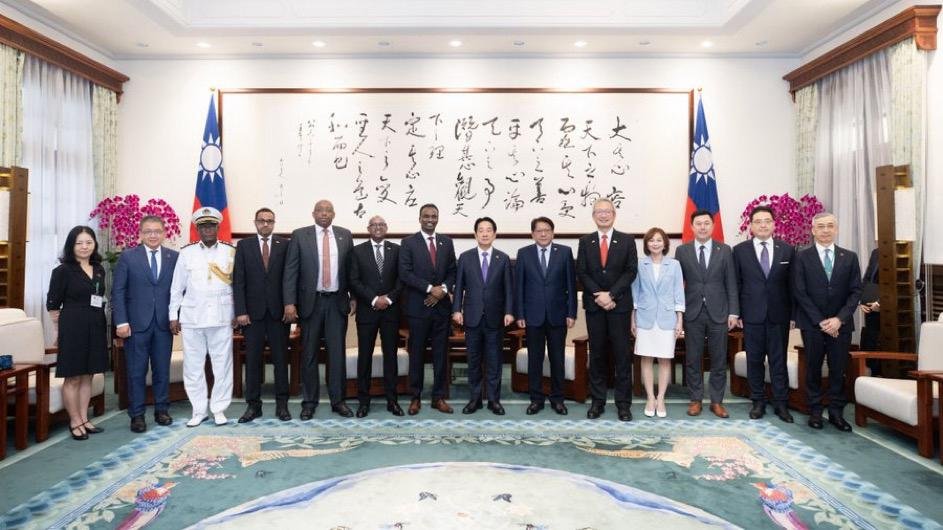
Yet, despite all this, Somaliland has remained resilient — holding peaceful elections, defending its territory, and now launching joint maritime operations with Taiwan’s Coast Guard, as signed this day, the 24th of July 2025 in Taipei.
Somaliland is no longer waiting for recognition — it is earning it, step by step, agreement by agreement, partner by partner.
By aligning with Taiwan, Somaliland is not only rejecting Chinese and Somali coercion; it is rewriting the rules of African diplomacy. It is proving that democratic legitimacy, not geopolitical convenience, should define sovereignty.
This strategy — built on courage, clarity, and conviction — is drawing the attention of the U.S., Europe, and other democratic powers looking for trusted partners in a fragile and contested region.
And in that sense, Somaliland is doing more than protecting itself —
It is becoming a beacon for Africa’s democratic future.
Please have your say and submit your opinion below:
[user-submitted-posts]
About the Author
