By Prof. Nassir Hussein Kahin
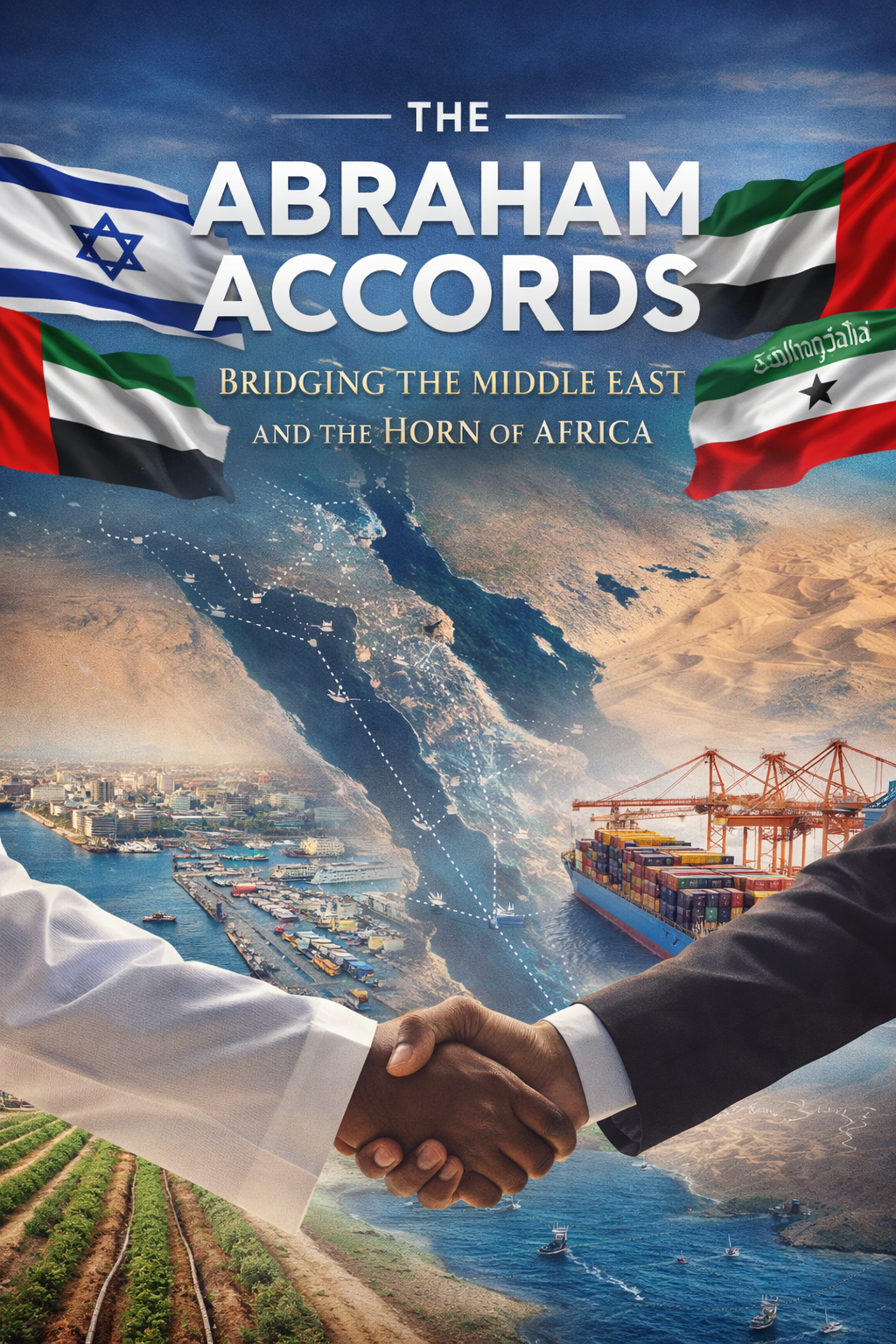
The Abraham Accords changed how countries in the Middle East deal with each other. Instead of focusing on conflict, they began working together on trade, security, and development. But this change is not staying only in the Middle East. It is now starting to reach the Horn of Africa—and one important step could shape the future: Israel recognizing Somaliland.
This would not just be a symbolic decision. It would have real effects on trade, security, and cooperation between regions.
From Agreements to Real Cooperation
The Abraham Accords showed that countries can move past old problems and work together based on shared interests. Israel and several Arab countries opened new relationships that focus on business, technology, and safety.
Now the same idea can grow beyond the Middle East. The next important area is the Red Sea region, which connects the Middle East to Africa.
Why Somaliland Is Important
Somaliland is located along the Gulf of Aden, near one of the busiest sea routes in the world. For over 30 years, it has had:
- Its own government
- Regular elections
- Relative peace compared to the region
Even with this progress, it is still not widely recognized as a country.
However, as Israel recently recognized Somaliland, it could:
- Help Somaliland gain more international attention
- Encourage other countries to build relations with it
- Strengthen cooperation along the Red Sea
This would be an important step not only for Somaliland, but for the region as a whole.
The Red Sea Matters to Everyone
The Red Sea is one of the most important routes for global trade. Ships carrying goods between Europe, Asia, and Africa pass through it every day.
But the area also faces problems:
- Armed groups threatening ships
- Political tensions
- Competition between global powers
If Israel works with partners on both sides of the Red Sea, including Somaliland, it can help improve safety and stability in this key area.
New Opportunities for Trade and Business
Somaliland’s Berbera port is becoming more important for trade. With support and investment, it can grow into a major hub connecting Africa to the Middle East and beyond.
If Israel becomes involved, it could bring:
- Better technology for managing ports
- Faster and safer trade systems
- Links to global markets
Together with investment from Gulf countries, this could create strong trade connections that benefit many countries.
Improving Agriculture and Water Supply
One of the biggest challenges in the Horn of Africa is water shortage and food insecurity. This is where Israel has strong experience.
Israel is known for:
- Saving water through smart irrigation
- Turning dry land into farmland
- Using technology to grow more food with less resources
If Somaliland and the region work with Israel, they could:
- Improve farming
- Reduce drought impact
- Strengthen food security
This would directly improve people’s lives.
Working Together on Security
The Middle East and the Horn of Africa face many of the same security problems. These include:
- Armed groups
- Smuggling and piracy
- Regional tensions
If Israel recognizes Somaliland, it can open the door to:
- Sharing information
- Training and support
- Better protection of sea routes
Working together can make the whole region safer.
Challenges to Expect
This kind of decision will not be easy. There will be:
- Opposition from Somalia
- Political pressure from other countries
- Debate in international organizations
But many major decisions in history faced challenges before they succeeded.
Conclusion: A New Connection Between Regions
The Abraham Accords started a new way of thinking—working together instead of staying divided.
The recent Israel recognition of Somaliland, could:
- Strengthen ties between the Middle East and the Horn of Africa
- Improve trade and economic growth
- Help create more stability in an important part of the world
This is not just about one country recognizing another.
It is about building new connections between regions that depend on each other.
And in today’s world, those connections matter more than ever.
About the Author
