By Prof. Nassir Hussein Kahin
A major challenge confronting Somaliland today is the growing tendency by some political actors and religious voices to frame foreign policy questions through a purely religious lens rather than through the realities of national strategic interest and statecraft.
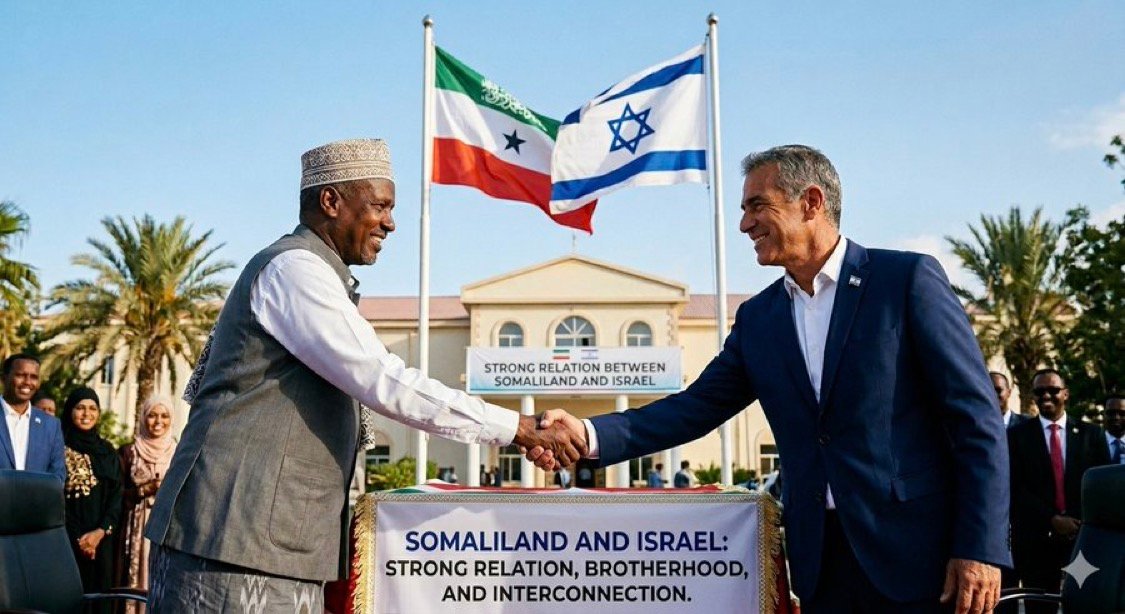
Recent debates surrounding Somaliland’s diplomatic engagement with Israel, including discussions about diplomatic representation and bilateral cooperation, have generated strong reactions across the region. These debates intensified following public statements by Somalia’s President, political leaders and some religious figures in Somalia during the recent Eid al-Adha period, further inflaming emotions and deepening political polarization.
Somalilanders should approach these developments with wisdom, restraint, and confidence.
Throughout its history, Somaliland has been a society deeply rooted in Islam. The nation’s religious identity has never been in question. Equally true, however, is that the primary responsibility of any government is to protect its people, advance their prosperity, strengthen national security, and pursue diplomatic relationships that serve the country’s interests.
International diplomacy is not a theological exercise. It is an instrument of statecraft.
Nations maintain relations with countries that differ in religion, ideology, political systems, and culture. Across the Muslim world, governments maintain diplomatic, economic, and security relationships with states of various faiths and political traditions. Such engagement does not require abandoning religious principles, nor does it diminish a nation’s religious identity.
The people of Somaliland should therefore be cautious whenever political disagreements are presented as religious obligations or whenever complex international diplomatic questions are reduced to emotional slogans or rhetorical statements. History demonstrates that mixing partisan politics with religious authority can create unnecessary divisions within society and distract attention from the real issues confronting a nation.
The central question for Somaliland is not whether a potential diplomatic partner belongs to one religion or another. The central question is whether a relationship advances Somaliland’s security, economic development, international recognition, and long-term national interests.
Citizens are entitled to debate foreign policy. Scholars, religious leaders, politicians, and ordinary citizens all have the right to express their views. Such debate is healthy in a democratic society.
However, no group should be permitted to monopolize patriotism, define political disagreement as religious disloyalty, or undermine national unity through inflammatory rhetoric. Somaliland’s future will be determined through democratic institutions, constitutional processes, and careful strategic judgment—not through fear, intimidation, or attempts to turn diplomatic policy into a test of religious faith.
The resilience that carried Somaliland through war, reconstruction, and three and a half decades of self-governance without foreign aid or peacekeeping troops must now also protect the nation from internal polarization. A confident nation like Somaliland does preserve its religious identity and can simultaneously engage with the wider world and Somaliland will continue to do both.
Somaliland’s foreign policy must always be guided by one principle above all others: the national strategic interest of Somaliland.
The purpose of diplomacy is not to please foreign governments.
The purpose of diplomacy is to advance Somaliland’s security, prosperity, development, and global recognition .
At the same time, Somalilanders must be alert to attempts by external and internal actors to divide the nation.
Citizens have every right to debate those decisions. That is the essence of Democracy.
But no one should seek to divide Somalilanders by suggesting that patriotism belongs exclusively to one group or that political disagreements should be transformed into religious conflicts.
The enemies of Somaliland’s progress would welcome such divisions Somalilanders should reject them. The lesson of the past thirty-five years is clear.
Whenever Somaliland has remained united, it has advanced. Whenever Somaliland has allowed internal divisions to dominate, progress has slowed.
The next phase of Somaliland’s journey will require the same wisdom that carried previous generations through war and reconstruction.
The struggle that defined the last thirty-five years was the struggle for sacrifice and survival. Somaliland cannot turn the clock back. It cannot afford a set back.
The challenge that will define the next thirty-five years is the management of success.
International Recognition may come gradually or suddenly.
New partnerships may emerge.
New opportunities may arise.
New pressures will undoubtedly follow.
But the principles that carried Somaliland this far must remain unchanged: unity, resilience, self-reliance, democracy, and an unwavering commitment to the national strategic interest.
The generation that restored Somaliland’s sovereignty gave the nation a foundation.
The responsibility of the present generation is to build upon it.
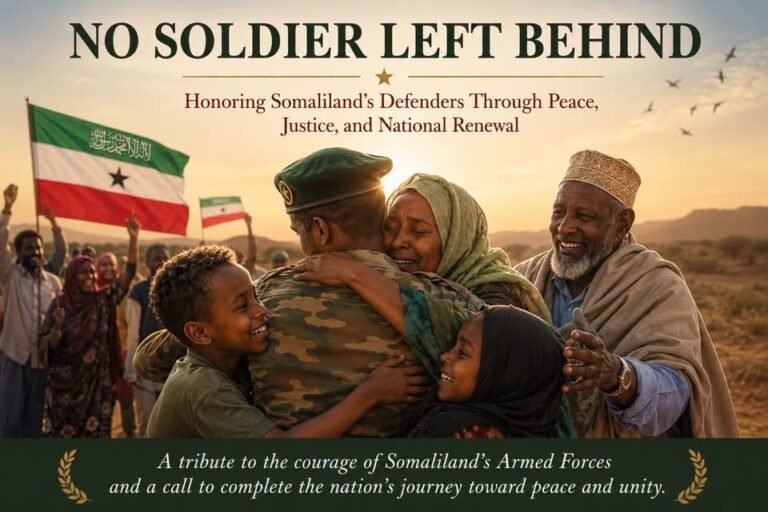
As Somaliland enters its thirty-sixth year, let us celebrate not only what has been achieved, but also what remains possible.
Let us remember the sacrifices of those who came before us.
Let us protect the peace they built. Let us approach the future with confidence rather than fear.
And let us never forget that recognition may open doors, but resilience is what carried Somaliland to those doors in the first place.
Recognition remains the goal. Recognition is the destination.
Resilience remains the path. Resilience is the means to reach that goal.
Together, they define Somaliland’s future.
As Somaliland seeks greater international engagement and recognition, its people must remain united around a simple principle: religion should continue to guide personal morality and social values, while foreign policy should be guided by the national strategic interest.