Recognition, Risk, and the Red Sea: Why Somaliland’s Israel Gamble Is Different From All the Others.
By Prof. Nassir Hussein Kahin
For thirty-five years, Somaliland has lived with risk.
Risk is not new to Somaliland. Risk is the story of Somaliland.
The restoration of Somaliland’s sovereignty in 1991 was itself a risk. Rebuilding a nation from the ashes of civil war without international recognition was a risk. Holding democratic elections in one of the world’s most unstable regions was a risk. Establishing independent institutions while neighboring Somalia remained trapped in cycles of conflict was a risk. Building partnerships with Ethiopia, the UAE, Taiwan, and now Israel were all risks.
Yet Somaliland has survived them all.
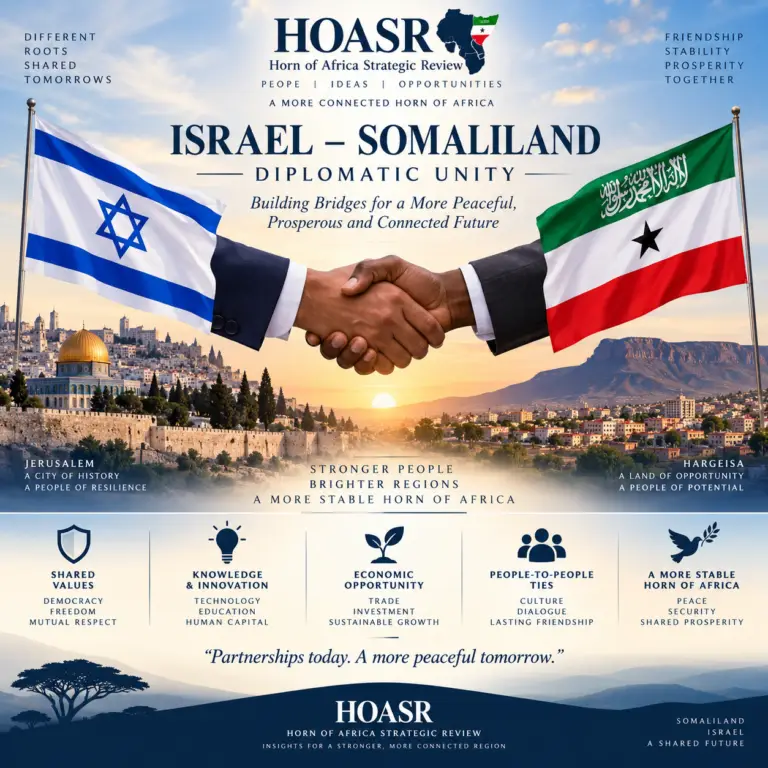
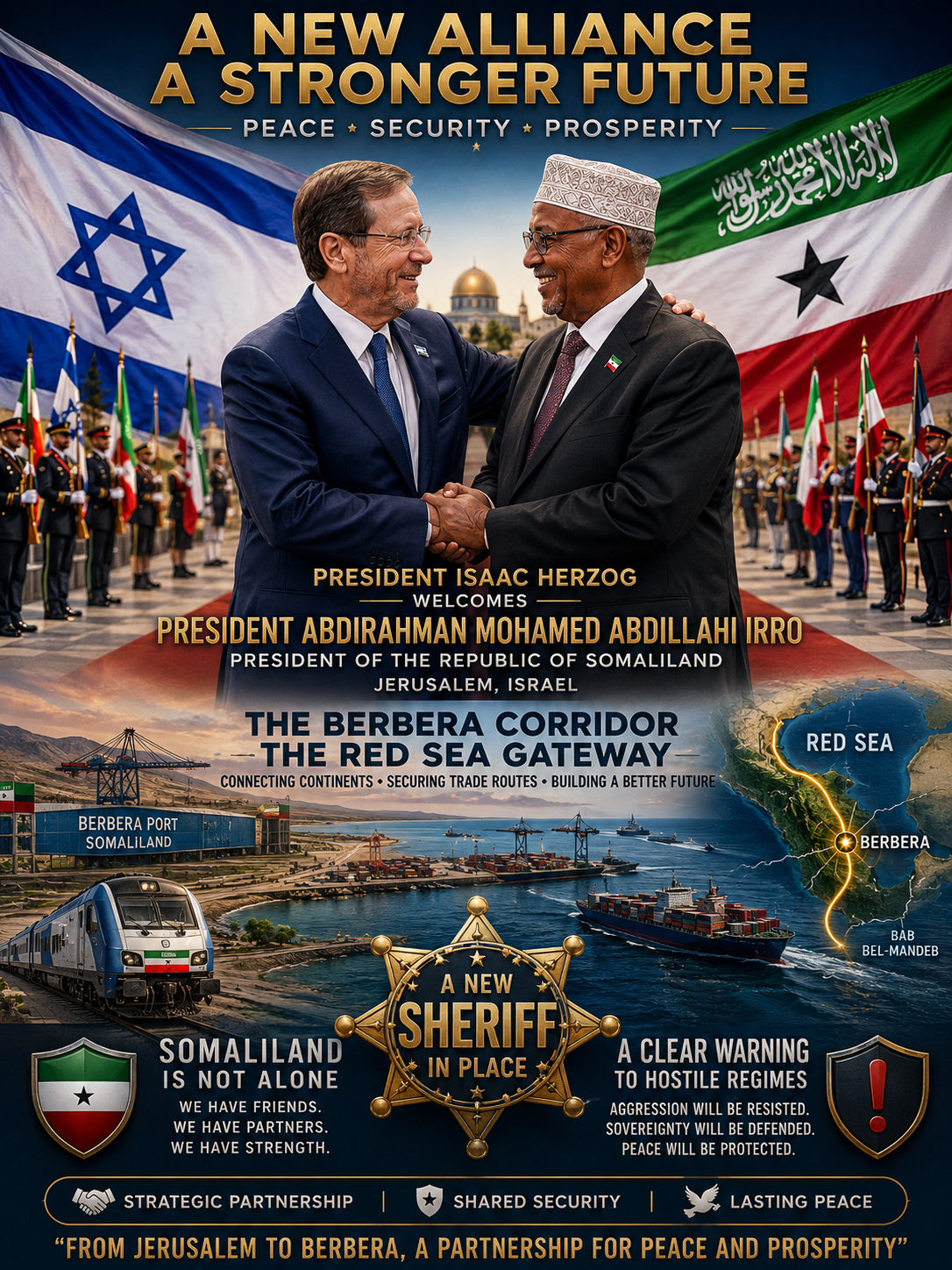
Today, critics of President Abdirahman Mohamed Abdillahi Irro’s historic visit to Israel warn that Somaliland is taking an unnecessary gamble. They argue that aligning itself with Israel amid a volatile Middle East could provoke diplomatic backlash from Somalia, Arab states, Islamist groups, and regional powers.
They are correct about one thing.
There will be backlash.
There always has been.
The more important question is whether avoiding risk has ever brought Somaliland closer to reclaiming the international status it voluntarily surrendered in 1960.
The answer is no.
For three and a half decades, Somaliland pursued a cautious approach. It built democratic institutions, maintained relative peace, secured its borders, conducted elections, transferred power peacefully, and repeatedly appealed to the international community through diplomacy and legal arguments.
Yet despite fulfilling nearly every traditional requirement of statehood, recognition remained elusive.
The lesson was becoming increasingly obvious.
The recognition question was never solely about law.
It was about geopolitics.
And geopolitics is changing.
President Irro’s visit to Jerusalem comes at a moment when the strategic map of the Red Sea is being redrawn before the eyes of the world.
The war involving Israel, Iran, and Tehran’s regional allies has transformed Maritime Security into a top priority for major powers. The Houthi campaign against commercial shipping has demonstrated how vulnerable global trade routes remain. The Bab El-Mandeb Strait has become one of the most contested waterways on Earth.
For Israel, the Red Sea is no longer a secondary theater.
It is a national security priority.
For the United States, China’s growing influence in Djibouti and the Horn of Africa has raised concerns about future military and economic competition across the region.
For Gulf states, control of ports, logistics corridors, and maritime routes has become central to national strategy.
And for Somaliland, geography has suddenly become one of its greatest diplomatic assets.
For decades, Berbera was viewed primarily as a commercial port.
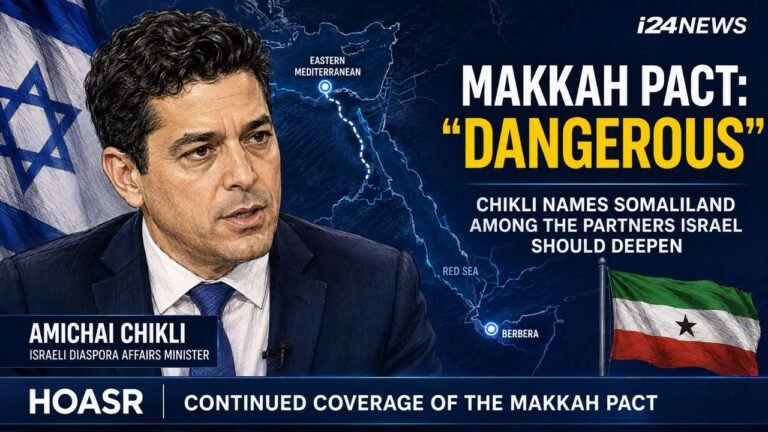
Today, strategic planners increasingly view it as part of a larger security architecture stretching from the Mediterranean to the Indian Ocean.
Think tanks from Washington to London have begun openly discussing Somaliland within the context of Red Sea security, maritime stability, counterterrorism, and great-power competition.
This marks a profound shift.
Somaliland is no longer being discussed merely as a humanitarian or development issue.
It is increasingly being discussed as a strategic actor.
Israel’s recognition accelerated that transition.
The significance of President Irro’s visit is therefore not simply that a Somaliland president is visiting Israel.
It is that a recognized relationship is now being institutionalized through state visits, diplomatic engagement, economic discussions, and strategic cooperation.
Recognition has moved from theory to practice.
The implications extend far beyond bilateral relations.
In Mogadishu, officials understand that Israel’s recognition has broken an important psychological barrier. The long-standing assumption that no country would ever be willing to recognize Somaliland has now been shattered.
Whether one country recognizes Somaliland or twenty, the precedent has been established.
That reality changes calculations in Washington, London, Addis Ababa, Abu Dhabi, Taipei, and elsewhere.
Countries that previously hesitated because they feared being first no longer face that obstacle.
Israel has already crossed that line.
The visit also highlights a broader truth that many Somalilanders understand instinctively.
The pursuit of recognition has never been risk-free.
When Somaliland rejected dictatorship, it faced war.
When it restored sovereignty, it faced isolation.
When it partnered with Ethiopia, it faced criticism.
When it welcomed Emirati investment in Berbera, it faced opposition.
When it established relations with Taiwan, it faced Chinese pressure.
Now, as it deepens ties with Israel, it faces another challenge.
But each step has followed the same logic.
A nation that believes in its sovereignty cannot indefinitely allow others to determine its foreign policy choices.
Like every state, Somaliland must decide its relationships based on its national interests.
Not Somalia’s interests.
Not Turkey’s interests.
Not China’s interests.
Not Djibouti’s interests.
Not Egypt’s interests.
Not the interests of any regional bloc.
Its own.
That does not mean Somaliland should abandon diplomatic caution. Nor does it mean that every strategic partnership automatically advances recognition.
The challenge for Somaliland’s leadership is to ensure that new relationships generate tangible benefits for citizens through investment, technology transfer, education, infrastructure development, security cooperation, and expanded diplomatic support.
Recognition cannot become an end in itself.
It must translate into national advancement.
Nevertheless, President Irro’s visit may ultimately be remembered as one of the most consequential diplomatic moments since 1991.
Not because it guarantees further recognition.
No one can guarantee that.
But because it signals that Somaliland is no longer waiting passively for history to unfold.
It is actively positioning itself within the emerging geopolitical architecture of the Red Sea.
For a nation that has spent thirty-five years navigating uncertainty, that may be the greatest lesson of all.
Somaliland did not survive because it avoided risk.
It survived because it learned how to manage it.
And in a world where strategic relevance increasingly matters as much as historical justice, that distinction could make all the difference. The Beginning of the End for the One-Somalia Policy?

Prof. Nassir Hussein Kahin is a researcher, educator, journalist, and geopolitical analyst specializing in the Horn of Africa, the Red Sea, international law, diplomacy, and strategic affairs. To read Full Bio click on this link: ABOUT THE AUTHORProf. Nassir Hussein Kahin