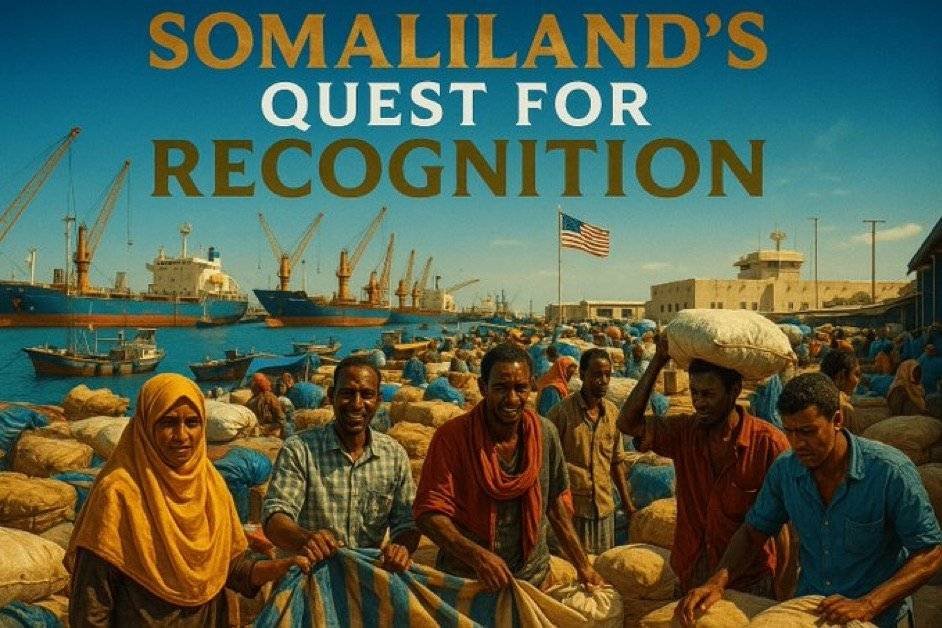
Somaliland's Quest for Recognition
By Nassir Hussein Kahin
For thirty-five years, Somaliland waited at the gates of the international system.
It built peace where others predicted collapse. It held elections where others expected war. It preserved order in one of the world’s most unstable regions. Yet despite all this, Somaliland remained unrecognized.
Now, after decades of diplomatic struggle, Somaliland has achieved one of the most consequential breakthroughs in its modern history: formal recognition by Israel and the opening of Somaliland’s embassy in Jerusalem.
This moment should have united the nation.
Instead, it has exposed a dangerous internal battle between truth and propaganda, diplomacy and incitement, national interest and political opportunism.
Every Somaliland president since 1991 made international recognition a top priority. Former President Muse Bihi Abdi came close through the Ethiopia-Somaliland MoU, which raised the possibility of recognition in exchange for strategic access to the Red Sea. Yet that agreement became controversial because its details were not fully disclosed, and opposition figures demanded parliamentary scrutiny.
Now, the same pattern is repeating itself.
Some political figures who once demanded recognition now criticize the very diplomatic breakthrough that delivered it. Former President Muse Bihi welcomed Israel’s recognition, yet later complained that he had not been sufficiently consulted. KAAH Party Chairman Maxamuud Xaashi publicly criticized the embassy’s opening in Jerusalem. Others questioned why the embassy was not opened in Tel Aviv.
These criticisms ignore one basic diplomatic fact: the location of an embassy is negotiated within the framework accepted by the host country that grants recognition. Somaliland did not force Israel to recognize it. Israel recognized Somaliland, and Somaliland opened its mission in the capital recognized by the host government.
More importantly, the embassy is located in West Jerusalem, not East Jerusalem where Al-Aqsa Mosque is located. That distinction is essential. East Jerusalem contains major Islamic holy sites and remains at the center of the Israeli-Palestinian dispute. West Jerusalem has been under Israeli administration since 1948. Those who deliberately blur this distinction are not informing the public; they are inflaming it.
Somalilanders and Palestinians have no historic conflict. Supporting Somaliland’s recognition is not an attack on Palestinian aspirations. President Abdirahman Mohamed Abdillahi Irro’s position is clear: he was elected to secure recognition, sovereignty, development, and international partnerships for the people of Somaliland. He was not elected to sacrifice Somaliland’s future to satisfy foreign ideological agendas.
The most dangerous propaganda today is the attempt to turn diplomacy into religious betrayal.
Some clerics and political activists are spreading antisemitic narratives while misusing religious language. Others claim that learning Israel’s history, or Israeli technology is “indoctrination.” Some even circulate false claims about Jewish temples being planned in Somaliland cities.
This is not criticism. It is incitement.
Education is not indoctrination. Diplomatic engagement is not religious betrayal. Learning about Israel does not make Somaliland less Muslim. It makes Somaliland more informed, more capable, and more prepared to engage the world.
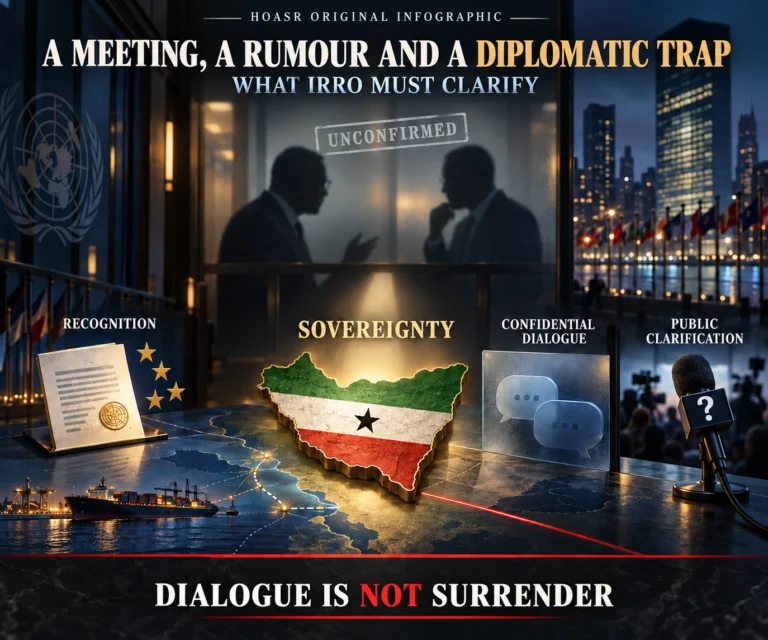
Why Democracies Do Not Negotiate National Security in Public
One of the greatest misconceptions in democratic politics is the belief that every major foreign policy initiative must first be debated publicly before it is undertaken.
History demonstrates precisely the opposite.
The world’s oldest and strongest democracies routinely conduct their most sensitive diplomatic negotiations behind closed doors—not because they reject Democracy, but because they understand that diplomacy and national security often require confidentiality before they require publicity.
The United States provides countless examples.When President Richard Nixon secretly prepared his historic opening to the People’s Republic of China in 1971, almost nobody in Congress knew the details. National Security Adviser Henry Kissinger secretly travelled to Beijing through Pakistan under extraordinary secrecy before President Richard Nixon publicly announced his visit. Had every detail been debated publicly beforehand, numerous governments opposed to closer U.S.-China relations could have mobilized diplomatic pressure to derail the initiative before it ever materialized.
Likewise, the Camp David Accords between Egypt and Israel were negotiated through highly confidential diplomacy before being presented to legislatures and the public. The success of those negotiations depended upon discretion, trust, and limited knowledge among only a handful of senior officials.
The same principle guided the secret negotiations that eventually produced the Oslo Accords between Israel and the Palestine Liberation Organization (PLO). Public negotiations would almost certainly have collapsed under political pressure before agreements were reached.
More recently, negotiations surrounding the Abraham Accords between Israel and several Arab states were conducted quietly for months before official announcements were made. Leaders understood that premature disclosure would have allowed domestic opponents, regional rivals, extremist organizations, and foreign intelligence services to organize campaigns aimed at preventing normalization.
The United Kingdom follows similar practices. Although Parliament exercises oversight over government policy, British governments have long relied upon confidential diplomacy conducted by the Foreign, Commonwealth & Development Office together with intelligence agencies before announcing major foreign policy initiatives. Parliament debates agreements after governments have negotiated them—not while sensitive negotiations are still underway and vulnerable to foreign interference.
The reason is simple: Foreign policy is unlike domestic legislation.
Every public statement is carefully monitored not only by journalists and opposition politicians but also by foreign governments, intelligence agencies, military planners, terrorist organizations, cyber operators, and strategic competitors. Every parliamentary debate, leaked document, or social media post can provide adversaries with valuable intelligence about a government’s negotiating position, internal divisions, or political vulnerabilities.
This principle becomes even more important when a government is dealing with one of the world’s most politically sensitive countries.
Israel remains one of the most heavily scrutinized and contested diplomatic actors in international politics. Any government considering new relations with Israel immediately attracts attention from regional rivals, ideological opponents, activist organizations, intelligence services, and foreign governments with competing strategic interests. Under such circumstances, confidentiality is not evidence of secrecy for its own sake. It is a fundamental instrument of pragmatic statecraft.
The bigger question is national security.
Somaliland’s recognition threatens many interests. Somalia’s political establishment loses if Somaliland gains more recognition. Regional actors such as Turkey, Egypt, Djibouti, Qatar, Saudi Arabia, and China may each have reasons to oppose Somaliland becoming an independent diplomatic player aligned with Israel, Taiwan, Ethiopia, the United States, or Western strategic interests in the Red Sea.
That is why internal propaganda should not be viewed as isolated noise. It may serve the interests of outside forces that want Somaliland divided from within.
Had President Irro publicly disclosed every step of Somaliland’s contacts with Israel before recognition or afterwards, Somaliland’s enemies would have had time to sabotage the process. Confidentiality was not betrayal. It was excellent diplomacy.
Now that recognition has been achieved, President Irro did communicate his responsibility better. He explained what agreements were signed, what sectors will benefit, and how Somaliland will protect its Islamic identity while expanding international partnerships.
Somaliland’s opposition parties also have a responsibility. They may criticize policy. They may demand transparency. They may question implementation. But they must not feed hysteria, religious incitement, Antisemitism, or anti-recognition sabotage.
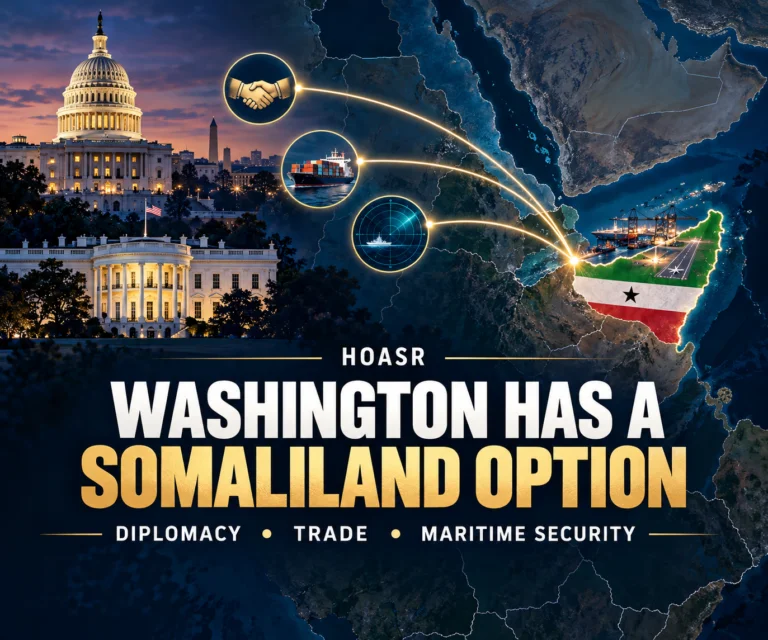
The people of Somaliland overwhelmingly support recognition. They know what thirty-five years of diplomatic isolation have cost them. They know that recognition can open doors in trade, investment, agriculture, water technology, cybersecurity, education, health, Maritime Security, and international finance. As President Irro publicly disclosed, these were the major priorities signed under the Jerusalem Agreements and all of the cabinet ministers endorsed it without a NO vote.
The winners of Somaliland-Israel relations are the citizens of Somaliland. The losers are those who want Somaliland isolated, dependent, divided, and trapped under the failed illusion of “One Somalia.”
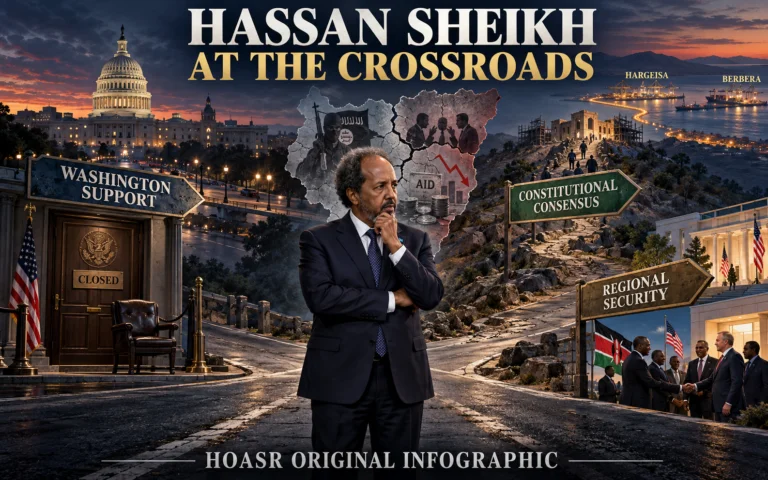
Somaliland stands today at a historic crossroads.
One path leads to diplomatic maturity, strategic partnerships, international legitimacy, and deeper engagement with countries willing to treat Somaliland as a sovereign state.
The other path leads back to isolation, emotional manipulation, religious incitement, and political sabotage.
The flag in Jerusalem is not a symbol of betrayal.
It is a symbol of arrival. It tells the world that Somaliland is no longer waiting passively outside the gates of diplomacy. It is entering the system, building partnerships, and forcing the world to confront a reality that has existed since 1991: Somaliland is a functioning state, and its people have the right to international recognition.
The task now is to protect that achievement.
Somaliland must deepen engagement with Israel in agriculture, water technology, cybersecurity, education, health, innovation, maritime security, and investment. It must also continue outreach to Africa, the United States, Europe, Taiwan, Ethiopia, the Gulf, and every country willing to treat Somaliland as a serious partner. Recognition is not won by fear. It is won by strategy.
The enemies of Somaliland understand what is at stake. That is why they want division inside Somaliland’s borders. They know that if Somaliland remains united, disciplined, and diplomatically focused, recognition will not stop with Israel.
The choice is now before the nation: propaganda or truth, fear or strategy, isolation or recognition. Somaliland waited thirty-five years for this moment. It must not allow those who failed to deliver recognition to now sabotage those who finally did.
Prof. Nassir Hussein Kahin is a researcher, educator, journalist, and geopolitical analyst specializing in the Horn of Africa, the Red Sea, international law, diplomacy, and strategic affairs. To read Full Bio click on this link: ABOUT THE AUTHORProf. Nassir Hussein Kahin