From Diplomatic Inertia to Strategic Reality
By Nassir Hussein Kahin
For more than three decades, the United States has maintained a policy toward Somaliland that increasingly reflects diplomatic inertia rather than geopolitical reality. During that time, Somaliland transformed itself from the ruins of civil war into one of Africa’s most stable democratic societies, while the strategic value of the Horn of Africa grew exponentially. Yet Washington largely remained committed to a framework inherited from another era.
Today, that consensus is beginning to fracture.
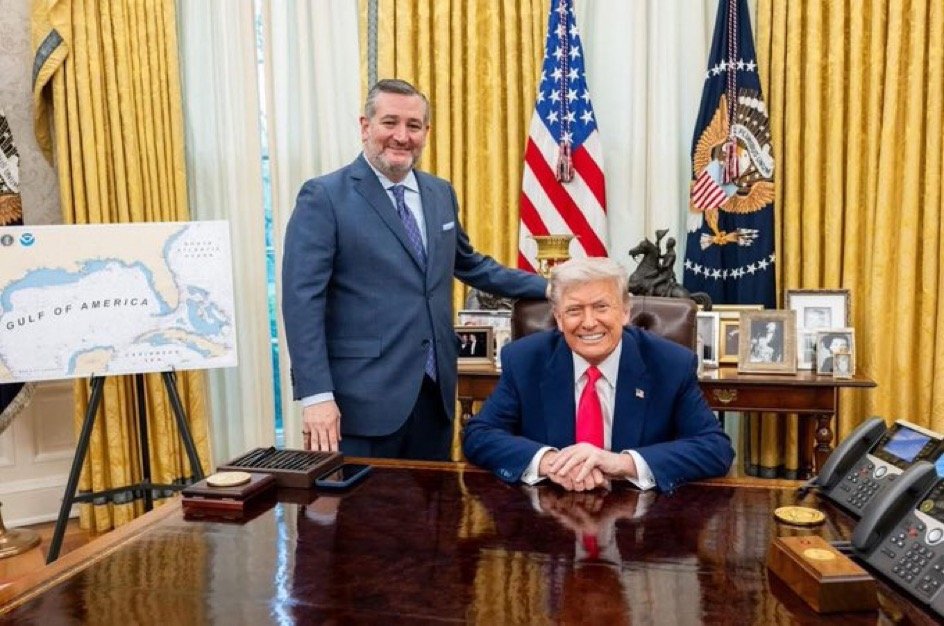
At the forefront of this shift stands Senator Ted Cruz, one of the most influential voices in the United States Senate on foreign policy. His advocacy for Somaliland represents far more than support for a long-overlooked African Democracy. It signals the emergence of a broader strategic doctrine—one that argues American foreign policy should reward proven democratic partners, confront authoritarian expansion, and align diplomacy with geopolitical realities rather than outdated assumptions.
If adopted, this doctrine could fundamentally reshape U.S. engagement across the Horn of Africa and the Red Sea.
From Diplomatic Inertia to Strategic Reality
For decades, American policy has officially recognized Somalia’s territorial integrity while quietly acknowledging Somaliland’s remarkable achievements in governance, security, and democratic development.
The contradiction has become increasingly difficult to justify.
Since restoring its sovereignty in 1991, Somaliland has established functioning democratic institutions, held multiple competitive elections, achieved peaceful transfers of power, maintained internal stability, secured thousands of kilometers of coastline, and emerged as a dependable partner in counterterrorism and Maritime Security. Unlike many internationally recognized states, Somaliland has earned legitimacy through performance rather than diplomatic recognition.
Senator Cruz argues that American policy should finally recognize this reality.
His central premise is straightforward: countries that consistently demonstrate democratic resilience, strategic reliability, and responsible governance should not remain indefinitely excluded from the international system merely because of outdated diplomatic conventions.
A Historic Letter That Changed the Conversation
The defining moment in Cruz’s advocacy came when, as Chairman of the Senate Foreign Relations Subcommittee on Africa and Global Health Policy, he sent a personal letter to President Donald J. Trump urging the formal recognition of the Republic of Somaliland within its internationally recognized 1960 borders.
The letter was remarkable not simply because it supported Somaliland, but because it framed recognition as a strategic American interest rather than an act of diplomatic charity.
Cruz argued that Somaliland had already demonstrated every characteristic Washington seeks in its closest partners.
He pointed to Somaliland’s democratic governance, peaceful political transitions, effective security institutions, commitment to counterterrorism, protection of international shipping lanes, partnership with Taiwan, expanding relations with Israel, support for the Abraham Accords, and willingness to deepen defense cooperation with the United States.
He further noted Somaliland’s strategic mineral potential and the opportunity to strengthen resilient supply chains independent of hostile powers. In essence, Cruz challenged Washington to recognize a partner that had already proven itself.
Confronting the Chinese Communist Party
Perhaps the most significant aspect of Cruz’s argument was its explicit geopolitical dimension. He warned that the Chinese Communist Party has sought to isolate Somaliland diplomatically because of its close relationship with Taiwan and its refusal to submit to Beijing’s pressure. For years, Cruz has been one of Congress’s most outspoken critics of the CCP.
He has consistently introduced and supported legislation aimed at countering Chinese military expansion, technological espionage, economic coercion, intellectual property theft, and growing influence across Africa, Latin America, and the Indo-Pacific. Viewed through this broader lens, Somaliland occupies a critical position.
Recognition would strengthen one of the few democratic partners in the Horn of Africa while simultaneously limiting Beijing’s ability to dominate one of the world’s most important maritime corridors. For Cruz, Somaliland is therefore not merely an African issue. It is part of the wider strategic competition defining the twenty-first century.
The Red Sea Has Become the World’s New Strategic Center
The timing of Cruz’s advocacy is no coincidence.The geopolitical importance of the Horn of Africa has never been greater. The Bab El-Mandeb Strait connects the Mediterranean Sea to the Indian Ocean through the Suez Canal and carries nearly one-third of global container traffic and a substantial share of international energy shipments.Recent Houthi attacks against commercial shipping have demonstrated how vulnerable this corridor has become.
Meanwhile, China has established its first overseas military base in neighboring Djibouti. Turkey has dramatically expanded its military footprint in Somalia. Iran continues supporting proxy networks throughout the Red Sea region. Russia has pursued naval access agreements, and the Gulf states are competing for influence through investments and military infrastructure.
Against this backdrop, Berbera has emerged as one of the region’s most valuable strategic assets. Its modern deep-water port, expanding airport, secure coastline, and political stability provide opportunities unavailable elsewhere along much of the Red Sea.
Recognition of Somaliland would therefore represent far more than the correction of a historical anomaly.It would strengthen American access to one of the world’s most strategically significant maritime regions.
Congress Is Beginning to Move: Senator Cruz’s position is no longer isolated.
Momentum has been steadily building on Capitol Hill. Representative Scott Perry introduced the Republic of Somaliland Independence Act (H.R. 3992), legislation calling for formal U.S. recognition of Somaliland as an independent state.
The measure attracted support from several Republican lawmakers, including Representatives Tom Tiffany, Andrew Ogles, Pat Harrigan, Tim Burchett, and John Rose.
Beyond formal recognition legislation, Somaliland increasingly appears in congressional discussions concerning Red Sea security, maritime commerce, counterterrorism, strategic minerals, Taiwan, Chinese influence in Africa, and broader Indo-Pacific strategy.
The conversation has clearly evolved. Somaliland is no longer viewed simply through the prism of Somalia. It is increasingly regarded as an emerging strategic partner.
Democracy Should Matter
At its core, Cruz’s argument challenges an inconsistency in American foreign policy. Washington regularly declares that democracy, rule of law, peaceful transfers of power, and responsible governance are fundamental principles guiding U.S. engagement around the world. Somaliland has demonstrated each of these principles over more than three decades. Yet it remains excluded from formal diplomatic recognition.
For Cruz, this contradiction weakens American credibility.
Recognition would demonstrate that the United States rewards countries that consistently uphold democratic values rather than merely preserving diplomatic arrangements inherited from the past.It would also send a powerful signal to emerging democracies worldwide that political performance—not geopolitical convenience alone—remains meaningful.
A New Doctrine for American Foreign Policy
Ted Cruz’s advocacy represents something larger than support for one country. It reflects an emerging doctrine for American foreign policy. The doctrine argues that strategic partnerships should be built upon demonstrated reliability, democratic governance, shared security interests, and the ability to contribute meaningfully to regional stability. It rejects the notion that failed diplomatic formulas should continue indefinitely simply because they have existed for decades.
In this framework, Somaliland is not an exception. It is the model.
History Rewards Strategic Vision
History often remembers leaders who recognize geopolitical transformations before they become obvious. Senator Ted Cruz has done precisely that.
By personally urging President Donald Trump to recognize Somaliland, confronting the Chinese Communist Party’s efforts to isolate it, emphasizing its strategic partnership with Taiwan and Israel, highlighting its importance to Red Sea security, and encouraging Congress to rethink long-standing assumptions, Cruz has fundamentally altered the debate in Washington.
Whether formal recognition comes next year or several years from now, the strategic logic has become increasingly difficult to ignore.
If history ultimately records the emergence of a new American strategy in the Horn of Africa, Senator Ted Cruz may well be remembered as one of its principal architects—a statesman who understood before many others that recognizing Somaliland was not merely an act of diplomatic justice, but a strategic imperative for America’s future in one of the world’s most consequential regions.U.S. Recognition of Somaliland Enters a Defining Moment

Prof. Nassir Hussein Kahin is a researcher, educator, journalist, and geopolitical analyst specializing in the Horn of Africa, the Red Sea, international law, diplomacy, and strategic affairs. To read Full Bio click on this link: ABOUT THE AUTHORProf. Nassir Hussein Kahin