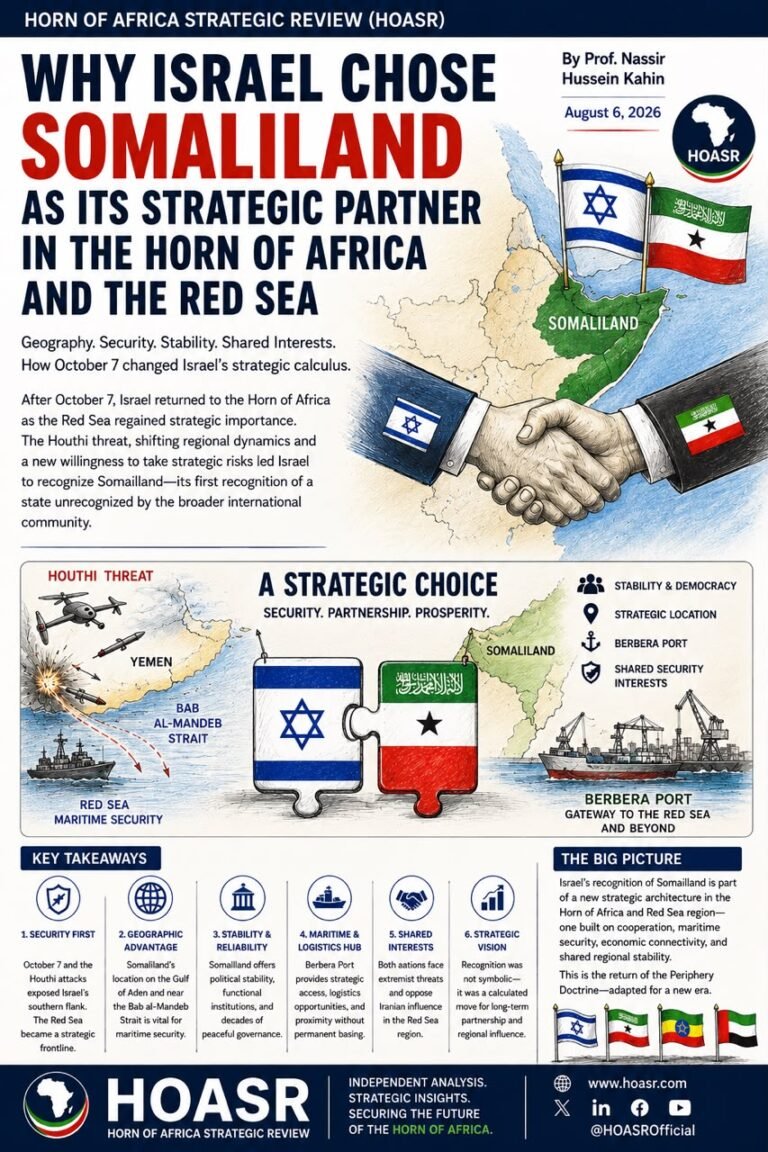
Israel is not merely another country establishing a diplomatic mission. It is one of the world’s most capable military powers with advanced intelligence, cybersecurity, drone, missile defense, and maritime security capabilities. It also enjoys deep strategic ties with the United States and growing partnerships with several Gulf countries.
Beyond Recognition: Why the Somaliland–Israel Strategic Alliance Has Reached the Point of No Return.
By Nassir Hussein Kahin
Somalia’s latest diplomatic protest against Israel’s engagement with Somaliland may ultimately be remembered as the moment Mogadishu acknowledged a geopolitical reality it could no longer prevent.
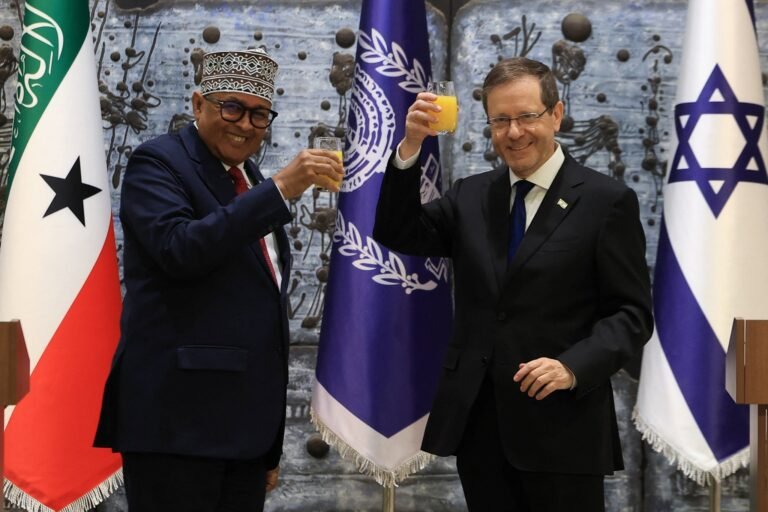
For more than three decades, Somalia and its regional allies relied on the assumption that Somaliland could be diplomatically isolated, economically constrained, and indefinitely denied international recognition. Today, that assumption is being challenged by events unfolding in Jerusalem, where Somaliland President Abdirahman Mohamed Abdillahi Irro has completed one of the most consequential state visits in Somaliland’s modern history.
Over the course of several days, President Irro met with Israeli President Isaac Herzog, Prime Minister Benjamin Netanyahu, senior cabinet ministers, members of the Knesset, business leaders, and security officials. He became the first Somaliland leader to address Israel’s parliament, visited Yad Vashem, participated in discussions on investment and technology cooperation, and formally opened Somaliland’s embassy in Jerusalem.
Yet the most strategically significant development may have occurred away from the cameras.
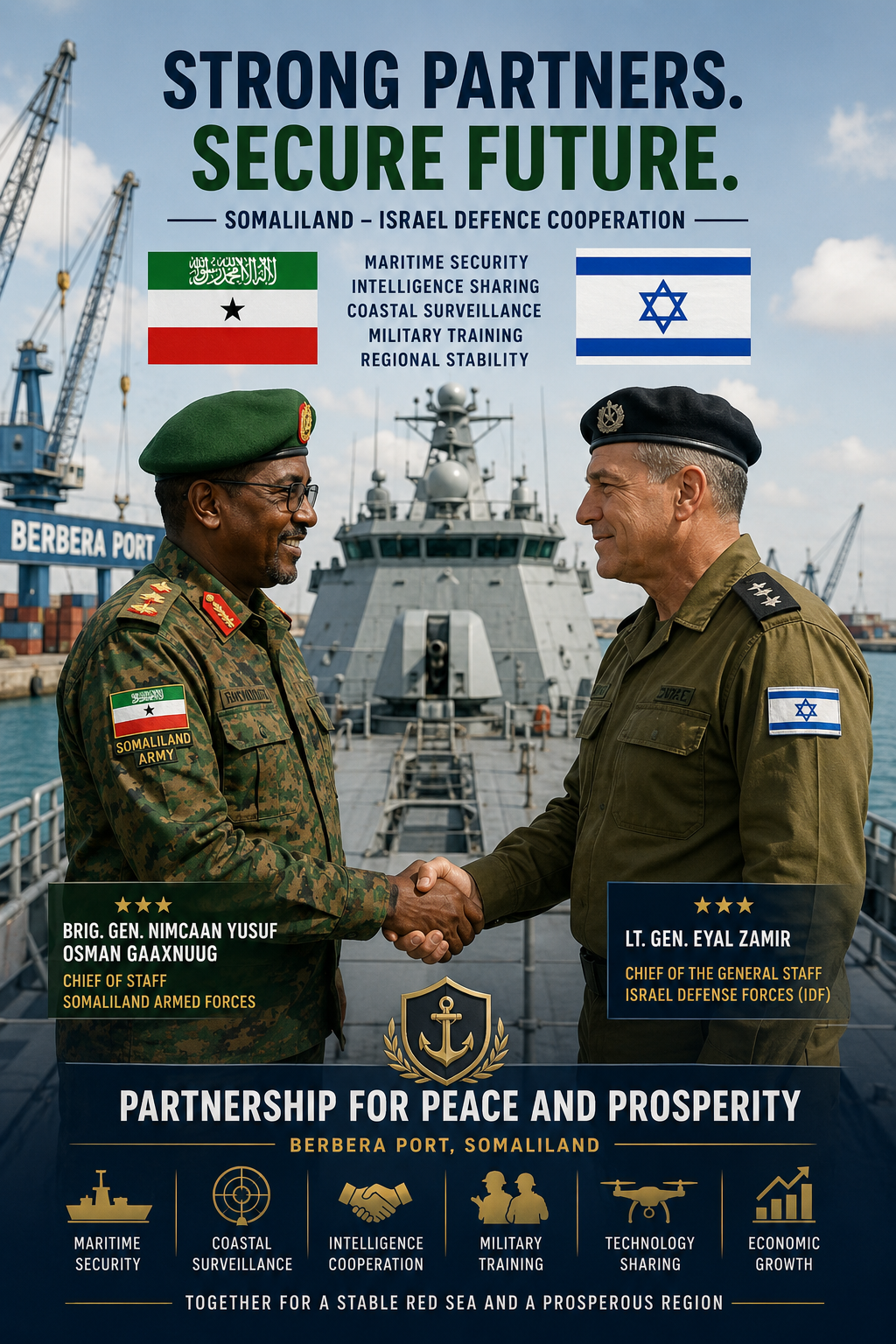
Reports indicate that Israel Defense Forces Chief of Staff Lt. Gen. Eyal Zamir met with Somaliland Armed Forces Chief of Staff Brig. Gen. Nimcaan Yusuf Osman Gaaxnuug to discuss practical military cooperation between the two countries. While some claims circulating on social media remain unverified, several important developments are now confirmed.
According to statements made during the visit, Israel is already involved in training Somaliland’s military and police forces. Discussions reportedly covered Maritime Security, intelligence cooperation, coastal surveillance, military professionalization, reconnaissance technologies, and the protection of critical maritime corridors in the Red Sea.
What remains unconfirmed are claims regarding permanent Israeli military bases or combat deployments in Somaliland. Somaliland’s Defence Minister has publicly denied reports that negotiations are underway for an Israeli military base in Berbera. However, the absence of a military base does not diminish the strategic significance of what is already occurring.
The key takeaway is straightforward: the Somaliland–Israel relationship has moved beyond diplomatic recognition and entered the realm of practical security cooperation.
That distinction matters.
Throughout modern history, successful recognition campaigns have rarely succeeded through diplomatic symbolism alone. Recognition becomes durable when it is institutionalized through political relations, economic agreements, security cooperation, intelligence sharing, and military-to-military engagement. Israel and Somaliland now appear to be moving through all of these stages simultaneously.
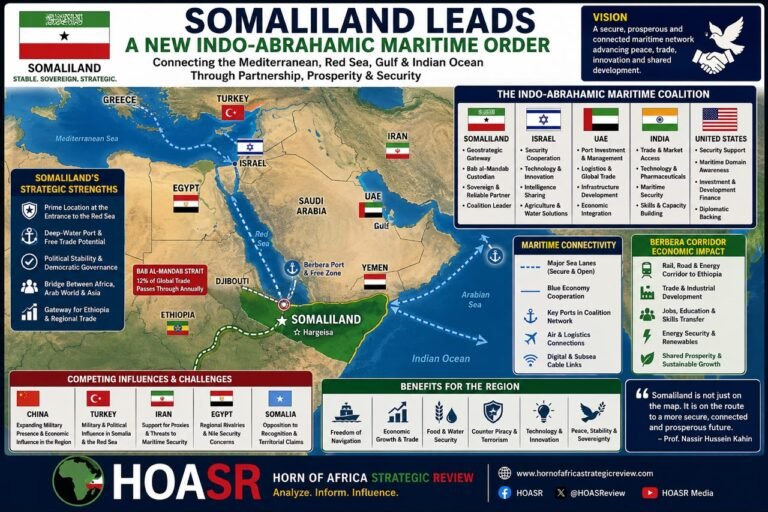
This is why Somalia’s statement reflects more than diplomatic disagreement. It reflects concern that Somaliland is no longer simply seeking recognition but is becoming integrated into a wider strategic architecture stretching from the Red Sea to the Eastern Mediterranean.
For Somalia and some of its partners—including Djibouti, Egypt, Turkey, and China—the challenge is increasingly apparent. Diplomatic opposition may continue, but the ability to reverse the emerging partnership is becoming progressively more difficult.
The strategic environment has changed.
Israel is not merely another country establishing a diplomatic mission. It is one of the world’s most capable military powers with advanced intelligence, cybersecurity, drone, missile defense, and maritime security capabilities. It also enjoys deep strategic ties with the United States and growing partnerships with several Gulf countries.
At the same time, the United Arab Emirates has invested heavily in Berbera’s port infrastructure and logistics network. Berbera is no longer simply a Somaliland asset; it has become a regional economic and strategic asset linked to international investors and maritime trade networks.
Consequently, any future attempt to destabilize Somaliland through direct military pressure, maritime disruption, or proxy conflicts in eastern or western regions would no longer be viewed solely as a local dispute. Such actions would potentially affect the interests of multiple external stakeholders with growing investments in Somaliland’s stability.
This does not mean Somaliland is immune from threats.
In fact, the risks may increase.
The most likely challenge facing Somaliland is not conventional invasion but indirect pressure. These risks include proxy conflicts, political destabilization efforts, information warfare campaigns, economic pressure, diplomatic isolation efforts, and attempts to exploit internal divisions.
History offers numerous examples.
Kosovo faced years of Serbian and Russian opposition following recognition by Western powers. South Sudan gained international recognition but struggled with internal instability after independence. Eritrea secured sovereignty despite decades of resistance from Ethiopia. In each case, recognition did not end geopolitical competition; it transformed it.
The same principle applies to Somaliland.
The primary battlefield is shifting from questions of legal recognition to questions of strategic influence.
For decades, Somaliland’s challenge was convincing the world that it existed as a functioning state.
Today, the challenge is different.
The world increasingly recognizes Somaliland’s strategic value. The issue now is how regional and international powers respond to that reality.
The symbolism witnessed in Jerusalem reflected this transformation. The Israeli military band played Somaliland’s national anthem, “Samo Ku Waar,” alongside Israel’s “Hatikvah.” Both songs speak of survival, resilience, and the aspiration of a people to live freely and securely in their homeland. That symbolism was reinforced by practical agreements involving diplomacy, economics, technology, and security.
The most important conclusion from President Irro’s visit is therefore not that Somaliland has gained another diplomatic partner.
It is that Somaliland has acquired a strategic partner.
The difference between those two concepts may shape the future balance of power in the Horn of Africa and the Red Sea for years to come.
The question is no longer whether some regional actors oppose Somaliland’s emergence.
The question is whether they possess the means to reverse a process that has already moved beyond recognition and into the realm of long-term strategic cooperation.
Judging by the developments witnessed in Jerusalem this week, that window may already have closed. Somaliland, Israel, and the New Red Sea Alliance: Recognition, Risk, and Geopolitical Reality

Prof. Nassir Hussein Kahin is a researcher, educator, journalist, and geopolitical analyst specializing in the Horn of Africa, the Red Sea, international law, diplomacy, and strategic affairs. To read Full Bio click on this link: ABOUT THE AUTHORProf. Nassir Hussein Kahin