By Prof. Nassir Hussein Kahin
In the arid expanse of the Ethiopian Somali Region, where life revolves around scarce water points and shifting trade routes, survival is a battle as much against nature as against neighbors. The recent Gaashaamo and Da’awalley massacres have thrown this precarious balance into stark relief, highlighting the deep-seated challenges faced by pastoral nomads whose livelihoods depend on the region’s fragile resources. Here, violence is not just the result of long-standing clan rivalries—it is a symptom of a larger crisis ignored for far too long by local leaders and the international community.
The massacres, both stemming from disputes over access to water and grazing land, reveal how resource scarcity has transformed into a deadly flashpoint. Despite warnings from organizations like the Water, Peace, and Security Partnership, which has consistently underscored the role of water insecurity in fueling violence, little has been done to address these grievances. Their predictive tools and advocacy for collaborative water resource management have yet to find traction among policymakers. The results, as seen in the scorched earth of the Hawd Reserve and the disrupted lives of pastoralist families, are as tragic as they are preventable.
These issues are not confined to Ethiopia’s borders. The ripple effects extend into Somalia, Somaliland, and Kenya, where nomadic movements are increasingly constrained by conflict zones. Disrupted trade routes have paralyzed the economy, leaving livestock markets empty and the pastoralists who rely on them destitute. Such disruptions reinforce a vicious cycle: poverty exacerbates competition for resources, which in turn breeds more violence.
The international community has not been silent. Regional organizations like IGAD have called for a unified protocol to manage shared water resources, but negotiations remain stalled. Meanwhile, cross-border tensions simmer, fueled by a zero-sum mentality that pits one group’s survival against another’s demise. As the massacres demonstrate, this mindset not only perpetuates cycles of violence but also undermines the fragile interdependence that sustains life in this harsh environment.
The parallels to other crisis zones are striking. In Mali, for instance, water scarcity and mismanagement have similarly amplified local conflicts, prompting comparisons between the Horn of Africa and other regions battling the effects of climate change and fragile governance. Experts have pointed to models like the Nile Basin Initiative or Southern Africa’s River Basin Organizations, where nations have managed to forge cooperation from chaos. But the lessons remain unheeded here.
The stakes could not be higher. As the Water, Peace, and Security Partnership has warned, the failure to act is not just a humanitarian tragedy but a destabilizing force for the entire region. “Water scarcity has become a weapon of war,” one analyst observed, “and unless we address it, the bloodshed will continue.” This sentiment was echoed by IGAD officials, who lamented the lack of political will to tackle the underlying causes of conflict.
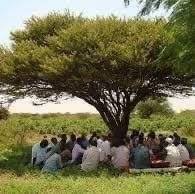
Yet, history offers hope. Regions like Rwanda and South Africa have shown that even the deepest divisions can be healed with the right mix of political courage, grassroots engagement, and international support. The Somali Region, and its troubled neighbors, must embrace a similar transformation, replacing zero-sum competition with a collaborative framework that values shared survival over mutual destruction. Only then can the blood-soaked earth of Gaashaamo and Da’awalley give way to a landscape of peace and resilience.Building Peace Through Water, Livelihoods, and Community Initiatives in El-Afweyn, Sool Region, Somaliland.

Prof. Nassir Hussein Kahin is a researcher, educator, journalist, and geopolitical analyst specializing in the Horn of Africa, the Red Sea, international law, diplomacy, and strategic affairs. To read Full Bio click on this link: ABOUT THE AUTHORProf. Nassir Hussein Kahin