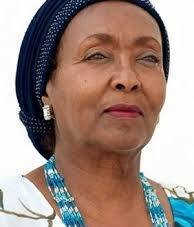
By: Edna Adan Ismail
Edna Adan Ismail is a former First Lady of Somaliland and later (2003-2006) was the Foreign Minister of Somaliland
Introduction
The territorial status of Somaliland is rooted in a uniquely clear and well-documented colonial boundary regime established by Britain during the British Somaliland Protectorate (1884–1960). Unlike many African territories whose borders emerged from vague or inconsistently applied colonial demarcations, the boundaries of Somaliland were defined through a series of formal Anglo–Ethiopian, Anglo–French, and Anglo–Italian treaties that specified the Protectorate’s limits with remarkable precision. These agreements placed Somaliland between Latitude 8° North and 11°30’ North, and between Longitude 42°45’ East and 49° East, creating a geodetically identifiable territorial space that Britain administered as a distinct political unit for seventy-six years.
These coordinates are not modern approximations; they reflect the exact geographic space recognized by Britain and other colonial powers throughout the Protectorate period. The boundaries were reinforced through diplomatic correspondence, official maps, and physical demarcation work—most notably the Anglo–Ethiopian boundary surveys of the early 20th century, which installed markers along the western and southern frontier. As a result, when Somaliland attained independence on 26 June 1960—five days before the former Italian Somalia attained independence—Somaliland entered the international system with clearly defined and internationally acknowledged borders corresponding directly to the treaty-based limits established by Britain.
This historical clarity is central to understanding Somaliland’s contemporary territorial claim. The African Union’s foundational commitment to the principle of uti possidetis juris—expressed in the 1964 Cairo Resolution, which states that “all Member States pledge themselves to respect the borders existing on their achievement of national independence”—reinforces the legal continuity of Somaliland’s inherited boundaries. It is therefore important for the African Union, the United Nations, and all member states to recognize that the principle of protecting the territorial integrity of former Italian Somalia cannot be interpreted as extending to Somaliland. Doing so would disregard the AU’s foundational legal doctrine and the historical record of decolonization in the Horn of Africa.
1. Colonial Foundations: Two Separate Territories Under Two Separate Colonial Powers
1.1 British Somaliland Protectorate (1884–1960)
Britain established the Somaliland Protectorate through treaties with Somali clan leaders beginning in 1884. These treaties created a defined territorial unit whose borders were later formalized through agreements with France, Italy, and Ethiopia. The Protectorate was administered as a distinct political entity with its own capital, institutions, and international identity.
1.2 Italian Somalia (1889–1960)
Italian Somalia was a completely separate colonial territory, governed under Italian administration with different legal systems, administrative structures, and territorial boundaries. Its borders were defined by Italy’s agreements with Ethiopia and Britain, and its colonial experience differed profoundly from that of British Somaliland. These borders were established through the same legal and diplomatic processes that defined other colonial territories in the region, including the former French Territory of the Afars and the Issas (now Djibouti).
1.3 No Shared Colonial Administration
At no point did Britain or Italy administer the two territories jointly. They were separate colonies, with separate borders, separate treaties, and separate paths to independence.
2. Independence in 1960: Two Sovereign States, Not One
2.1 The State of Somaliland (26 June 1960)
Through a Royal Proclamation issued by Her Majesty Queen Elizabeth II, the State of Somaliland became an independent and sovereign nation on 26 June 1960. It was recognized by more than 30 countries, including permanent members of the United Nations Security Council. Somaliland entered the international system with the same borders that Britain had administered for seventy-six years, corresponding directly to the treaty-defined limits established through Anglo–Ethiopian, Anglo–French, and Anglo–Italian agreements.
2.2 The State of Italian Somalia (1 July 1960)
Five days later, the former Italian Somalia became independent as a sovereign state. It was a separate state with its own borders and international recognition. It is also important to note that Somaliland and Italian Somalia were inhabited by different clans, spoke different dialects, and maintained distinct cultural, legal, and customary traditions. The two territories did not share a unified social, linguistic, or customary identity prior to the attempted union.
2.3 The Attempted Union Between Two Sovereign States
When Somaliland became independent on 26 June 1960, it did so as a fully sovereign state recognized by more than 30 nations. Five days later, on 1 July 1960, the former Italian Somalia attained its own independence. The two newly independent states then attempted to form a voluntary political union.
However, the legal instruments underpinning this union were never properly harmonized or jointly ratified. Somaliland’s legislature approved a different Act of Union than the one adopted in Mogadishu, creating a constitutional inconsistency that was never resolved.
2.4 The Union Did Not Erase Borders — It Was a Political Partnership
The union did not dissolve or merge the original colonial borders of the two states. Instead, it created a political partnership between two previously sovereign states. Just like other sovereign states that entered voluntary unions—such as Senegal and Gambia in the Senegambia Confederation, Egypt and Syria in the United Arab Republic, and Jordan and Iraq in the Arab Federation—Somaliland and Somalia each retained their original borders throughout the duration of their political union.
2.5 Dissolution of the Union and Reversion to Original Borders
When the Somali Democratic Republic collapsed in 1991 following civil war, state disintegration, and the fall of the military regime, the political union between Somaliland and Somalia ceased to exist. In accordance with international practice and the principle of continuity of statehood, Somaliland reverted to the borders it held when it had gained independence from Britain on 26 June 1960.
Conclusion
The legal and colonial foundations of Somaliland’s territorial status are distinct, well-documented, and grounded in internationally recognized treaties and principles. Somaliland’s borders were clearly demarcated and administered separately from Italian Somalia throughout the colonial period and at the moment of independence. The attempted union between Somaliland and Somalia was a political arrangement that did not erase the original borders or the sovereignty of the two states.
Following the collapse of the Somali Democratic Republic, Somaliland’s reassertion of its independence and territorial boundaries is consistent with international legal principles, including uti possidetis juris and the continuity of statehood. Recognition of Somaliland’s distinct legal status and borders is essential for regional stability, respect for historical treaties, and adherence to African Union commitments.

Prof. Nassir Hussein Kahin is a researcher, educator, journalist, and geopolitical analyst specializing in the Horn of Africa, the Red Sea, international law, diplomacy, and strategic affairs. To read Full Bio click on this link: ABOUT THE AUTHORProf. Nassir Hussein Kahin