Assessing the Strategic, Economic, and Diplomatic Calculus
By Prof. Nassir Hussein Kahin
Argentina has not officially recognized the Republic of Somaliland. That point must be stated clearly at the outset. There is no public declaration from Argentina’s Ministry of Foreign Affairs, no presidential decree from Buenos Aires, and no formal diplomatic exchange establishing recognition.
Yet Argentina has become one of the most closely watched countries in Somaliland’s recognition debate. The reason is not accidental. Under President Javier Milei, Argentina has moved sharply toward Israel, the United States, and a more ideologically assertive foreign policy. That shift has placed Buenos Aires inside the expanding diplomatic conversation that followed Israel’s formal recognition of Somaliland on December 26, 2025. Israel’s government described that decision as official recognition of Somaliland as an independent and sovereign state.
For Somaliland, Argentina matters because it represents something larger than bilateral diplomacy. If Argentina were ever to recognize Somaliland, it would signal that recognition is no longer confined to the Horn of Africa, Israel, or regional security calculations. It would show that Somaliland’s case can travel across continents and enter the foreign policy thinking of a major Latin American state.
The speculation intensified in May 2026, when Somali media reported that the United Arab Emirates was lobbying several countries, including Argentina, Eswatini, Zambia, and the Dominican Republic, to recognize Somaliland. Those reports claimed that Argentina and Eswatini were seen as among the more likely candidates, though no final decision had been confirmed.
That distinction is crucial. These were reports based on diplomatic and intelligence sources, not official Argentine policy. Still, the logic behind Argentina’s inclusion is understandable.
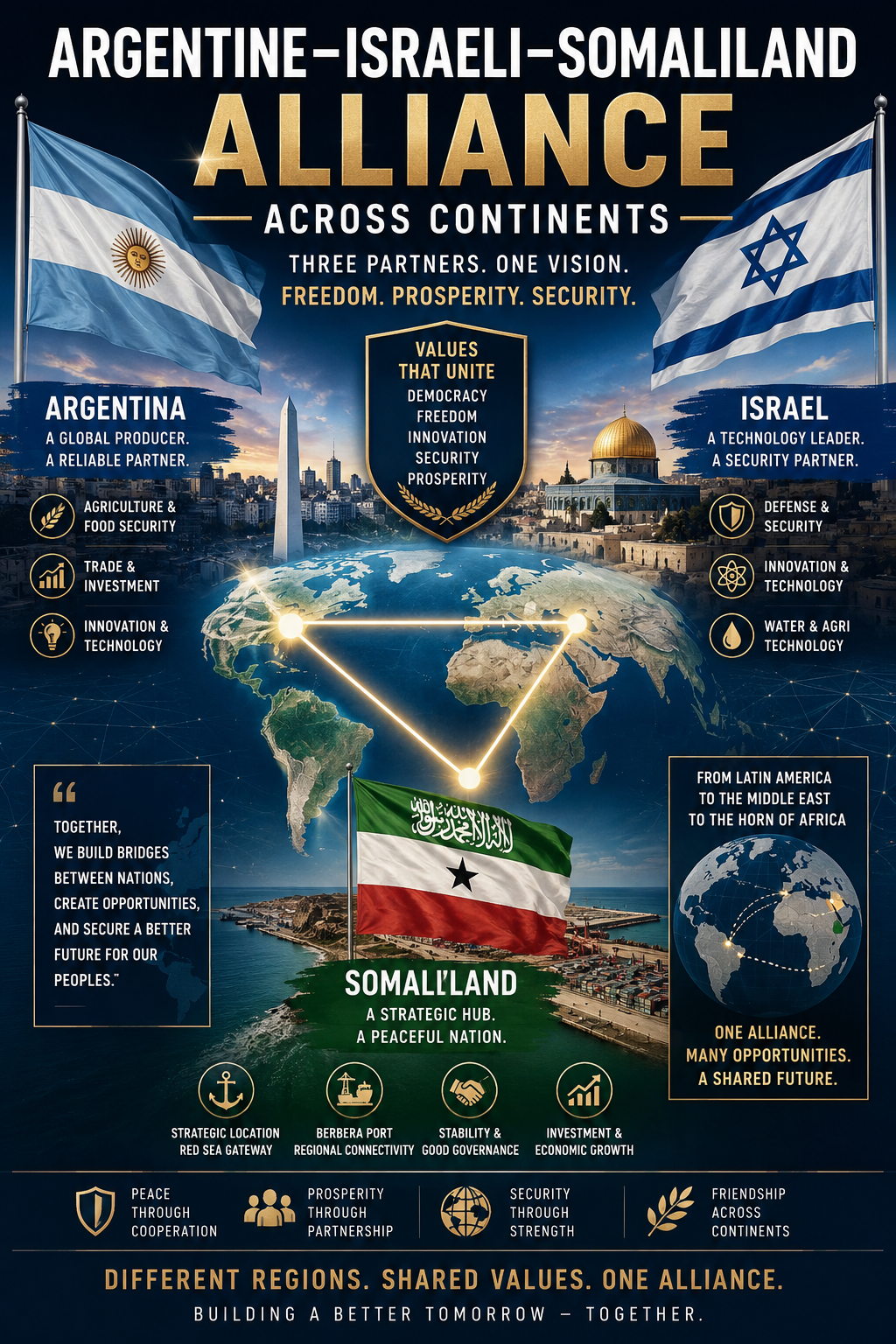
President Milei has made pro-Israel diplomacy a defining part of his international identity. Argentina’s alignment with Israel, its declared intention to move its embassy to Jerusalem, and its broader shift away from traditional diplomatic caution make Buenos Aires an unusually interesting candidate.
The Times of Israel opinion essay argued that recognition of Somaliland could serve Argentina’s interests by opening commercial access to East Africa, strengthening ties with Israel, and positioning Argentina near an emerging logistics hub around Berbera. (The Times of Israel Blogs)
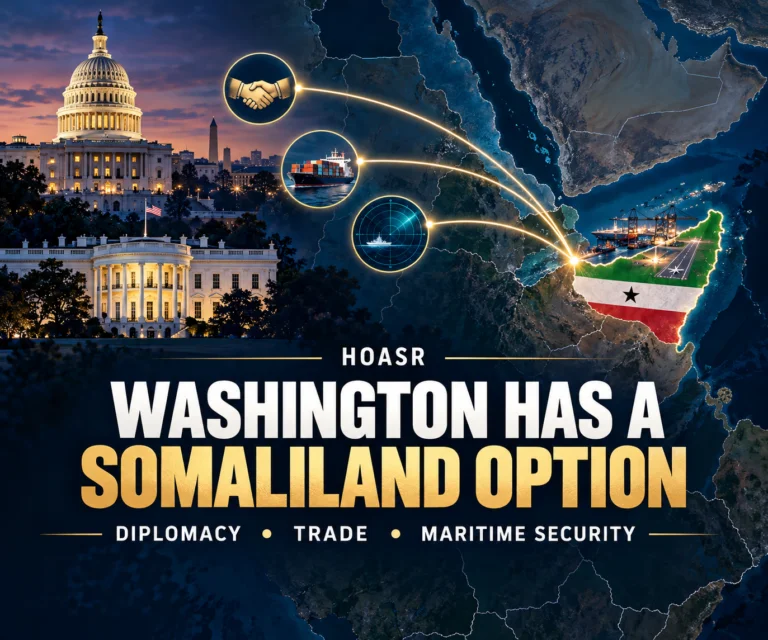
Somaliland’s strategic geography gives that argument weight. Berbera sits near the Gulf of Aden and the Bab El-Mandeb, one of the world’s most sensitive maritime corridors. The Red Sea crisis, Houthi attacks on shipping, Iranian influence in Yemen, and great-power competition in the Horn of Africa have all elevated Somaliland’s importance.
Recent reporting has also described UAE-backed military infrastructure activity in Somaliland linked to wider Emirati, Israeli, and American strategic interests. (Le Monde.fr)
For Argentina, recognition would not be only symbolic. It could serve three possible purposes.
First, it would deepen Argentina’s alignment with Israel at a moment when Israel is actively expanding its Red Sea and Horn of Africa strategy.
Second, it could open commercial channels for Argentine agriculture, beef, grain, and food exports into East Africa through Berbera.
Third, it would allow Argentina to project a more independent global role, consistent with Milei’s willingness to challenge older diplomatic habits.
But the obstacles are serious as it would face the same forces that continue to oppose Somaliland Recognition.
Argentina would therefore need to weigh symbolic solidarity with Israel and strategic opportunity against the diplomatic cost of confronting Somalia’s territorial claim.
The most accurate assessment is this: Argentina is not currently a recognizer of Somaliland, but it is a plausible future candidate because of its pro-Israel foreign policy, its interest in alternative global partnerships, and reported UAE lobbying efforts. However, until Buenos Aires issues an official statement, all claims of Argentine recognition should be treated as speculation, advocacy, or diplomatic rumor.
For Somaliland, the Argentina file should be handled carefully. Overstating the case could damage credibility. But cultivating Argentina quietly and strategically could be valuable. Somaliland should emphasize democratic governance, Berbera’s commercial potential, Red Sea security, food-security partnerships, and the moral argument that Somaliland is not a secessionist project born yesterday, but the restored sovereignty of a former British protectorate that entered a failed union voluntarily in 1960.
If Argentina moves, it may not move alone. It would likely be part of a broader diplomatic wave involving Israel, the UAE, friendly African states, and possibly Latin American governments willing to challenge conventional positions.
Until then, Argentina remains not a breakthrough, but a signal: Somaliland’s recognition campaign has entered a new geopolitical arena. Expect surprises!

Prof. Nassir Hussein Kahin is a researcher, educator, journalist, and geopolitical analyst specializing in the Horn of Africa, the Red Sea, international law, diplomacy, and strategic affairs. To read Full Bio click on this link: ABOUT THE AUTHORProf. Nassir Hussein Kahin