By Prof. Nassir Hussein Kahin
The geopolitical landscape of the Horn of Africa is undergoing a historic transformation. The old ideological foundations that once shaped Somali nationalism are steadily collapsing under the weight of new regional realities, strategic realignments, and shifting global power calculations. At the center of this transformation stands Somaliland — no longer merely a self-declared republic seeking recognition, but an emerging geopolitical actor in the rapidly evolving Red Sea order.
For decades, Pan-Somali nationalism functioned as the ideological backbone of Somali political identity. It promoted the dream of a unified Somali nation stretching across the Horn of Africa, transcending colonial borders and consolidating all Somali-inhabited territories into one state. Yet the ideology that once inspired nationalist movements has today become politically hollow, strategically irrelevant, and disconnected from realities on the ground.
The collapse of the Somali Republic in 1991 fundamentally shattered the illusion of centralized Somali unity. What followed was not merely state failure, but the complete disintegration of the Pan-Somali political project itself. Somaliland responded to that collapse not with chaos, but with political reconstruction. While southern Somalia descended into civil war, warlordism, extremist insurgencies, and dependency on foreign peacekeeping missions, Somaliland gradually built functioning institutions, restored internal stability, established democratic governance, and developed an independent political identity.
Thirty-five years later, the contrast has become impossible to ignore. Somaliland now represents one of the most stable and politically functional territories in the Horn of Africa, while Somalia remains trapped in recurring cycles of constitutional crisis, clan rivalries, insecurity, and institutional paralysis.
The latest political crisis in Mogadishu further exposes the widening gap between political mythology and geopolitical reality. Somalia today stands dangerously close to renewed fragmentation amid escalating tensions between the federal government and regional administrations such as Puntland and Jubaland. President Hassan Sheikh Mohamud faces growing accusations of constitutional violations, political overreach, and refusal to negotiate with opposition leaders despite mounting domestic and international pressure.
Even diplomatic interventions by the United Nations, the United States, and the United Kingdom have so far failed to reverse Somalia’s political deterioration. The specter of further state fragmentation and internal conflict once again looms over Mogadishu.
Yet amid this instability, Somali political elites continue invoking the rhetoric of Pan-Somali unity and “territorial integrity” as though Somalia itself were politically consolidated. This contradiction reveals the increasingly performative nature of Somali nationalism. The language of sovereignty has become less a reflection of actual state capacity and more a diplomatic instrument used to obstruct Somaliland’s pursuit of international recognition.
For years, Mogadishu attempted to frame Somaliland’s independence as a violation of Somali unity while ignoring the reality that Somalia has exercised no meaningful sovereignty over Somaliland since 1991. This narrative relied heavily on emotional nationalism and legal abstraction rather than practical governance. However, the doctrine of “territorial integrity” has steadily weakened against the facts on the ground. Somaliland possesses functioning state institutions, conducts elections, secures its borders, engages foreign partners, and maintains relative internal stability — all characteristics associated with effective sovereignty.
The regional geopolitical environment has also changed dramatically. The Red Sea has emerged as one of the world’s most contested strategic corridors, linking global trade routes, military logistics, energy transit networks, and Maritime Security operations. Competition among regional and global powers for influence in the Red Sea and Gulf of Aden has elevated the strategic value of territories capable of offering stability, access, and reliable partnerships. Somaliland’s geographic position along this corridor has consequently transformed its geopolitical significance.
The January 1, 2024 Memorandum of Understanding between Somaliland and Ethiopia marked a decisive turning point in this transformation. The agreement reflected Ethiopia’s growing recognition of Somaliland’s strategic relevance and signaled a broader regional recalibration around maritime access and Red Sea security. Predictably, Mogadishu reacted with outrage, portraying the agreement as an assault on Somali sovereignty and accusing Ethiopia of expansionist ambitions.
However, these reactions exposed a deeper anxiety within Somalia’s political establishment: the fear that Somaliland’s geopolitical normalization is becoming irreversible. Somalia’s objections increasingly appear disconnected from regional realities. Strategic actors are now engaging Somaliland not as a theoretical issue of disputed sovereignty, but as a functional political entity situated at the crossroads of critical maritime and security interests.
This geopolitical shift accelerated further following Somaliland’s recognition by the State of Israel. The recognition carried implications extending far beyond bilateral diplomacy. It symbolized Somaliland’s entry into a broader geopolitical architecture linking the Red Sea, the Gulf region, East Africa, and emerging Middle Eastern strategic alignments. Somaliland’s growing engagement with Israel also intensified Somalia’s propaganda campaigns accusing Somaliland of facilitating Israeli military expansion or participating in alleged plans involving displaced Palestinians from the Gaza conflict.
These accusations largely reflect political desperation rather than credible geopolitical analysis. Mogadishu has increasingly resorted to externalizing its failures by portraying Somaliland as the source of regional instability while avoiding confrontation with its own internal crises. Instead of addressing governance failures, constitutional disputes, corruption, insecurity, and fragmentation, Somali political discourse repeatedly redirects public attention toward Somaliland’s diplomatic activities.
This pattern reveals the exhaustion of Pan-Somali nationalism as a governing ideology. The ideology no longer offers practical solutions to Somalia’s state-building failures. Instead, it survives through nostalgia, symbolism, and the constant manufacture of external threats. Somaliland’s diplomatic successes therefore represent not only a challenge to Somalia’s territorial claims but a direct challenge to the ideological foundations of Pan-Somali nationalism itself.
Meanwhile, Somaliland’s political evolution increasingly aligns with the emerging realities of twenty-first century geopolitics. In the modern international system, strategic relevance often outweighs outdated ideological narratives. Stability, institutional functionality, maritime access, economic partnerships, and security cooperation matter more than emotional appeals to historical unity projects that collapsed decades ago.
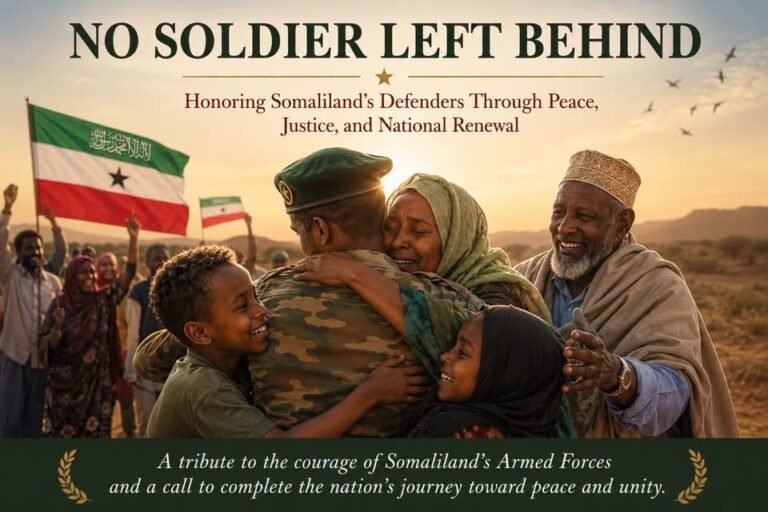
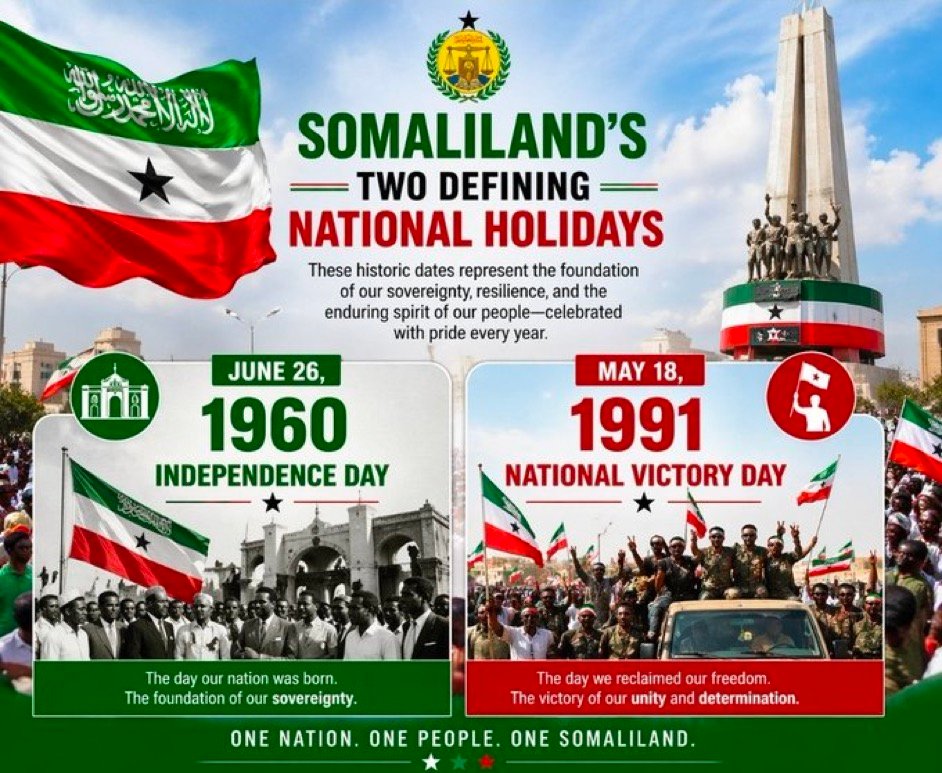
The May 18, 2026 Somaliland Independence celebrations demonstrated this transformation with striking clarity. The celebrations no longer resembled the defiant ceremonies of an isolated territory seeking survival. Instead, they reflected the confidence of a political entity increasingly aware of its geopolitical value within the Horn of Africa and Red Sea security architecture. Somaliland’s trajectory now intersects with some of the most important strategic developments shaping global politics: Red Sea militarization, Gulf rivalries, maritime trade security, energy transit competition, and the restructuring of regional alliances.
The geopolitical collapse of Pan-Somali nationalism therefore represents more than the decline of a failed ideology. It marks the emergence of a new regional order in which political legitimacy is increasingly determined not by historical romanticism, but by governance capacity, strategic utility, and geopolitical relevance.
In this new order, Somaliland is no longer waiting for history to validate its existence. History is already moving in its direction.
About the Author