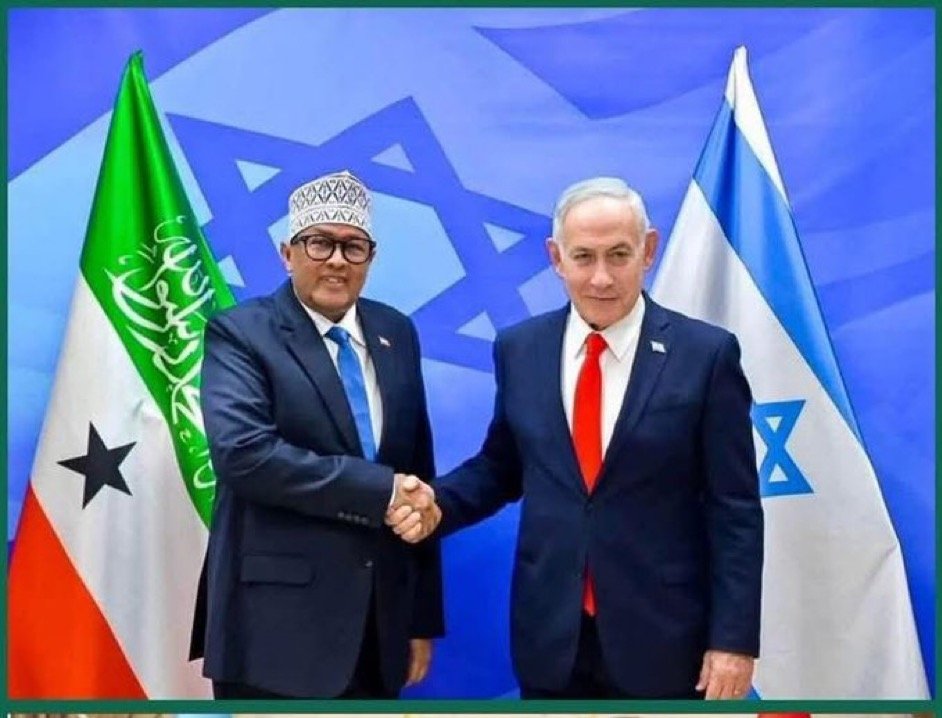
Israel broke the assumption that no UN member would ever move first.
By Prof. Nassir Hussein Kahin
By 2026, the question surrounding Somaliland is no longer whether it functions as a state. The real geopolitical question is whether the United States can continue to afford the strategic ambiguity of refusing to recognize it.
For more than three decades, Hargeisa survived as a diplomatic orphan: unrecognized, isolated, and largely excluded from the international system despite maintaining the characteristics of functional sovereignty. Yet the geopolitical climate of the Red Sea has fundamentally changed. Maritime insecurity, Houthi attacks, Chinese military expansion, Turkish influence in Mogadishu, Gulf rivalries, and the race for critical minerals have transformed Somaliland from a peripheral African dispute into a frontline strategic asset.
The December 26, 2025 recognition of Somaliland by Israel marked the beginning of this transformation. More than a symbolic diplomatic gesture, the move shattered a decades-long international taboo surrounding Somaliland’s statehood. It also repositioned the territory inside the wider framework of the Abraham Accords and the emerging security architecture of the Red Sea corridor.
The implications are profound.
For years, Washington maintained the “One Somalia” doctrine largely because no major power was willing to openly challenge the African Union consensus on colonial borders. Israel’s recognition changed that equation. Once a UN member state formally acknowledged Somaliland’s sovereignty, the issue ceased to be theoretical. It became operational, strategic, and transactional.
At the center of this new geopolitical reality lies Berbera.
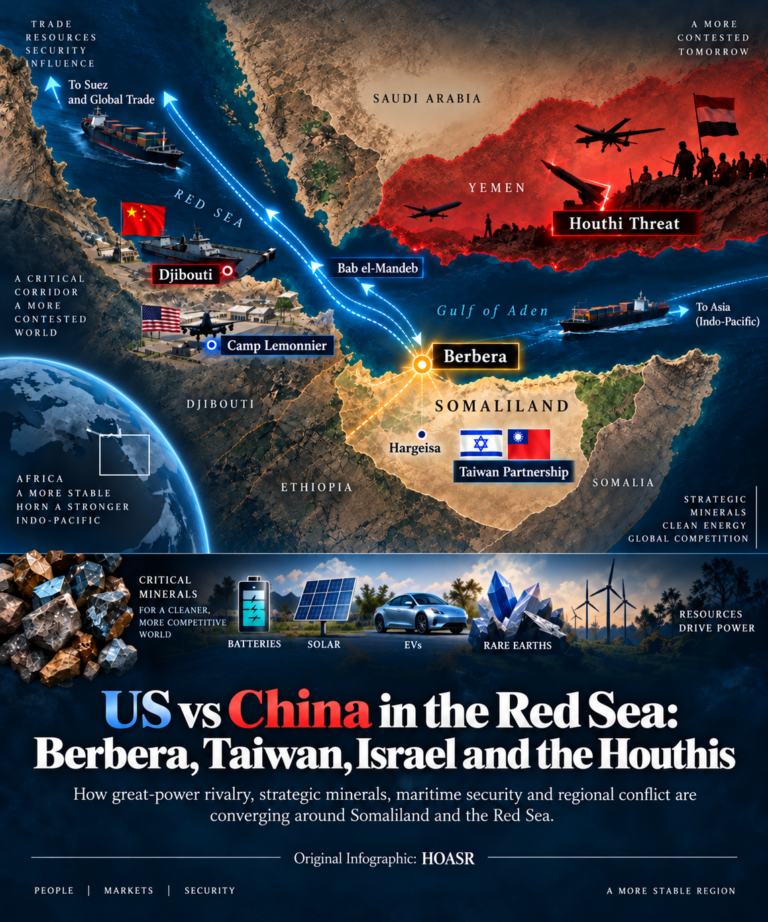
The Port of Berbera and its adjacent airfield are now viewed not merely as infrastructure projects but as strategic instruments in great-power competition. Positioned along one of the world’s most important maritime chokepoints, Berbera offers the United States and its allies something increasingly valuable in the age of Red Sea instability: redundancy outside Djibouti.
This matters enormously.
Djibouti already hosts American, Chinese, French, and other military installations, making it one of the most militarized territories on earth. As tensions escalate between Washington and Beijing, US planners are increasingly uncomfortable with overdependence on a single logistical hub situated beside China’s first overseas naval base. Somaliland presents an alternative: a pro-Western, geographically strategic, relatively stable partner willing to exchange access for recognition.
This is the essence of the emerging “Recognition-for-Resources” doctrine.
Unlike the Cold War model where ideology dominated alliances, today’s geopolitical alignments are increasingly transactional. Somaliland offers maritime positioning, mineral access, surveillance capabilities, and political reliability. In return, it seeks legitimacy, security guarantees, and economic integration into the Western-led order.
The attraction for Washington is obvious.
Somalia’s federal government remains politically fragmented, heavily dependent on external peacekeeping forces, and unable to fully secure its territory against Al-Shabaab. Electoral disputes, constitutional paralysis, corruption allegations, and deteriorating security conditions continue to undermine Mogadishu’s credibility as a long-term strategic partner.
By contrast, Somaliland projects itself as the opposite model: regular elections, functioning institutions, independent financial systems, and relative internal stability. This comparative narrative has become central to Hargeisa’s diplomatic campaign in Washington.
The strategic triangle involving Somaliland, Israel, and the United Arab Emirates further intensifies the pressure on US policymakers.
Abu Dhabi’s investment through DP World has already transformed Berbera into a rising commercial and logistical hub. Israel views Somaliland as a forward security platform near the Bab El-Mandeb Strait capable of monitoring Iranian-linked Houthi activity in Yemen. Ethiopia sees Berbera as a critical maritime alternative in its search for strategic sea access.
Together, these converging interests are producing what analysts increasingly call the “Berbera Axis.”
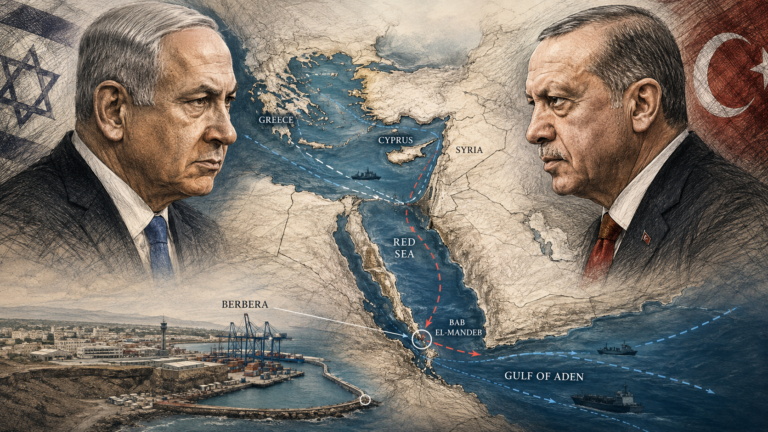
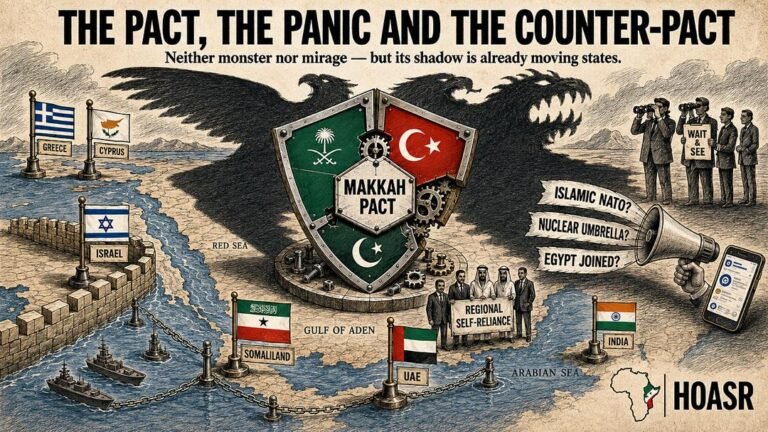
This emerging alignment directly challenges the rival regional bloc centered around Mogadishu, Ankara, and Cairo. Turkey has invested heavily in Somalia’s security sector and maintains its largest overseas military base in Mogadishu. Egypt, motivated by tensions with Ethiopia over the Nile dispute, strongly opposes any arrangement that strengthens Addis Ababa or legitimizes Somaliland’s independence claims.
The Horn of Africa is therefore evolving into a geopolitical chessboard where local sovereignty disputes intersect with Middle Eastern rivalries, global shipping security, and great-power competition.
What makes Somaliland particularly attractive to Western strategists is not only geography but ideological alignment.
Its relationship with Taiwan carries symbolic and strategic significance far beyond bilateral cooperation. By maintaining ties with Taipei despite pressure from China, Somaliland has deliberately positioned itself inside a wider democratic and anti-authoritarian alignment favored by sections of the American political establishment.
In Washington, this matters.
Somaliland is increasingly framed not as a separatist entity but as a democratic outlier resisting both Islamist extremism and authoritarian influence. Conservative think tanks, bipartisan congressional advocates, and strategic planners now discuss Somaliland within the context of Red Sea security, Indo-Pacific competition, and the global supply chain race for critical minerals.
The mineral dimension could become decisive.
Reported lithium and coltan reserves in Somaliland align directly with American concerns over technological dependency and supply-chain vulnerability. In the era of artificial intelligence, electric vehicles, and advanced defense manufacturing, access to critical minerals is no longer merely economic; it is strategic.
Hargeisa understands this reality and is exploiting it skillfully.
By tying recognition to Maritime Security, mineral access, and Abraham Accords expansion, Somaliland has reframed its independence campaign from a moral argument into a geopolitical bargain.
That is a major diplomatic evolution.
Still, the path toward recognition remains fraught with risk.
Somalia continues to reject Somaliland’s claims categorically and warns against foreign military agreements inside the territory. Turkey and Egypt view Israeli involvement in Somaliland as destabilizing. Saudi Arabia fears the normalization precedent could encourage separatist movements elsewhere in the Arab world. Meanwhile, internal Somaliland challenges — including the Las Anod crisis and accusations of democratic backsliding following tensions over Israel recognition — threaten to complicate Hargeisa’s carefully cultivated image.
Washington therefore faces a strategic dilemma.
Maintaining the old Somalia policy preserves diplomatic continuity and avoids provoking regional backlash. But it may also mean forfeiting strategic advantages in one of the world’s most contested maritime corridors. Recognizing Somaliland, on the other hand, could dramatically reshape Red Sea geopolitics, strengthen American positioning against China and Iran, and expand the Abraham Accords into Africa — but at the cost of escalating regional tensions.
The most probable outcome is neither immediate recognition nor total rejection.
Instead, the United States appears increasingly likely to pursue a Taiwan-style model of phased institutionalization: expanded security cooperation, economic engagement, intelligence coordination, and semi-formal diplomatic presence without immediate full recognition.
Yet even this intermediate step would represent a historic shift.
Because once Somaliland becomes embedded inside Western security architecture, full recognition may eventually become less a diplomatic revolution and more a formal acknowledgment of geopolitical reality.
The struggle over Somaliland is no longer merely about borders drawn in 1960 or grievances born in 1991. It is now about who controls the future security architecture of the Red Sea, who secures the maritime arteries linking Europe to Asia, and which alliances will dominate the emerging geopolitical order stretching from the Gulf to the Horn of Africa.
In that contest, Somaliland has ceased to be invisible.

Prof. Nassir Hussein Kahin is a researcher, educator, journalist, and geopolitical analyst specializing in the Horn of Africa, the Red Sea, international law, diplomacy, and strategic affairs. To read Full Bio click on this link: ABOUT THE AUTHORProf. Nassir Hussein Kahin