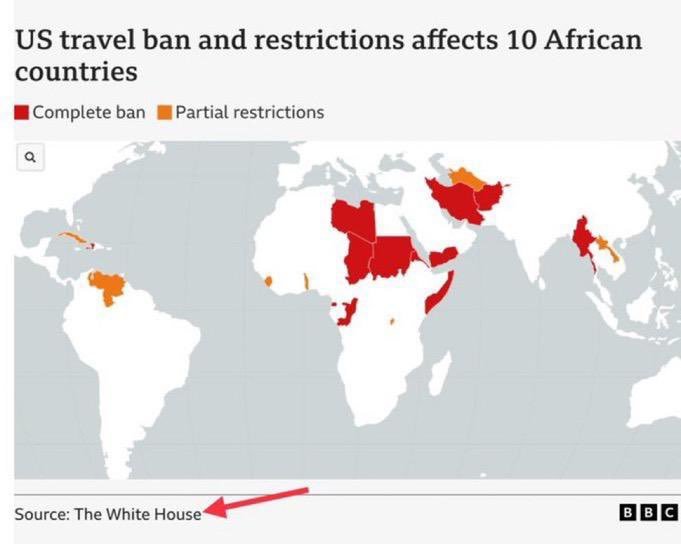
Somalia's Latest Outrage Over a Map!
By Prof.Nassir Hussein Kahin
In a remarkable display of diplomatic insecurity, Somalia’s federal government has once again embarrassed itself on the global stage—this time by lashing out at the BBC for publishing a map that reflects an indisputable reality: Somaliland is not part of Somalia.
What might have been dismissed as another routine tantrum from Mogadishu is, in fact, deeply telling. It signals a growing desperation from a government losing its grip not only on internal governance but on the broader narrative it has so long used to deny Somaliland’s statehood.
This is not an isolated media incident. In recent months, some of the most respected voices in global journalism—The Guardian, The New York Times, and even official U.S. government platforms—have quietly begun portraying Somaliland as it is: a distinct, functioning, and self-governed entity. These editorial and cartographic choices are not accidental. They are the product of decades of factual reporting, historical awareness, and sober acknowledgement of ground realities.
Let’s be clear: Somaliland is not a breakaway region. It was born as an independent state in 1960, voluntarily entered a union with Somalia, and rightfully withdrew in 1991 when that union collapsed under dictatorship, civil war, and atrocities. Since then, Somaliland has rebuilt itself as a sovereign nation in all but formal recognition—peaceful, stable, democratic, and credible.
Meanwhile, Mogadishu’s administration—propped up by foreign troops and donor funds—can barely project authority outside its fortified compound. It has failed to conduct timely elections, failed to protect its citizens, and failed to lead with any semblance of national unity. Somalia, tragically, remains a state in name only.
And so, Somalia’s latest outrage over a map is not about geography—it’s about legitimacy. When respected global institutions stop pretending that Somalia is whole, they aren’t undermining Somalia—they are validating the facts. Somaliland exists, functions, and governs. It defines itself through institutions, democratic practices, and the will of its people—not through borrowed narratives or colonial-era maps.
The truth is, the world is tired. Tired of the fiction of a unified Somalia. Tired of the diplomatic limbo that punishes success and rewards failure. Tired of seeing a responsible, self-built Democracy like Somaliland remain in the shadows while a collapsing state claims ownership of its future.
Somalia would do well to abandon this policy of denial and condemnation. Instead of attacking journalists, it should focus on rebuilding institutions, restoring security, and earning the credibility that Somaliland already possesses. Respect is earned through performance—not propaganda.
Finally, every map drawn in line with reality, every article that distinguishes Somaliland from Somalia, is not just a symbolic act. It is a step toward correcting decades of diplomatic inertia. Recognition may not come overnight, but the shift in global attitude is underway—and irreversible.
Prof. Nassir Hussein Kahin is a researcher, educator, journalist, and geopolitical analyst specializing in the Horn of Africa, the Red Sea, international law, diplomacy, and strategic affairs. To read Full Bio click on this link: ABOUT THE AUTHORProf. Nassir Hussein Kahin