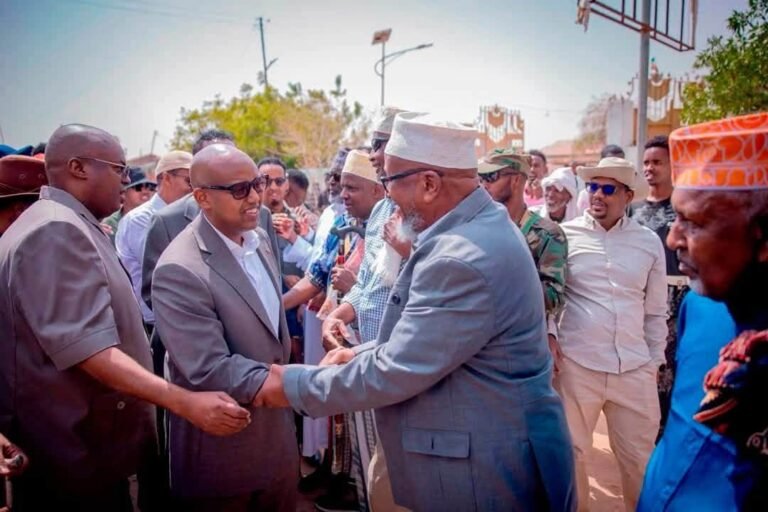

Somaliland President Abdirahman Mohamed Abdullahi "Ciro"
Source: The Christian Science Monitor. By Kate Bartlett, Contributor.
June 12, 2025.
Since the breakaway state of Somaliland declared its independence from Somalia 34 years ago, no country has recognized its sovereignty.
That might soon change. The Trump administration sees Somaliland – a self-governing territory with its own currency and passport – as a potential strategic ally in the volatile Horn of Africa. Last month, Somaliland’s president told The Guardian that he was in talks with U.S. officials to recognize the state.
The Trump administration has not confirmed this. But recognizing Somaliland’s independence could fire up tensions in an already unstable region, with wide-ranging implications for the Horn of Africa and beyond.
The Trump administration has suggested it might recognize the breakaway state of Somaliland, setting a precedent that could extend far beyond the state’s borders.
How was Somaliland created?
Somaliland is a coastal territory in northern Somalia. It was a British protectorate until independence in 1960, after which it merged with the previously Italian-administered Somalia. When the national government in Mogadishu collapsed in 1991, after years of strife, Somaliland broke away.
Since then, it has been fully self-governing. Today, the territory of 6 million people has a reputation for credible elections and stable Democracy in a neighborhood of authoritarian regimes.
For decades, Somaliland’s leaders have tried to use its success to earn the world’s recognition. However, most countries are loath to encourage secessionist movements.
For its part, the United States has long sided with Somalia, which it considers an important ally in the fight against terrorism in the region.
Why is the Trump administration interested in Somaliland?
After Somaliland’s elections in November, the Senate Foreign Relations Committee chairman praised Somaliland’s “unique democratic character” in a post on the social media platform X. But the U.S. interest in Somaliland is about much more than democracy, analysts say.
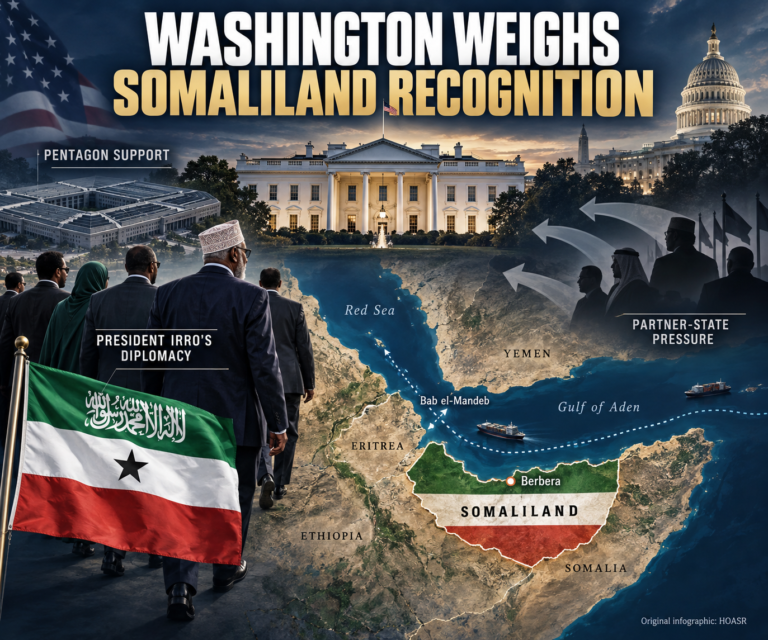
The de facto state sits on the Gulf of Aden, a key global oil shipping route that has recently been disrupted by attacks from Yemen’s Houthi rebels.
Somaliland’s coastal city of Berbera has a long Cold War-era airstrip and a port, which the government is offering the U.S. access to for a base, in exchange for recognition.
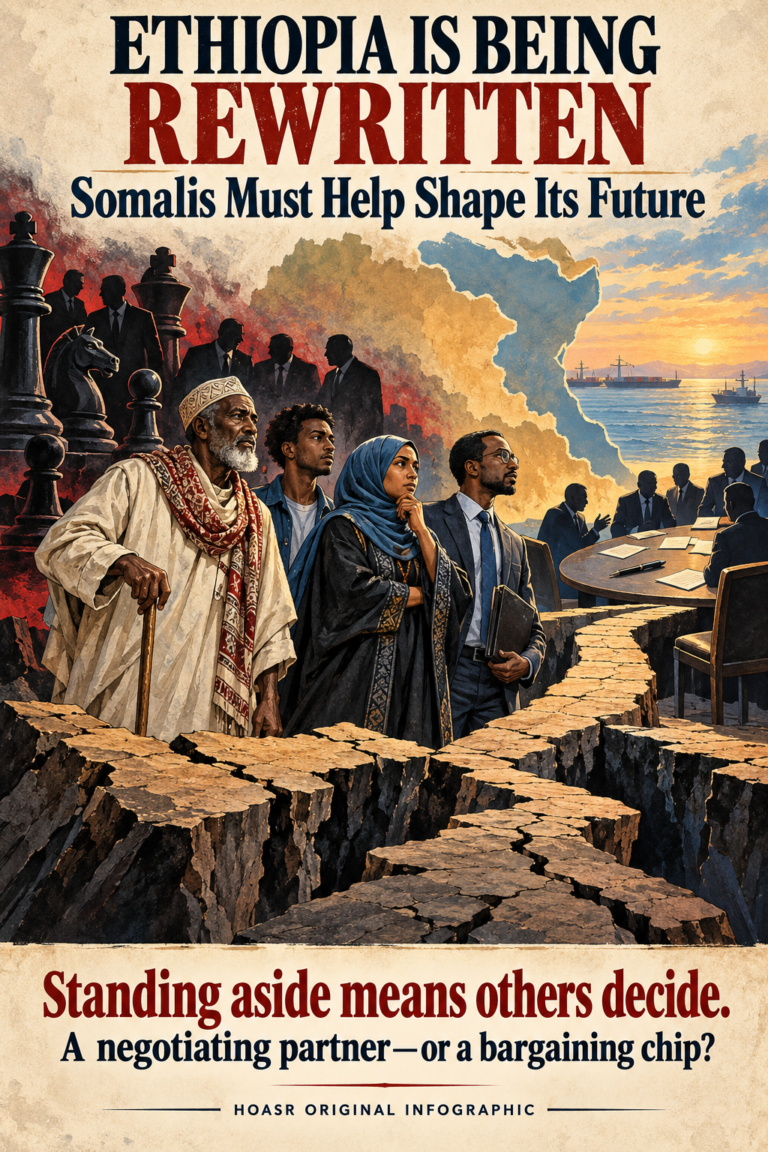
“The Horn of Africa has always been a geopolitical chessboard,” says Seifudein Adem, an expert on the region and visiting professor at Doshisha University in Japan.
But now, he says, “The stakes are becoming magnified by the rivalry between the United States and China,” both of which have a military base in neighboring Djibouti. “Somaliland’s proximity to major shipping routes and oil reserves makes it a prize in any geopolitical contest,” he adds.
In addition to its strategic location, Somaliland’s minister of energy and minerals says the breakaway state has made progress in oil exploration and boasts untapped stores of the critical mineral lithium.
Another quid pro quo for the Trump administration could be Somaliland’s openness to resettling Palestinians. Although Somaliland denied reports by The Associated Press in March that it had been approached by Washington on the issue, the state’s foreign minister told Israeli media he didn’t rule out hosting Palestinians from Gaza.
What’s at stake?
U.S. recognition would enrage Somalia and could add to tensions in an already unstable region.Last year Somaliland signed a deal with landlocked regional powerhouse Ethiopia, allowing Addis Ababa to build a naval base on its coastline in return for recognition.
This set off a major diplomatic spat with Mogadishu, raising the specter of a regional conflict.
But there are signs the U.S. administration is growing fed up with Somalia after years of supporting the country’s fight against Islamist militants. In June, for instance, President Donald Trump included Somalia in his travel ban.
How close is recognition, anyway?
It’s unclear. Last month, Somaliland President Abdirahman Mohamed Abdullahi told The Guardian he had been speaking to high-ranking U.S. officials and said, “Recognition is on the horizon.”

While neither Mr. Trump nor the State Department has commented, many in the Republican establishment would support the move. The Heritage Foundation’s Project 2025 – widely seen as a blueprint for Mr. Trump’s second term – called for the recognition of Somaliland “as a hedge against the U.S.’s deteriorating position in Djibouti.” Meanwhile, in December, two Republican representatives introduced a bill to formally recognize Somaliland.
Still, Ahmed Soliman, a Horn of Africa researcher at the think tank Chatham House, says he isn’t convinced that the U.S. will actually go ahead.
Recognizing Somaliland would complicate U.S. relations with other countries in the region and their allies, he says, noting that Somalia has support from Turkey and Egypt, while the United Arab Emirates has interests and concessions in Somaliland.
What’s more, for independence to stick, Somalilanders and Somalis need to engage in “dialogue to resolve the issues” between them, Mr. Soliman writes in a message to the Monitor. “No external actor can do that for them.”

Prof. Nassir Hussein Kahin is a researcher, educator, journalist, and geopolitical analyst specializing in the Horn of Africa, the Red Sea, international law, diplomacy, and strategic affairs. To read Full Bio click on this link: ABOUT THE AUTHORProf. Nassir Hussein Kahin