 Worth Repeating Since Kenya Recognized Kosovo Just Recently, and should extend a similar diplomatic recognition to Somaliland.
By Prof. Nassir Hussein Kahin.
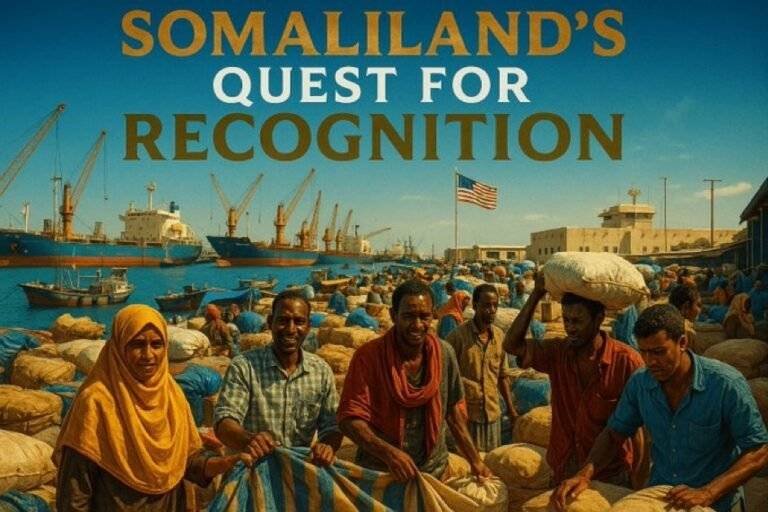
In a world increasingly defined by the ruthless scramble for power and influence, the United States faces a historic decision that could shape the future of the Horn of Africa and beyond. As China tightens its grip on Djibouti, a mere stone’s throw from one of the world’s most vital maritime arteries, America has a rare chance to strike back in the great geopolitical chess game. The key to this bold maneuver? Somaliland.
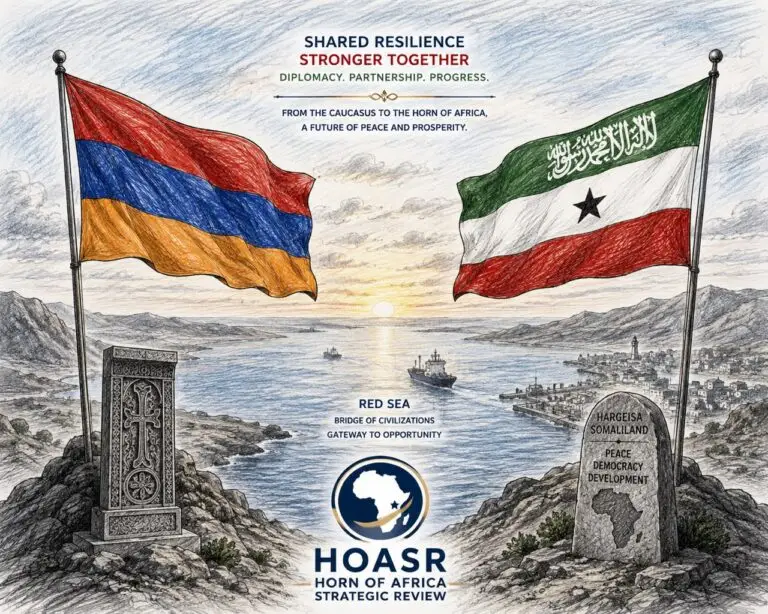
Sound familiar? It should. This is Kosovo all over again. In 2008, against a storm of opposition from Russia, Serbia, and even some European allies, the United States stood tall and recognized Kosovo as an independent state. Critics warned of chaos, retaliation, and diplomatic fallout. But Washington knew better. It saw Kosovo not just as a moral obligation but as a strategic linchpin—a beacon of stability in a volatile Balkans and a a crucial counterweight to Russian influence. History has vindicated that decision. Now, the U.S. has the chance to repeat that triumph by recognizing Somaliland, a move that would send shockwaves through the Horn of Africa and alter the balance of power in the Red Sea.
A Tale of Two States
The parallels between Kosovo and Somaliland are striking. Both emerged from failed unions with larger, dysfunctional states. Both built their case for independence on the back of historical grievances, persecution, and sustained self-governance. Kosovo broke away from Serbia after decades of brutal repression, while Somaliland declared independence from Somalia following years of civil war, marginalization, and tyranny under Siad Barre’s dictatorship.
Like Kosovo, Somaliland has met the Montevideo Convention’s criteria for statehood: a defined territory, a permanent population, a functioning government, and the capacity to engage in international relations. Unlike Somalia, which has struggled with instability, terrorism, and corruption, Somaliland has fostered democratic elections, maintained peace, and governed effectively.
Yet, Somaliland, like Kosovo once was, remains in diplomatic limbo—a vibrant, functional state with no seat at the United Nations.
A Strategic Imperative
The stakes for Somaliland’s recognition go far beyond symbolism. The Red Sea and Gulf of Aden are among the most strategically significant waterways in the world, funneling energy supplies and goods to and from Europe, Asia, and beyond. Djibouti, currently home to a sprawling Chinese military base, dominates this region.
Beijing’s growing influence here threatens to upend the delicate balance of power, giving China a chokehold over global trade and American security interests.
Enter Somaliland. Its port city of Berbera, just across from Yemen, offers a golden opportunity for the U.S. to diversify its military presence and reduce its reliance on an increasingly China-aligned Djibouti. A U.S. base in Berbera would serve as a bulwark against Chinese expansion, safeguard vital trade routes, and ensure a lasting American presence in the region.
Recognizing Somaliland also sends a powerful message to China, Turkey, and other regional players like Egypt: the United States is not retreating from the Red Sea. Instead, it is doubling down, securing alliances, and charting a course for long-term dominance.
The Moral High Ground
Let’s not forget the moral dimension. Somaliland’s peaceful, democratic governance is a rarity in a region marred by chaos and autocracy. Recognition would reward Somaliland for its perseverance and commitment to Democracy, setting an example for other aspiring states. It’s a move that aligns with America’s values and its role as a champion of freedom and self-determination.
And for those wringing their hands about African Union (AU) objections or Somalia’s inevitable outrage, history offers a clear rebuttal. In 2008, when President Bush took the brave decision to unilaterally recognize Kosovo even some of his closest allies in NATO refused to go along. Russia howled about Kosovo. Serbia fumed. None of it mattered. American might and moral clarity prevailed. It can—and must—prevail again. It just began with one country. Today over 100 countries have official diplomatic offices in Kosovo ( Hargeisa has called too many times, and would never hang up).
The Risks of Hesitation
To delay Somaliland’s recognition is to squander a golden opportunity. It allows China to entrench itself further in Djibouti, expands Turkey’s foothold in Somalia, and emboldens autocratic regimes eager to challenge U.S. influence. Worse still, it signals that America lacks the vision and resolve to act decisively in its strategic interests.
Critics will argue that recognition could destabilize the region, but the truth is the opposite. Somaliland’s recognition would bring clarity to a murky geopolitical landscape, stabilizing one of Africa’s most turbulent corners.
A Bold Gamble Worth Taking
The time for cautious diplomacy is over. America must act boldly, as it did with Kosovo, to recognize Somaliland and secure its position as the dominant power in the Red Sea. Yes, there will be objections—from China, from Somalia, from regional players like Egypt and Djibouti. But the U.S. has faced down such opposition before. It has defied Russian vetoes, Serbian protests, and countless diplomatic roadblocks in the past. This too shall pass, if Kenya takes the high moral ground.
With or without recognition, Somaliland will proudly protect and defend its de jure recognition as much as it shed blood for reclaiming it in 1991.

Prof. Nassir Hussein Kahin is a researcher, educator, journalist, and geopolitical analyst specializing in the Horn of Africa, the Red Sea, international law, diplomacy, and strategic affairs. To read Full Bio click on this link: ABOUT THE AUTHORProf. Nassir Hussein Kahin