Public frustration with election delays is both real and justified
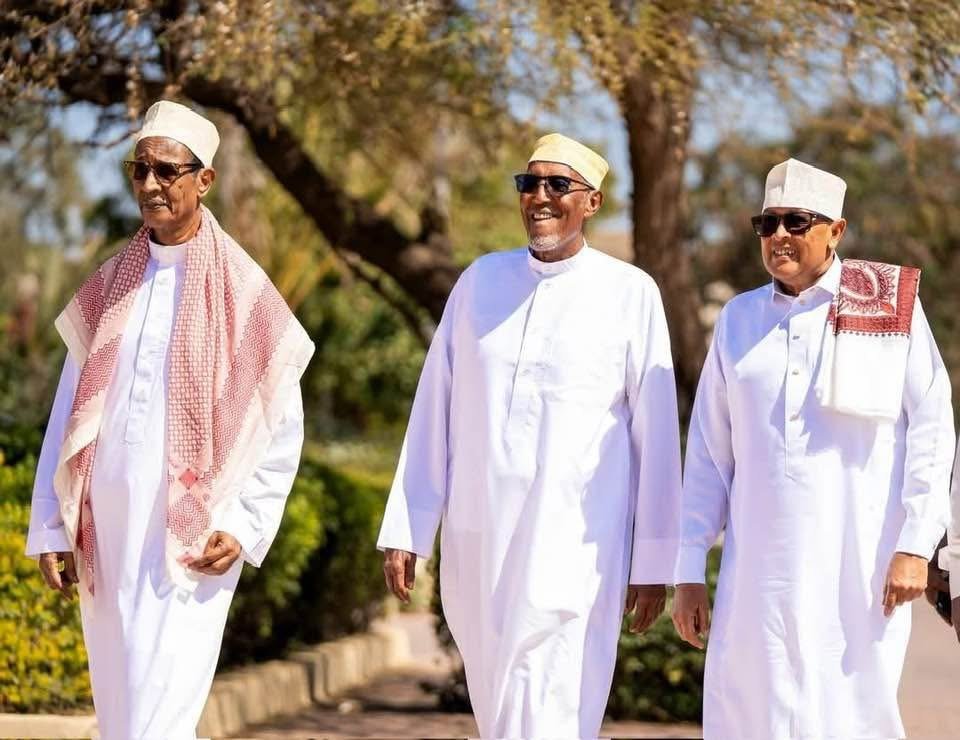
At a time of heightened political sensitivity, national decisions must be judged with fairness, context, and responsibility. When Somaliland’s current realities are assessed objectively, it becomes evident that the House of Elders (Guurti) acted not out of political convenience, but in fulfillment of its constitutional mandate to safeguard national stability and the public interest.
Public frustration with election delays is both real and justified. Somaliland has experienced repeated term extensions, particularly during the fourteen years of Kulmiye Party rule. That period left a legacy of mistrust, as many extensions were defended on grounds that, in hindsight, could have been resolved. This history has understandably made citizens cautious, even skeptical, of any similar decision today.
However, it is analytically flawed to treat all extensions as equivalent. The current decision by the House of Elders applies specifically to the House of Representatives and Local Council elections scheduled for 31 May 2026. Unlike previous cases, this postponement is not driven by political maneuvering but by a convergence of national constraints that could not be responsibly ignored.
The most immediate factor is the situation in the Sool region. The area remains unprepared to participate in a credible electoral process, as the government continues delicate peace-building and reconciliation efforts. Proceeding with elections while a key region remains effectively excluded would not strengthen Democracy; it would undermine its legitimacy.
Security concerns also persist in parts of the western regions. Inter-communal tensions—some exacerbated by actors hostile to Somaliland’s stability—continue to pose risks to peace and public order. Addressing these conflicts has required urgent attention and resources, both of which are essential preconditions for conducting free, fair, and orderly elections.
Compounding these challenges is the ongoing drought. The failure of the anticipated Gu rains has displaced significant segments of the population, placing many communities in humanitarian distress. Conducting elections under such conditions would be neither inclusive nor humane. A democratic process cannot be considered legitimate when large portions of the electorate are displaced and struggling for survival.
Taken together, these realities present a compelling case for postponement. Ignoring them would not have demonstrated commitment to democracy; it would have reflected a disregard for its foundational principles.
The House of Elders (Guurti) did not choose the expedient path—it chose the responsible one.
This does not mean the decision should be beyond scrutiny. Public debate remains essential in any functioning democracy. However, criticism must be grounded in an honest appraisal of facts. Dismissing the Guurti’s decision without acknowledging the complexity of the current environment risks elevating political rhetoric above national interest.
Somaliland’s stability has been built on prudence, dialogue, and restraint. These are not signs of weakness; they are the foundations of resilience. Abandoning them in moments of pressure would carry far greater risks than a measured delay.
The postponement of the elections, while regrettable, was not arbitrary. It was a calculated decision aimed at preserving peace, ensuring inclusivity, and protecting the long-term integrity of the democratic process. In this context, the House of Elders deserves not reflexive condemnation, but a fair and balanced assessment of its role in safeguarding the nation.
To read more by the author, see the Related Posts below:
Ambassador Egal is a regular contributing writer for HOASR and the founder of Horn of Africa Herald, an independent digital newspaper