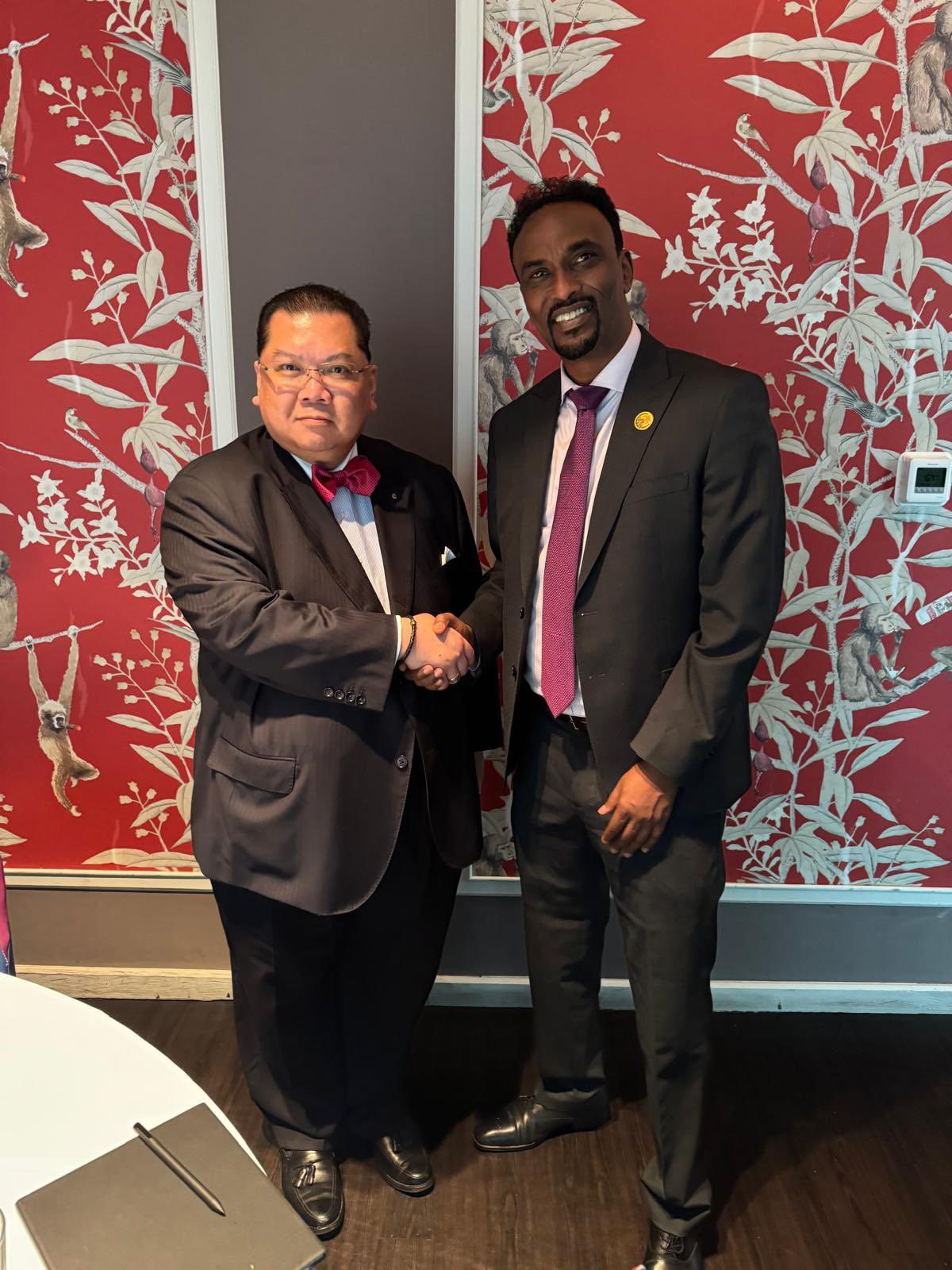
By Prof. Nassir Hussein Kahin.
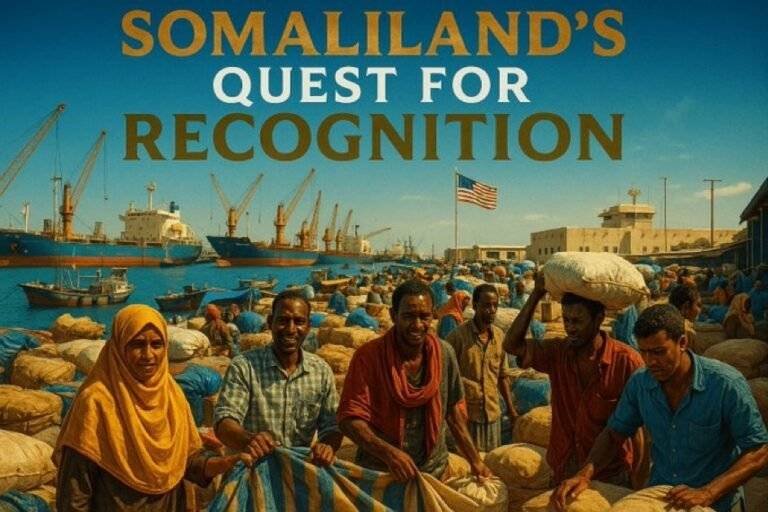
As the sun rises over Somaliland’s rugged mountains and golden coastline, it casts its light on a nation caught in the crosshairs of regional and global ambitions. For over three decades, Somaliland has quietly but resolutely built a democratic state in one of the world’s most volatile regions—holding Peaceful Elections, building institutions, and maintaining security. Its recent political transition, marked by the election of Dr. Abdirahman Mohamed Abdullahi “Ciro,” reaffirmed its commitment to democratic governance. But as Somaliland charts its path toward international recognition, it faces a convergence of opposition from actors that see its independence not as a right, but as a threat to their own influence.
At the heart of this resistance is Somalia, which views Somaliland’s sovereignty as an existential challenge to its territorial claims. Backed by Egypt, Turkey, and Qatar, Somalia continues to push the outdated “One Somalia” policy, despite its own federal structure being fraught with dysfunction and centrifugal forces. Regions like Puntland and Jubaland operate with increasing autonomy, and the central government’s control barely extends beyond Mogadishu. The insistence on Somali unity is less a principle than a political fiction used to stifle Somaliland’s aspirations.
But the opposition runs deeper than Somalia’s own fragility. Djibouti, long a dominant trade and maritime hub, sees in Somaliland’s Berbera Port a rising competitor that could challenge its grip on Ethiopian trade routes. Djibouti’s economic model—built on exclusive access to Ethiopia’s imports and exports—would be significantly weakened by an internationally recognized and commercially viable Somaliland.
Egypt and Turkey’s objections are driven by their broader geopolitical calculations. Egypt sees Somaliland’s deepening ties with Ethiopia—particularly the recent Memorandum of Understanding—as a threat to its leverage in Nile water negotiations. Its history of backing factions in Libya and military engagement in Somalia suggests a pattern: projecting power under the guise of regional stability while suppressing developments that challenge its strategic dominance. Egypt’s troop deployments under the AU mission, arms transfers to Somalia, and alleged support for destabilizing elements in eastern Somaliland highlight the militarized nature of its policy.
China’s opposition is no less calculated. Through its Belt and Road Initiative, Beijing seeks unchallenged influence in the Horn of Africa and across strategic maritime routes like the Bab El-Mandeb. Somaliland, with its strategic location and insistence on transparency and sovereignty, poses a challenge to China’s preferred model of opaque investment, debt entrapment, and infrastructure control. Somaliland’s openness to cooperation with democratic allies—especially the U.S.—risks upsetting China’s carefully laid plans to dominate the Red Sea corridor.
Eritrea and other autocratic regimes in the region have their own reasons for opposing Somaliland’s rise. A functional, democratic, and peaceful Somaliland undermines the narrative that authoritarianism is necessary for stability. It offers a working alternative—demonstrating that governance based on accountability and popular will can succeed, even in the Horn of Africa. For leaders who maintain power through repression and manipulation, Somaliland is not just a political anomaly—it is a threat by example.
As I noted in my recent article Unmasking Diplomatic Propaganda, recent efforts to discredit Somaliland—such as Egyptian Ambassador Motas Zahran’s piece in Time magazine—reflect a broader campaign to distort realities on the ground. These narratives, cloaked in concern for regional unity, are in fact thinly veiled attempts to suppress Somaliland’s success. Egypt’s history of interfering in Libya, its military support for Somalia, and its manipulation of Nile geopolitics belie its claims to be a force for stability.
Worse still, reports of Egypt and China facilitating arms transfers into Somalia—some of which have allegedly made their way into destabilizing elements near Somaliland’s borders—underscore the lengths to which these states will go to maintain their influence. The threat is not just diplomatic; it is strategic and militarized.
In this volatile environment, Somaliland’s democratic credentials become both its greatest asset and its most dangerous liability. It is a nation that defies the Horn’s norm of corruption, authoritarianism, and dependency. It has functioned independently since 1991, held multiple competitive elections, and safeguarded its borders without international peacekeepers. Unlike Somalia, which remains under a de facto UN trusteeship, Somaliland has built a functioning state with limited resources but limitless determination.
The argument that Somaliland’s recognition would open a “Pandora’s box” of secessionist movements across Africa is both outdated and intellectually dishonest. As the African Union’s 2005 fact-finding mission concluded, Somaliland’s case is legally and historically unique. Its claim rests on colonial-era boundaries and a failed voluntary union with Somalia—not arbitrary redrawing of borders. Somaliland is not trying to create a new state, but to restore one that briefly existed and voluntarily entered into a union that has long since collapsed.
U.S. policymakers are beginning to acknowledge this reality. Congressman Scott Perry’s introduction of H.R. 10402—calling for U.S. recognition of Somaliland—signals a shift in thinking. Recognition is no longer viewed solely through the lens of Somali unity but increasingly through the prism of strategic interests: securing maritime routes, countering Chinese influence, and supporting a rare African Democracy. The port of Berbera, already hosting U.S. and allied military assets, offers unparalleled access to the Red Sea and the Indian Ocean. Somaliland is not a liability—it is an opportunity.
For Somaliland, recognition is not a vanity project; it is a matter of survival and justice. It has earned its sovereignty through resilience, sacrifice, and an unshakeable commitment to its people’s will. The international community must ask itself: will it continue to reward dysfunction, authoritarianism, and dependency, or will it stand with those who have built something worthy of recognition?
The answer should be clear. Somaliland is not a threat—it is a model. And for the Horn of Africa to move beyond perpetual crisis, its success must not be feared but embraced.

Prof. Nassir Hussein Kahin is a researcher, educator, journalist, and geopolitical analyst specializing in the Horn of Africa, the Red Sea, international law, diplomacy, and strategic affairs. To read Full Bio click on this link: ABOUT THE AUTHORProf. Nassir Hussein Kahin