By Prof. Nassir Hussein Kahin, Executive Managing Editor.
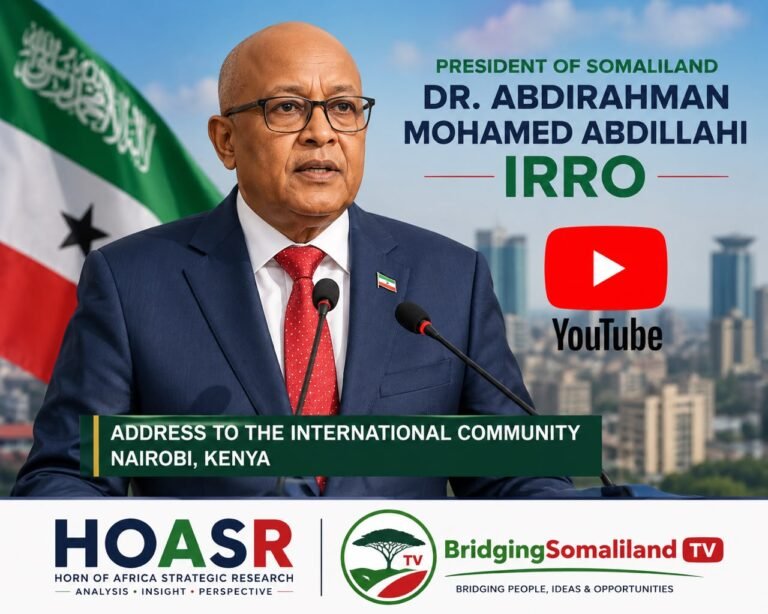
As the sun rises over Somaliland’s rugged mountains and golden coastline, it casts its light on a nation caught in the crosshairs of history. For decades, Somaliland has fought to define itself as a beacon of Democracy and stability in one of the world’s most volatile regions. Its Peaceful Elections, marked by the triumph of Dr. Abdirahman Mohamed Abdullahi “Ciro,” have once again placed this unrecognized state under the global spotlight. Yet, even as it celebrates its democratic gains, Somaliland finds itself encircled by a web of adversaries—regional and global powers united by a singular goal: to derail its march toward self-determination.
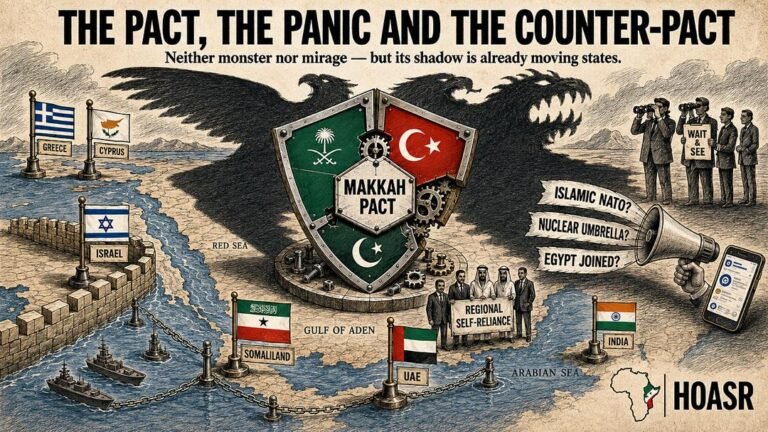
Somalia, Djibouti, Eritrea, China, and Turkey—each with their own agenda—are converging in an unholy alliance of geopolitical intrigue. They see in Somaliland not just a fledgling democracy but a potential disruptor of the status quo, a nation determined to carve its destiny free from the constraints of external control. For Somalia, Somaliland’s assertion of independence threatens its territorial integrity and political narrative. Somalia’s diplomatic machinery, fueled by allies such as Egypt and Qatar, works tirelessly to choke Somaliland’s quest for recognition at every international forum.
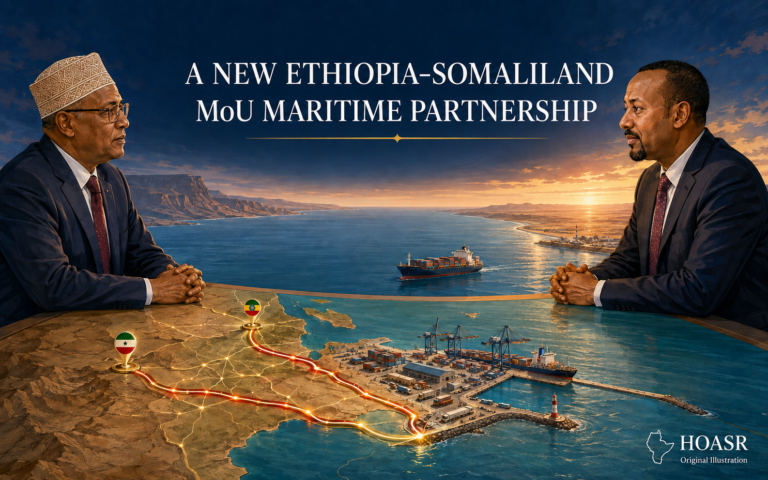
Suffice it just to mention Djibouti, the region’s traditional trade and maritime hub, views Somaliland as an emerging rival. Its leaders understand the implications of a recognized Somaliland, with its Berbera Port poised to challenge Djibouti’s stranglehold on regional logistics and trade routes. Eritrea, ever the shadowy operator, sees an opportunity to maintain its influence by ensuring Somaliland remains isolated and embroiled in regional complexities.
But the stakes rise further with the entry of global powers. China, with its insatiable appetite for strategic outposts, is determined to extend its Belt and Road Initiative into Somaliland, not as a partner but as a master. Its opaque infrastructure deals and media manipulation campaigns are aimed at embedding its influence while ensuring Somaliland remains beholden to its economic leverage. Meanwhile, Turkey, with its eyes on military and economic dominance in the Horn of Africa, seeks to align with Somalia and other regional players to block Somaliland’s aspirations.
These forces are not just vying for influence; they are engaging in active destabilization. Proxy actors, economic isolation tactics, disinformation campaigns, and military posturing are the weapons of choice. Somaliland, perched on the Gulf of Aden and near the Bab El-Mandeb Strait, holds the keys to one of the most strategic maritime corridors in the world. Its geographical position is both its greatest asset and its most perilous vulnerability. The waters surrounding it are rife with piracy, terrorism, and Global Power Competition, making Somaliland’s stability essential not just for the region but for the global economy.
And at the heart of this storm stands Dr. Ciro, a seasoned diplomat with decades of experience in navigating the treacherous waters of international relations. His victory in the polls has inspired hope among Somaliland’s people, but it has also made him a target. He inherits a nation rich in untapped resources but surrounded by adversaries eager to exploit its weaknesses. The world has seen what happens to resource-rich but vulnerable nations in Africa—Sudan’s descent into chaos, the Sahel’s spiral into extremist violence, the Congo Basin’s plunder by transnational criminals. These are cautionary tales that Somaliland cannot afford to ignore.
Dr. Ciro’s challenge is nothing short of monumental. He must walk a tightrope, balancing immediate threats with long-term ambitions. Somaliland’s democracy, still fragile, must be fortified against the external pressures of disinformation and internal cracks that adversaries will seek to exploit. The president must forge alliances not out of desperation but from a position of strength, ensuring that any agreements with foreign powers serve the long-term interests of his nation.
Recognition remains Somaliland’s ultimate goal, but it cannot come at the cost of sovereignty. Dr. Ciro understands that his nation’s rich resources and strategic location are bargaining chips in a high-stakes game. Yet, he also knows that Somaliland must not trade these assets for fleeting gains. His vision must extend beyond the immediate allure of international recognition to a future where Somaliland is a sovereign leader, respected and self-reliant.
The battle ahead will test every ounce of Dr. Ciro’s diplomatic skill, every fiber of Somaliland’s resilience. It is a battle not just for recognition but for survival in a world where power and influence often trample over principle. Somaliland stands at a crossroads, its destiny hanging in the balance. The question now is whether its leaders can rise above the machinations of those who seek to contain it, crafting a future defined by self-determination and strength.
As the world watches, Somaliland’s struggle is more than a regional story. It is a lesson in resilience, a testament to the power of democracy, and a warning to those who underestimate the resolve of a nation determined to chart its own course. And for Dr. Ciro, this moment is not just a test of leadership—it is the defining challenge of his life. And Somalilanders are confident that President “Ciro” has the ability to overcome these challenges.
Prof. Nassir Hussein Kahin is a researcher, educator, journalist, and geopolitical analyst specializing in the Horn of Africa, the Red Sea, international law, diplomacy, and strategic affairs. To read Full Bio click on this link: ABOUT THE AUTHORProf. Nassir Hussein Kahin